Punjab’s free residential plot initiative is aimed at qualifying homeless households. Understand the district-based quotas, ownership checks, balloting and what happens after an allotment.
Table of Contents — jump straight to a section
- Eligibility Criteria
- Required Documents
- Verified programme details at a glance
- What is actually being offered
- Eligibility and family ownership rules
- District quotas and available sites
- Documents to organize before registration
- Online application walkthrough
- Verification and selection
- Costs after an allotment
- Household examples
- Avoiding fake registration services
- How this differs from housing loans
- Tracking results and complaints
- Next steps before spending money
- What matters most before you apply
- Apni Zameen Apna Ghar: what a free plot would actually mean
- Verify documents and protect the application
- Before applying: a sensible checklist
- Three practical situations explained
- Explore related Scheme Info guides
- Frequently asked questions
- Official sources and editorial independence

Eligibility Criteria
Who qualifies under this programme
Check the following conditions before spending time on an application. The official programme or bank makes the final decision.
- Be a permanent Punjab resident with a valid CNIC and apply for a notified scheme in your own district.
- The applicant, spouse and dependent children must not already own a house or residential plot anywhere in Pakistan.
- Meet the programme’s financial-need and other eligibility checks as determined during scrutiny.
- Understand that an application is not a guaranteed allotment; selection depends on verification and available plots.
Required Documents
Documents that must match the official records
Use this practical preparation list. Items described as conditional are needed only if the official form or verification team requests them.
- Valid CNIC and the applicant’s current mobile contact details.
- Address and district-of-residence information consistent with the CNIC and official records.
- Family information, including spouse/dependent details if requested for property-ownership checks.
- Income or financial-status declaration and non-ownership declaration if the current portal asks for them.
- Application acknowledgement or tracking number after submission.
Verify the latest details in the Official Punjab free-plot portal before submitting anything.
Verified programme details at a glance
| Your question | Official detail and how to interpret it |
|---|---|
| What is the benefit? | Free three-marla residential plots for eligible households in designated Punjab housing schemes. |
| How many plots were in the first phase? | The official AZAG portal refers to 2,000 plots in 19 districts. |
| Who qualifies geographically? | Punjab residents with valid identity documents; applications are tied to schemes in the applicant’s own district. |
| Can a current landowner qualify? | The published criteria require the household not to own a qualifying house/plot or land as specified by the programme. |
| How are plots allotted? | PHATA screens applications and undertakes a published balloting/verification process. |
| What are the building milestones? | The official FAQ expects construction to begin within six months after possession and finish within two years. |
| Where is the authentic application route? | The government’s azag.punjab.gov.pk website, application account and status facility. |
What is actually being offered
For Apni Zameen Apna Ghar Scheme, The programme allocates residential plots to qualifying households under notified districts and schemes. Its benefit is land allocation, not a cash transfer or construction-loan sanction. A prospective beneficiary should understand what plot allocation legally means, what later building expenses remain, and why programme announcements do not substitute for a personal allotment letter.
An assessment of Apni Zameen Apna Ghar Scheme should begin with one principle: The first decision should therefore be about the actual benefit, not the size of a headline. Read the government's description carefully, identify what must happen before a benefit is confirmed, and keep the wording of any decision or notice. Planning around a possible award as though it were cash already in hand can create avoidable costs for a household.
One useful way to approach the issue is to write three columns: what the published programme says, what evidence the applicant actually holds, and what remains unverified. This small exercise separates facts from hopes. It also helps relatives or business partners make decisions without confusing a preliminary eligibility check with an official result. With Apni Zameen Apna Ghar Scheme, make the distinction in writing before acting.
Ask what is being transferred or financed, who owns it afterward, and whether restrictions continue after selection. Many government support announcements describe programme-level goals that are wider than an individual applicant's rights. The exact outcome should always be read from the relevant authorization or agreement.
Eligibility and family ownership rules
Understanding Apni Zameen Apna Ghar Scheme starts here: The Punjab Government disallows households where the applicant, spouse or dependent children own a plot or house anywhere in Pakistan. This family-wide condition is more important than simply checking the applicant’s name. Applicants must be permanent Punjab residents and apply within their district.
When reviewing Apni Zameen Apna Ghar Scheme, remember that Eligibility is rarely established by one attractive number. A sensible applicant checks every applicable condition, including identity, residency, date and exclusions, then compares that list with their genuine circumstances. When a rule is unclear, seek written clarification from the named authority rather than guessing or changing personal information to fit a form.
Read conditions together, not one at a time. A person may satisfy a general age or income description while failing a location or documentation rule. Even where an exclusion sounds unfair, the correct response is to seek official clarification or an authorized appeal—not to omit an inconvenient fact.
District quotas and available sites
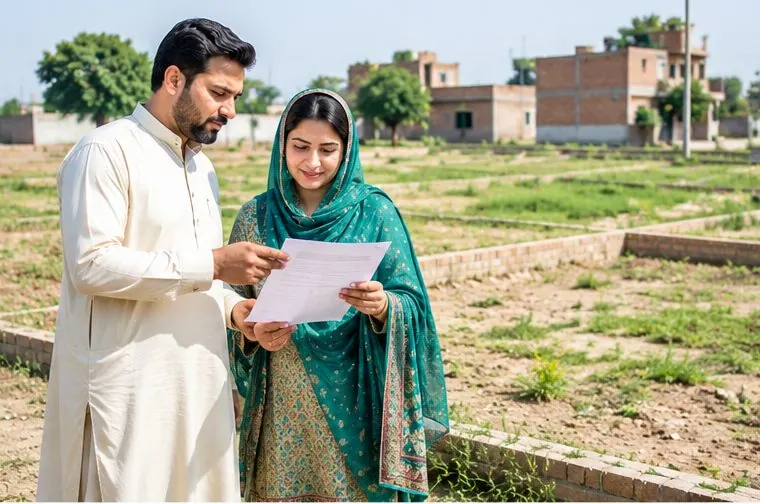
The practical position under Apni Zameen Apna Ghar Scheme is this: Application is tied to the applicant’s district and to notified housing schemes. A headline promising plots across Punjab does not establish that every district has vacant plots today. Check the official district quota information before making arrangements, and distinguish planned plots from allotted ones.
The location question in Apni Zameen Apna Ghar Scheme is worth examining because Local implementation can matter just as much as the national or provincial announcement. The correct district, branch, scheme site or programme phase may decide where an application should go. Before travelling or hiring help, check that the location is genuinely covered and that the published process is still accepting requests.
For a practical comparison, consider an applicant who satisfies the main geographic rule but has not confirmed the programme phase. That applicant may be suitable in principle and still unable to apply today. Another who submits on time with incorrect identity information faces a different problem. Each case calls for a different response. That distinction affects the likely path through Apni Zameen Apna Ghar Scheme.
A programme may cover selected cities, tehsils, villages, financial branches or institutions. That boundary is often deliberate because funding and administrative capacity are allocated locally. Check whether a particular service office can help before assuming the entire province uses the same process.
Documents to organize before registration
A careful look at Apni Zameen Apna Ghar Scheme shows why Prepare CNIC, family information, income and contact details plus any declarations the current portal requests. Keep a consistent address and household record across the application, NADRA documentation and supporting files. If an upload field changes, follow the live official instructions instead of copying a third-party checklist.
Before supplying evidence for Apni Zameen Apna Ghar Scheme, consider this: Documents have two purposes: they establish identity and support the particular claim being made. Make a checklist before starting; compare names, addresses and dates across records; and keep readable copies. Do not assume a third-party screenshot has the latest file requirements, because portals and verification workflows can change without warning.
Keep the document pack small but well organized: identity proof, any relevant income or ownership evidence, and the official acknowledgement. Store originals securely and use copies only through legitimate channels. A well prepared file makes later correction requests easier to understand and reduces the temptation to pay an unauthorized facilitator. For Apni Zameen Apna Ghar Scheme, keep the evidence organized before submission.
A reliable application record includes originals held safely, legible scans and a note explaining the purpose of each uploaded document. Sensitive data should be shared only where it is genuinely required. Applicants should avoid sending full identity records to informal groups offering to 'check' status for a fee.
Online application walkthrough
For Apni Zameen Apna Ghar Scheme, Create or access your official portal account, choose the correct district, complete your details and inspect declarations about property ownership and financial obligations. Submit only once the information matches the documents. Save any confirmation or tracking number for later use.
For anyone using the official Apni Zameen Apna Ghar Scheme route, Online submission should be treated as a formal declaration. Read the entire form, check selected options and save a personal copy of the final acknowledgement. Where an official portal provides a reference number, record it securely. An apparently successful submit button does not necessarily mean an application was approved.
Where a portal is available, use the direct address on the official department's site rather than an advertisement. Record the page date, review any privacy notice and check the spelling of the domain. When a form is closed, treat that as a status issue—not an invitation to search for a secret alternative form. These habits help make a Apni Zameen Apna Ghar Scheme application more reliable.
The most important part of an application is consistency. Forms asking about residence, ownership, banking status or household composition are often checked against other records. A truthful, complete declaration may take longer to prepare, but it is easier to defend if the application is selected for manual review.
Verification and selection
Understanding Apni Zameen Apna Ghar Scheme starts here: An application is a request for consideration; it does not award a plot. Ownership checks, residential status, district quotas and formal allocation rules may determine eligibility. A clean application can still remain pending if there are fewer plots than qualified households.
As a candidate moves through Apni Zameen Apna Ghar Scheme, Verification protects the programme as well as legitimate applicants, but it can take time. Some checks happen automatically while others require human review or physical evidence. Ask what a pending or under-review status actually means; never treat an intermediary's verbal promise as proof that a government authority or bank has selected you.
After submission, note the precise status message and whether any further action is requested. A delay can arise from quotas, technical checks, record matching or an incomplete inspection, depending on the programme. The responsible authority can explain the next authorized step better than an anonymous video claiming a fixed timeline. That is a practical way to track Apni Zameen Apna Ghar Scheme without confusing pending and approved cases.
The review stage can include technical, eligibility, financial and administrative decisions. Being asked for an additional document is not proof that an award will follow. It is simply another step in a process that should be tracked using the programme's own communication channels.
Costs after an allotment
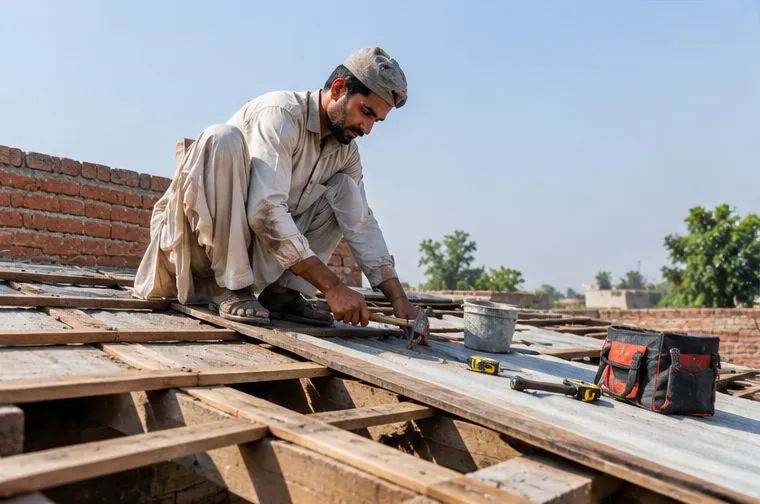
The practical position under Apni Zameen Apna Ghar Scheme is this: A free plot is not necessarily a finished home. Ask the authority about transfer documents, site development, connection charges, construction permission and any notified restrictions. Budgeting for bricks, foundations, utilities and transport helps a family decide whether it could use the property responsibly.
Financially, Apni Zameen Apna Ghar Scheme needs to be understood in these terms: Published assistance figures need context. They may describe a maximum subsidy, a per-unit amount, a target for the entire programme or a confirmed individual entitlement. Separate public budget announcements from contractual terms applying to one applicant, and calculate the costs you would still carry after any benefit.
For financial planning, distinguish the face value of support from accessible cash. A benefit in equipment, land, housing work or a restricted card may not be sold or spent on unrelated items. Ask what the recipient is allowed to do and what contribution, maintenance or reporting may still be required. In Apni Zameen Apna Ghar Scheme, net value matters more than a headline.
The headline value should not be mistaken for the net economic gain. Applicants may have maintenance, transport, materials, legal or business-operating costs. A responsible decision compares these costs over time and checks whether receiving one form of support restricts access to another.
Household examples
A careful look at Apni Zameen Apna Ghar Scheme shows why Consider a couple renting in their home district and owning no property: they may be closer to the intended group, subject to other rules. A person whose spouse owns a house in another city faces a fundamentally different eligibility question. Check both cases against the exact family ownership definition.
For the latest phase of Apni Zameen Apna Ghar Scheme, A dated notice is usually more useful than a viral screenshot. Application openings, selection lists and payment cycles can change independently. Keep the date and source of a rule with your notes, and avoid telling friends that a programme is currently open solely because its original registration page remains accessible.
Keep a simple chronology: announcement date, submission date, last government update and next action. This avoids passing along expired information. If the page has no fresh deadline, write 'current intake not confirmed' in your own plan rather than inventing a day to make the process seem urgent. Compare every Apni Zameen Apna Ghar Scheme date with a freshly issued official notice.
Older notices can remain searchable for years and still describe a valid historic phase. A reader should therefore separate the permanent purpose of a scheme from the temporary dates of a particular intake. Programme activity is not the same thing as a verified open registration period.
Avoiding fake registration services
For Apni Zameen Apna Ghar Scheme, Use the official Punjab and AZAG sites rather than social posts promising guaranteed plots for an advance payment. Never give account passwords, one-time codes or identity photographs to a stranger. An agent who claims to bypass the queue or secure a plot should be treated as a warning sign.
A responsible budget for Apni Zameen Apna Ghar Scheme recognises that A practical household or enterprise budget should include money spent before receiving support, routine costs after receiving it and a margin for delays. Use conservative estimates rather than the most optimistic outcome. That approach makes the decision useful even if the application is deferred, reduced or rejected.
Costs are easiest to control when they are separated into essential, optional and uncertain items. Include transport, copies, connectivity, maintenance or working capital as relevant. Do not spend money on non-refundable bookings or contractors until the scheme's actual approval conditions are clear. In a Apni Zameen Apna Ghar Scheme plan, this is safer than assuming the most favourable outcome.
Good planning relies on a conservative case, not just a best case. Estimate what happens if the support arrives late, is smaller than hoped, or comes with an obligation to contribute. This protects the applicant from making irreversible purchases based on a provisional result.
How this differs from housing loans
Understanding Apni Zameen Apna Ghar Scheme starts here: Compare the free-plot purpose here with Apni Chhat Apna Ghar, where qualifying households may already own land and seek construction support. One programme cannot simply substitute for the other: land ownership can help in a construction-loan scheme but disqualify someone from a landless-household plot scheme.
A common difficulty with Apni Zameen Apna Ghar Scheme is that Many rejected or stalled applications are complicated by inconsistent documents, missing proof or incorrect assumptions about the benefit. Review the exact cause before trying again. An error that can be corrected should not be confused with a permanent exclusion, but an applicant should never use fabricated records to get around a genuine rule.
When something appears wrong, start with the source document or official status record. Identify one specific discrepancy and ask for the appropriate remedy. Repeated messages to unrelated numbers and social-media pages rarely resolve a formal eligibility or payment dispute. A thoughtful Apni Zameen Apna Ghar Scheme review begins by finding the exact cause.
An unsuccessful result can have several causes: an ineligible circumstance, a missing record, expired registration, exhausted quota or simple data mismatch. These possibilities call for different remedies. Seek a clear reason and preserve a copy of the official response before making a new application.
Tracking results and complaints
The practical position under Apni Zameen Apna Ghar Scheme is this: Keep a simple timeline of submission, confirmation, requested corrections and published notices. If status information conflicts, contact the official help channel and record the date and response. Do not interpret silence or a generic eligibility message as an allotment.
Individual examples involving Apni Zameen Apna Ghar Scheme illustrate why Personal circumstances make a difference. Two households might live in the same district but have different eligibility because of land ownership, income, family status or programme history. Use examples as a way to identify questions for the real authority, not as a substitute for individual assessment or professional advice.
A realistic scenario is useful only if its assumptions are visible. Write the applicant's age or family status, district, asset situation and evidence on hand, then test each one against the official rule. Do not turn a hypothetical example into a guaranteed approval statement. That is why Apni Zameen Apna Ghar Scheme cannot be assessed from a single example.
Examples also show why broad social-media advice fails. A rule may interact with family size, ownership history, district or specific benefit purpose. Compare scenarios cautiously and use them to prepare precise questions for the responsible authority rather than as evidence of an individual entitlement.

Next steps before spending money
A careful look at Apni Zameen Apna Ghar Scheme shows why Confirm the district and open intake, gather the genuine documents, review family ownership disclosures and read every acceptance condition. Treat any future allocation as subject to the terms issued by the responsible housing authority rather than as permission to immediately sell or construct.
For safe participation in Apni Zameen Apna Ghar Scheme, If a phone number, social-media account or unofficial representative asks for a deposit or PIN, verify the request through the provider's published website or help line. Protect CNIC images and financial data. For alternative support, compare the purpose and conditions of separate programmes rather than assuming their rules are interchangeable.
Finally, share only the facts that can be checked. A family member may want a simple answer, but 'eligible subject to verification' is more helpful than an unsupported promise. Keeping records and using legitimate complaint routes reduces exposure to fraud and makes the next administrative step clearer. Reliable information about Apni Zameen Apna Ghar Scheme starts with the provider, not an intermediary.
Official programmes should be approached through official channels even when an advertisement looks convincing. Fraud prevention is part of financial planning: verify domains, protect one-time codes and keep copies of genuine payment instructions. Where a new phase is not confirmed, the safest next step is monitoring the official source.
What matters most before you apply
Use the dated official sources below to confirm application windows. Guidance prepared from a published set of rules may remain useful when the programme itself pauses registration or changes an implementation phase.
Apni Zameen Apna Ghar: what a free plot would actually mean
A residential plot can be life-changing, but it is not the same as an immediately habitable home. Families should understand eligibility, selection and the costs that follow allotment.
Check whether the household is truly landless
- Review ownership across family records. An old inherited share, jointly owned plot or disputed title may need clarification under the actual rules.
- Consider the family's status, not one CNIC in isolation. Household ownership screening may take spouse and dependent records into account.
- Match the district requirement. The original scheme uses location-specific allotments; demand in one district does not create vacant plots in another.
- Disclose complications honestly. Attempting to hide ownership can lead to cancellation after verification.
Compare district quota with actual selection
- A published quota is not an approval letter. It indicates planned plots, not a guaranteed allotment for each registered family.
- Look for verified site locations. Families should understand whether work, schools and transport are reasonably accessible.
- Understand the ballot or verification process. Being able to submit a form does not mean the selection stage has finished.
- Save all official references. Keep the date, application identifier and any district-level enquiry record.
Estimate post-allotment responsibilities
- Construction finance is separate. Land allocation may not include the cost of building walls, roof and utilities.
- Check occupancy and transfer conditions. Free or subsidised plots can carry restrictions on selling or using the land.
- Estimate connection expenses. Water, electricity, drainage and transport can affect the site's actual affordability.
- Avoid early contractor deposits. Do not sign a building contract before confirming lawful allotment and site possession.
Verify documents and protect the application
Prepare a coherent household record
- CNIC and family linkage: Check that names and relationships match the registry used for selection.
- Residence evidence: Keep the required domicile or district documents rather than relying on an unrelated utility bill.
- Ownership declarations: Understand which family members and properties the official form asks about.
- Income or social registry information: Where required, give accurate household data and ask how to correct a genuine mismatch.
Recognise registration fraud
- Use the genuine government site. A copied web design or a logo in a social post is not proof that a private registration service is authorised.
- Never pay for a promised plot number. Allotment or ballot decisions are handled through the scheme's official process.
- Protect identity documents. Do not send CNIC photographs to unknown WhatsApp groups.
- Keep status messages in context. 'Submitted', 'under verification' and 'allotted' are not interchangeable.
If selected, examine the allotment terms
- Inspect the official letter. Plot location, size, conditions and issuing authority should match government records.
- Confirm the procedure for possession. A map image alone does not establish a lawful handover date.
- Plan the next housing step. Explore eligible construction assistance separately and do not assume automatic financing.
- Ask before altering ownership. Selling, transferring or renting a subsidised plot may breach the conditions of allotment.
Before applying: a sensible checklist
- Confirm the issuing authority and current programme phase on an official domain.
- Match identity, domicile, household, land, academic or business records to the actual eligibility category.
- Prepare clear documents and a contact number that you control; never share a login OTP with an agent.
- Read the amount, deadlines, conditions and disqualification clauses as well as the headline benefit.
- Save screenshots of genuine submissions and ask the named official office to clarify disputed information.
Three practical situations explained
A family renting in an eligible district
Check district and identity details and the ownership rule; tenancy alone is not proof of qualification.
An applicant who owns a small plot elsewhere
Do not conceal that ownership. The property check can disqualify a case or lead to cancellation later.
A selected family without construction funds
Plan for the building deadline and realistic construction costs before treating free land as a finished free home.
Official sources and editorial independence
Information checked against the government, bank or university pages below on 12 November 2026. Figures and conditions change between programme phases, and publication does not guarantee registration is open. Scheme Info is an independent publisher: we do not issue loans, enrol scholarship recipients or make official allotment decisions.
Frequently asked questions
What is the benefit?
Free three-marla residential plots for eligible households in designated Punjab housing schemes.
How many plots were in the first phase?
The official AZAG portal refers to 2,000 plots in 19 districts.
Who qualifies geographically?
Punjab residents with valid identity documents; applications are tied to schemes in the applicant’s own district.
Can a current landowner qualify?
The published criteria require the household not to own a qualifying house/plot or land as specified by the programme.
How are plots allotted?
PHATA screens applications and undertakes a published balloting/verification process.
What are the building milestones?
The official FAQ expects construction to begin within six months after possession and finish within two years.
Where is the authentic application route?
The government’s azag.punjab.gov.pk website, application account and status facility.
Is an AZAG plot the same as an Apni Chhat loan?
No. The plot allotment and construction-finance programme have different criteria and benefits.
Can applicants apply for a different district?
The portal describes district-based application eligibility. Follow the district specified by your verified residence.
Can I sell the plot immediately?
Do not assume resale rights. Check the allotment deed and official restrictions before any transfer or construction commitment.