Practical guidance for Pakistani young entrepreneurs on the SMEDA–PMYP partnership: training, mentoring resources, pre-feasibility studies, business planning, youth-loan preparation and safe official channels.
On this page — tap to open or close
- Latest verified facts
- Key terms and quick comparison
- Who qualifies and who needs to check
- Documents and record-matching checklist
- Safe application and follow-up steps
- What the September 2026 partnership actually established
- How SMEDA resources help before a loan application
- Eligibility for services versus eligibility for financing
- Turn a business idea into a one-page proposal
- Read a pre-feasibility study critically
- How to use a cash-flow forecast before borrowing
- What women and underserved entrepreneurs should ask
- Which documents help a finance-ready business file?
- Training, mentorship and the digital youth hub
- Avoid business-loan agents and unrealistic success promises
- Three real-world decision examples
- Mistakes, delays and fraud prevention
- Official sources and related SchemeInfo guides
Latest verified facts about SMEDA PMYP Youth Entrepreneurship Scheme 2026
For readers evaluating SMEDA PMYP Youth Entrepreneurship Scheme 2026, Pakistan’s small-business environment can be difficult for first-time entrepreneurs: market research is expensive, plans are often informal, and bank finance requires evidence that a business can sustain debt. The Ministry of Industries and Production announced a cooperation framework between SMEDA and the Prime Minister’s Youth Programme to improve awareness and access to business development and financing support.
SMEDA PMYP Youth Entrepreneurship Scheme 2026 references the Prime Minister’s Youth Business and Agriculture Loan Scheme, SMEDA pre-feasibility studies, financial web tools, business-plan templates, training modules and targeted outreach, including women and underserved regions. Its value to the reader lies in making those tools practical. A good applicant first identifies the business problem, builds a conservative budget, tests customer demand, and only then decides whether taking a loan is appropriate.
SMEDA PMYP Youth Entrepreneurship Scheme 2026 — quick comparison before you proceed
| Decision point | What it means in practice |
|---|---|
| MoU date | 10 September 2026 official ministry announcement. |
| Main purpose | Improve youth entrepreneurship resources and access to business and finance information. |
| Support examples | Training modules, financial literacy, feasibility tools, business plans and awareness. |
| Finance connection | PM Youth Business and Agriculture Loan Scheme through its separate bank-led approval process. |
| Target groups | Start-ups, MSMEs, youth, women and underserved entrepreneurs. |
| Key distinction | The MoU is not an automatic grant or a lender guarantee. |
When reviewing SMEDA PMYP Youth Entrepreneurship Scheme 2026, A training or business-planning service answers how to run a firm; a loan answers how to finance it. These are related but different. SMEDA can help an entrepreneur consider costs, risks and business models, while a participating bank evaluates creditworthiness and legal requirements. A borrower must ultimately repay financing according to its approved terms.
For example, a small manufacturing start-up may need guidance on supplier quotations and break-even volume before it needs a large equipment loan. A mature business might instead need a working-capital forecast. Different owners benefit from different parts of the SMEDA and PMYP partnership.
SMEDA PMYP Youth Entrepreneurship Scheme 2026 eligibility: who should check first?
When checking eligibility for SMEDA PMYP Youth Entrepreneurship Scheme 2026, educational outreach can be broader than formal loan qualification, so confirm requirements for each resource and any separate finance product.
- To assess eligibility under SMEDA PMYP Youth Entrepreneurship Scheme 2026, aspiring or existing entrepreneur seeking legitimate business-development guidance.
- Applicant in a Pakistan business sector covered by available SMEDA resources.
- Young entrepreneurs and MSMEs among the intended outreach groups.
- Women and underserved-region applicants can seek targeted support channels.
- For financing, compliance with the current PMYB&ALS age, business and participating-bank rules.
- An honest business model and repayment strategy rather than a guarantee of profit.
For an applicant reviewing SMEDA PMYP Youth Entrepreneurship Scheme 2026 criteria, do not assume a training certificate waives bank eligibility tests, collateral rules or financing charges.
Documents and record-matching checklist
When preparing SMEDA PMYP Youth Entrepreneurship Scheme 2026 documents, the exact requirements differ between a webinar, a helpdesk visit, and a credit application. Organising the business file early makes advice more useful.
- Valid identity and reliable contact details.
- A one-page description of the proposed product, customers and market.
- A realistic start-up or expansion investment budget.
- Supplier quotations for major machinery, tools or inventory.
- Business registration, tax and bank records where applicable.
- To avoid documentation problems with SMEDA PMYP Youth Entrepreneurship Scheme 2026, monthly sales, expenses and cash-flow forecast with a weak-demand scenario.
For an application file related to SMEDA PMYP Youth Entrepreneurship Scheme 2026, ask the current lender for the binding checklist before purchasing any expensive attestation or outside consultancy service.
Safe SMEDA PMYP Youth Entrepreneurship Scheme 2026 application and follow-up
When using the official SMEDA PMYP Youth Entrepreneurship Scheme 2026 application route, the following workflow keeps business preparation separate from the bank’s eventual decision.
- When following the SMEDA PMYP Youth Entrepreneurship Scheme 2026 process, read the Ministry of Industries announcement to understand the actual partnership.
- Visit SMEDA’s official resources for sector pre-feasibility studies and planning tools.
- Identify your business sector, customer and the main decision you need help with.
- Update template costs with live quotations from your own district.
- Prepare a conservative cash-flow forecast and a one-page business summary.
- Use available SMEDA or PMYP training and helpdesk routes for feedback.
- If borrowing is necessary, review the current PM Youth loan rules and participating banks.
- Apply through the official loan portal and retain application and lender references.
When preparing to use SMEDA PMYP Youth Entrepreneurship Scheme 2026, do not pay anyone for a guaranteed “SMEDA-approved youth loan”; financing requires its own assessment.
What the September 2026 partnership actually established
The SMEDA PMYP Youth Entrepreneurship Scheme 2026 is best understood as a collaboration to make business development and financing information easier to access. The Ministry of Industries and Production announced a formal memorandum of understanding on September 10, 2026. It supports training, outreach, business-plan tools, feasibility studies, mentorship-related resources and better awareness of the Prime Minister’s Youth Business and Agriculture Loan Scheme. It is not proof that a separate new cash grant has been awarded to every youth applicant. Entrepreneurs should identify the exact service they need before registering for anything.
What to check before acting
- When comparing claims about SMEDA PMYP Youth Entrepreneurship Scheme 2026, read the government press release rather than a rewritten “new grant” advertisement.
- Distinguish entrepreneurship training from bank loan approval.
- Clarify whether a course, template or advisory service has an official fee.
- Choose resources based on your actual business sector and experience.
- Use current PMYP and SMEDA platforms rather than unofficial “slot booking” forms.
How SMEDA resources help before a loan application
Before submitting details for SMEDA PMYP Youth Entrepreneurship Scheme 2026, A bank usually needs evidence that the proposed business can operate and repay financing. SMEDA offers sector information, pre-feasibility studies and planning tools that can make those assumptions more realistic. A study for a dairy unit, for example, can show possible equipment costs and cost categories, but it cannot know the applicant’s village rents, supplier prices or market access. Treat published templates as starting points. Replace placeholder costs with quotations, validate sales assumptions and show the repayment cushion. A strong application is built from local evidence rather than a downloaded PDF alone.
What to check before acting
- Pick the closest sector study, then adapt it to your district.
- Obtain actual equipment and supplier quotations with dates.
- Estimate sales using conservative demand rather than best-case growth.
- Show the working-capital cycle and owner contribution.
- Explain what happens if sales are twenty per cent below forecast.
Eligibility for services versus eligibility for financing
SMEDA PMYP Youth Entrepreneurship Scheme 2026’s outreach is intended for youth entrepreneurs, start-ups and micro, small and medium enterprises, especially underserved groups. But access to educational material does not automatically establish eligibility for a specific bank tier. Borrowing criteria may involve age, business registration, residence, credit history, ownership, collateral or bank assessments, depending on the active PMYB&ALS terms. Users should check the loan scheme directly and consult its participating bank if their business is unusual. Avoid publishing one list of eligibility rules as if it controls every workshop, consultation and financing product.
What to check before acting
- Before assuming SMEDA PMYP Youth Entrepreneurship Scheme 2026 is suitable, check youth loan age and business criteria on the current official loan portal.
- Treat a free training resource separately from a loan prequalification decision.
- Disclose whether the business already operates or remains a proposal.
- Clarify partnership or company ownership before submitting a financing form.
- Ask about sector-specific restrictions with a participating lender.

Turn a business idea into a one-page proposal
In the context of SMEDA PMYP Youth Entrepreneurship Scheme 2026, good plans answer five questions: who the customer is, why that customer will pay, how the product is delivered, what the true costs are and how cash is collected. A one-page plan can be a useful first draft before a longer lender proposal. It should describe the product in plain language and identify one clear competitive advantage. It should not promise a market size or profit margin unsupported by evidence. SMEDA’s planning resources help put structure around a concept, but customer interviews and local market checks provide the reality test.
What to check before acting
- Define a clear product or service and the customer who needs it.
- List two or three competing businesses in your actual market.
- Explain the pricing logic using real supplier costs.
- Show the first three months of marketing and delivery activity.
- State the biggest risk and how the owner would respond.
Read a pre-feasibility study critically
A pre-feasibility report is a model, not a promise of commercial success. It can contain assumptions about premises, labour, energy cost, interest, equipment and selling price. In 2026 an outdated electricity tariff or machinery quote can distort profitability significantly. Review the date of the study, confirm whether the equipment exists locally and test what happens if customer demand is weaker. Banks may appreciate structured feasibility work, but they will still examine whether the individual applicant has the expertise and practical ability to deliver the numbers.
What to check before acting
- Check publication date and original assumptions before copying numbers.
- Update utility costs, wages, tax obligations and machinery quotations.
- Adjust expected production volume to achievable first-year demand.
- Model a bad month and identify the minimum cash reserve needed.
- Write down which assumptions have been personally verified.
How to use a cash-flow forecast before borrowing
When budgeting for SMEDA PMYP Youth Entrepreneurship Scheme 2026, profit and cash are different. A small manufacturer can show an accounting profit but run out of money if customers pay late and raw materials require advance cash. Prepare a month-by-month forecast showing receipts, inventory payments, wages, rent, energy bills, tax and loan instalments. Highlight the month with the lowest cash balance. If the business has seasonal sales, ensure there is enough working capital between peak seasons. The partnership’s financial-literacy emphasis makes this one of the most practical skills to develop before approaching a bank.
What to check before acting
- List cash receipts by the month they are expected to arrive.
- Include supplier payments when due, not when products are sold.
- Show owner withdrawals separately from business expenses.
- Keep a buffer for power outages, transport delays and customer returns.
- Test whether the monthly loan instalment remains affordable in a slow period.

What women and underserved entrepreneurs should ask
For someone considering SMEDA PMYP Youth Entrepreneurship Scheme 2026, the official collaboration emphasises outreach to women entrepreneurs and people in less-served areas. Better outreach can make it easier to locate a relevant helpdesk, training video or proposal resource, but it does not remove genuine barriers such as travel, childcare, documentation or phone access. Applicants should ask whether assistance is available online, through a district office or via a scheduled workshop. A woman running a home-based enterprise may need a different cost structure and schedule than a factory-based applicant; the plan should reflect the real working arrangement.
What to check before acting
- Check for online learning materials if travel to a regional office is difficult.
- Ask whether a helpdesk supports home-based and informal business transitions.
- Prepare records of actual sales even if the enterprise operates from home.
- Discuss banking, registration and business identity requirements in advance.
- Seek advice tailored to the local market instead of a one-size-fits-all startup pitch.
Which documents help a finance-ready business file?
While organising records for SMEDA PMYP Youth Entrepreneurship Scheme 2026, the exact bank list depends on the financing tier and lender, but a well-organised applicant can prepare identity records, a concise plan, supplier quotations, business registration details where applicable, bank statements and reasonable cash-flow projections. Existing businesses should show actual revenues rather than only optimistic future numbers. A start-up should identify what it has already invested and which assumptions remain untested. Education records or experience evidence may help explain technical capability, although the scheme may not require a particular degree for all categories.
What to check before acting
- Store CNIC and registered contact information securely.
- Prepare an updated business plan and realistic investment breakdown.
- Collect bank statements and tax or registration records when relevant.
- Obtain supplier quotations and location or premises evidence.
- Check the live participating-bank checklist before paying for attestations.
Training, mentorship and the digital youth hub
While researching SMEDA PMYP Youth Entrepreneurship Scheme 2026, the ministry announcement describes coordination with the PMYP Digital Youth Hub, including videos, FAQs, business templates and links to SMEDA-developed materials. A useful learning route is to choose one core skill, complete the relevant module, then apply it to the applicant’s own budget or business records. Training should lead to better decisions, not simply a certificate collected for social media. If a website invites the user to pay for an “exclusive government mentor”, confirm the service through SMEDA or PMYP before sending money.
What to check before acting
- Start with bookkeeping and simple pricing if the business is very small.
- Use a business-model template to test customer value and delivery.
- Practise explaining loan repayment from actual cash flow.
- Ask a local helpdesk which advisory services are currently active.
- Save work products such as budgets and supplier comparisons, not only attendance badges.
Avoid business-loan agents and unrealistic success promises
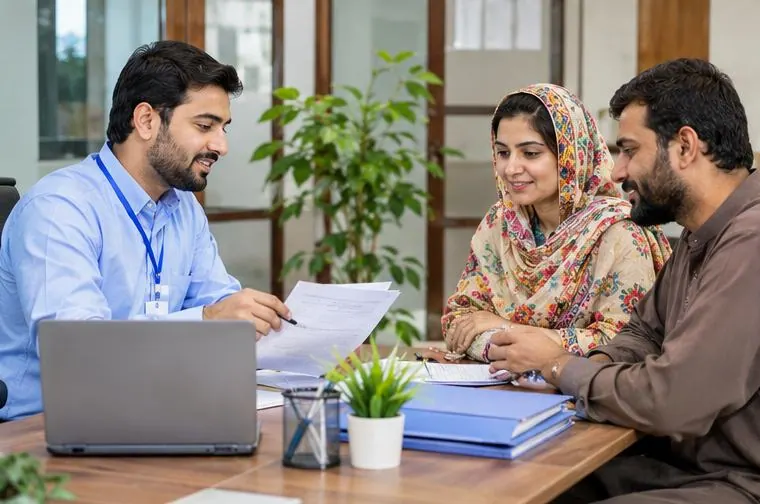
For a realistic SMEDA PMYP Youth Entrepreneurship Scheme 2026 financial decision, A new partnership announcement is attractive bait for scammers offering guaranteed approvals, paid “recommendation letters” or fake online assessment forms. The official arrangement does not mean SMEDA can overrule bank credit assessment. Contact the named public organisations through their own websites, and check which lender is handling the application. Do not surrender business logins, bank OTPs or sensitive identity documents to a promoter. Legitimate help should explain the process, what documents are needed and what the official charges are, without promising a particular loan outcome.
What to check before acting
- Do not pay an agent for a guaranteed PMYP approval or loan token.
- Use SMEDA and PMYP websites to find current support resources.
- Check the lender independently before handing over financial statements.
- Retain quotations, agreements and correspondence related to paid private advisers.
- Report impersonation accounts and suspicious links to the relevant organisation.
Three practical SMEDA PMYP Youth Entrepreneurship Scheme 2026 examples to compare
In a practical SMEDA PMYP Youth Entrepreneurship Scheme 2026 situation, the following examples are illustrations rather than approval decisions. They help show what good applicants check before spending money or handing over documents.
Example 1: A Faisalabad garment unit
For readers comparing SMEDA PMYP Youth Entrepreneurship Scheme 2026 scenarios, A young entrepreneur wants to buy sewing machines. She uses an SMEDA study only as a structure, gets actual machine quotations, checks fabric margins and tests the monthly repayments against orders from local buyers.
- Update old study prices.
- Verify demand and realistic gross margin.
- Borrow only for affordable growth.
Example 2: A Peshawar online service company
To apply SMEDA PMYP Youth Entrepreneurship Scheme 2026 guidance in real life, two graduates plan a small design and development business. Their early cost may be laptops and internet rather than a factory building. They should model customer acquisition and collections before choosing a loan size.
- Map repeat clients and revenue.
- Keep software and internet costs realistic.
- Separate partners’ roles and obligations.
Example 3: A rural dairy entrepreneur
When weighing SMEDA PMYP Youth Entrepreneurship Scheme 2026 example, A household plans to expand a small dairy operation. Training could help assess feed, veterinary care, chilling and sale channels. A loan proposal should account for seasonal milk production and disease risk.
- Estimate herd health and feed costs.
- Check buyer and cold-chain access.
- Test weak-month instalment cover.
Common mistakes that cost time or money
When weighing the costs connected with SMEDA PMYP Youth Entrepreneurship Scheme 2026, training or institutional logos can create unrealistic expectations when promoted without context.
- Presenting the September 2026 MoU as a guaranteed new November grant.
- Confusing free information with an automatic loan approval.
- Copying old feasibility prices without local verification.
- Forecasting sales without a customer acquisition plan.
- Ignoring working capital and late customer payments.
- Choosing a loan size based on maximum eligibility rather than repayment capacity.
- Paying unknown agents for recommendation letters.
- Sharing full CNIC or bank statements through unverified forms.
- Treating a course certificate as proof of commercial success.
- Failing to record the reasons a bank or mentor rejected an assumption.
In a practical SMEDA PMYP Youth Entrepreneurship Scheme 2026 cost comparison, A good business plan changes as the entrepreneur learns from customers, suppliers and formal advisers.
Official sources and more guides on SchemeInfo
Check the original publication before acting. SchemeInfo summarises information independently and does not take applications, charge processing fees or guarantee approval.
Official government and programme sources
- Ministry of Industries and Production MoU announcement
- SMEDA official website
- Prime Minister Youth Programme official website
Related SchemeInfo reading
The following cross-links use proposed WordPress slugs. Confirm them against published permalinks before going live.
Frequently asked questions
The answers below distinguish published programme rules from practical guidance. If an application date or amount changes, the official source takes priority.
Did SMEDA and PMYP launch a new cash scheme in November 2026?
The verified partnership MoU was signed on 10 September 2026. It supports outreach, training and business resources rather than guaranteeing a new cash grant.
Is SMEDA itself offering a guaranteed PMYP loan?
For a practical understanding of SMEDA PMYP Youth Entrepreneurship Scheme 2026, no. The partnership supports preparation and access to information; participating banks make financing decisions under the applicable youth-loan framework.
What is a pre-feasibility study?
It is a model of business assumptions and costs. Update it with real local prices, demand evidence and personal capacity before using it for a decision.
Can someone with a home business use training resources?
The partnership intends broad outreach including women and underserved entrepreneurs. Check which SMEDA or PMYP materials and helpdesks fit your business.
Do I need a registered company to read the resources?
For readers evaluating SMEDA PMYP Youth Entrepreneurship Scheme 2026, many information resources can help an aspiring entrepreneur; formal banking eligibility and registration requirements are separate questions.
What information should my business plan include?
Describe customers, pricing, competitors, investment cost, working capital, expected cash receipts, expenses, risks and a realistic repayment plan.
Where can I find official SMEDA material?
Start at the official SMEDA website and use the Ministry’s announcement for the collaboration details. Beware of cloned portals.
What is the Digital Youth Hub role?
When reviewing SMEDA PMYP Youth Entrepreneurship Scheme 2026, the government agreement envisages the PMYP Digital Youth Hub sharing SMEDA tools, training and other guidance resources.
Is training itself a loan approval?
No. Training can strengthen an application but does not replace identity, eligibility, cash flow and lender credit assessment.
Should I pay a private consultant to guarantee approval?
Avoid consultants who guarantee government-finance approval. Verify any service and fee independently, and keep sensitive identity records secure.
Editorial disclosure: SchemeInfo is an independent information website, not the government, lender, programme administrator or payment agent. Dates, eligibility and availability can change. Never send a CNIC image, OTP or banking PIN to an unverified contact. Photo images are credited archival photographs and do not document programme-specific 2026 events.