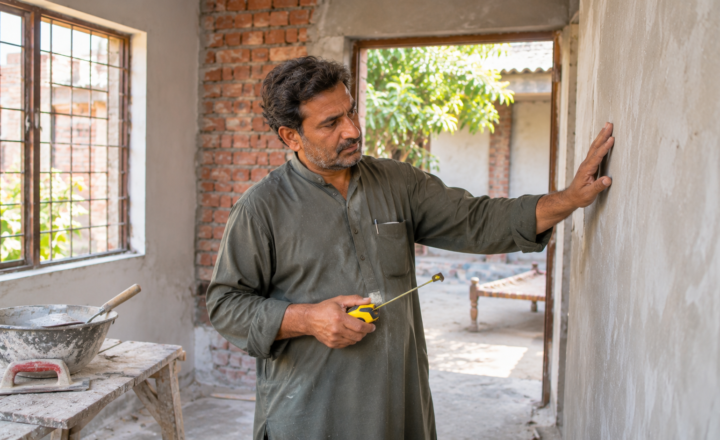
Before applying for Apni Chhat Apna Ghar, check the right housing model, plot-size and household requirements. This guide helps you prepare land records, understand programme stages and avoid common application mistakes.
Table of Contents — jump to a section
- Understanding the programme and its purpose
- Programme overview and execution models
- Eligibility published by the Punjab Government
- What applicants should prepare
- How to use the government portal
- Understanding loan versus housing assistance
- Official source and application guidance
- Verified facts at a glance (November 2026)
- What the updated rules mean in practice
- How Apni Chhat Apna Ghar works in practice
- Eligibility for Apni Chhat Apna Ghar: who should check first
- Limits, fees and the practical budget
- Documents for Apni Chhat Apna Ghar
- How to use Apni Chhat Apna Ghar through official channels
- Common application situations and how to respond
- Identify which Apni Chhat Apna Ghar route fits
- Budget the construction in stages
- Avoid housing-scheme application traps
- A home-building readiness exercise
- A practical pre-application checklist
- Three applicant situations: what to do next
- Explore related Scheme Info guides
- Frequently asked questions
- Official sources and editorial disclosure
Understanding the programme and its purpose
Punjab has published a housing programme and an official registration portal. Applicants should focus first on the conditions of the correct execution model, especially the distinction between owning qualifying land and seeking other types of housing assistance. Before using Apni Chhat Apna Ghar, confirm the newest official update.
Programme overview and execution models
Apni Chhat Apna Ghar is a Punjab housing initiative designed to improve access to affordable homes. The province describes several delivery models, so a single description of a loan amount or repayment schedule does not necessarily cover every participant.
This distinction matters: a housing construction model, an allocation model and a financing model can use different eligibility checks and administrative procedures. Consult the official portal for the particular route you are considering.
Eligibility published by the Punjab Government
- The applicant should be the head of the family as reflected in NADRA records.
- Punjab permanent residence and a qualifying CNIC are required.
- For the specified land-based construction path, the provincial page refers to ownership of land measuring up to five marla in urban areas or ten marla in rural areas.
- The applicant should not be a bank loan defaulter.
- The official eligibility criteria also mention NSER registration and a PMT score of 60 or less.
- The government lists criminal-record restrictions for certain convictions.
Treat these requirements as the published eligibility criteria for the relevant model, not as proof of final approval. The implementing authority decides eligibility after checks.
What applicants should prepare
Landownership and family information are central to the Apni Chhat Apna Ghar. Before registering, inspect your own ownership records, verify CNIC and contact details and make sure you understand the size and location requirements. Inaccurate records can delay verification and should be corrected through the relevant issuing authority, rather than altered in an application.
- CNIC and accurate household information.
- Property or landownership documents where applicable.
- Contact number accessible to the applicant.
- Any NSER or income-related information requested on the official portal.
How to use the government portal
- Visit the official ACAG website linked below.
- Read the current About Program and Eligibility Criteria information.
- If registration is available, use the official Register option.
- Follow the portal instructions and retain your registration information.
- Monitor notices on the government site for model-specific updates and selection information.
Because housing assistance is valuable and public demand may be high, be cautious of anyone promising allotment or approval in exchange for a payment.
Understanding loan versus housing assistance
Not every government housing benefit is a conventional bank mortgage. Financial assistance, allocation and construction programmes differ in repayment requirements and ownership conditions. The official Punjab programme documentation should be the definitive reference for any specific model, interest or instalment information. Avoid estimating a monthly instalment when your individual programme terms are not yet known.
Official source and application guidance
Apni Chhat Apna Ghar — official portal — official information ↗
For this particular question, Apni Chhat Apna Ghar should be judged against the official policy rather than a generic financing advertisement.
Verified facts at a glance (November 2026)
These are published official rules, programme targets or procedural details. They are not a personal eligibility determination, a live-registration claim or an approval promise.
| Question | Official detail or important distinction |
|---|---|
| Managing agency | Punjab Housing & Town Planning Agency under HUD&PHED. |
| Programme ambition | 100,000 affordable houses/apartments across Punjab through three implementation models, according to the published programme overview. |
| Urban land condition | Sole ownership and possession of a plot measuring 5 marla or less for the plot-based construction route. |
| Rural land condition | Sole ownership and possession of a plot up to 10 marla for the plot-based construction route. |
| Household screening | The Punjab portal cites National Socio-Economic Registry registration and PMT score of 60 or less. |
| Other conditions | Punjab resident; head of a nucleus family as per NADRA; no disqualifying criminal history or bank loan default. |
| Registration | Use acag.punjab.gov.pk and keep your own application reference; selection is not automatic. |
What the updated rules mean in practice
Choose the correct housing model before uploading documents
Punjab describes Apni Chhat Apna Ghar as a programme with three implementation models. A person building on their own modest plot and a household seeking access to a completed housing unit are not necessarily assessed through an identical process. Start by reading the most recent model guidance and confirming whether your case involves land ownership, construction assistance or a separate allocation pathway. Do not describe every benefit as a free house or every enrolment as a loan.
Plot size is only one part of the eligibility test
The public scheme page specifies ownership and possession of no more than 5 marla in urban areas and up to 10 marla in rural areas for the stated plot-based eligibility. It also references the applicant’s nucleus-family status, Punjab residence, NSER record, a PMT score of 60 or below, credit standing and relevant legal exclusions. An eligible-size plot alone is not enough; a person should confirm that all of these other conditions match the route being used.
Make the construction budget realistic
Before approaching contractors, get separate estimates for foundations, walls, roofing, water and electrical connections, labour and basic finishing. A rough building quote often leaves out utility connections, boundary walls, sanitation or site preparation. Keep a 10–15% contingency as a personal planning assumption, not as an official scheme requirement. Ask whether payments are released in stages and which evidence must be shown before each stage.
Privacy reminder: Never upload land documents or CNIC images to a copied login page sent over social media. Type the official acag.punjab.gov.pk address directly and keep your application reference private.
How Apni Chhat Apna Ghar works in practice
For a household, the practical question is not only whether Apni Chhat Apna Ghar exists. It is whether the published programme addresses the actual need involving property, who reviews the application, and how the applicant will receive a formal response. The institutional role is important because an intermediary website cannot change an outcome.
The Punjab portal identifies Punjab permanent residency and head-of-family status under NADRA records. This affects how somebody should prepare and whom they should ask for a decision. If the applicant cannot establish this condition, the sensible step is to contact Government of Punjab before investing in paperwork, travel or third-party services.
Eligible applicants should own and possess a residential parcel of no more than five marla in an urban area or ten marla in a rural area. Do not extend that sentence beyond what it says. Published policy language can describe a limit, a coverage rule or an eligibility test rather than a promise that every applicant receives the same service. Ask for a current written explanation where the original webpage is ambiguous.
Treat the application as one stage of a process. Initial registration, identity confirmation, document review, property verification and a final written decision may be separate. Saving dates and official reference numbers makes the process easier to follow without relying on messages from unknown agents.
An applicant researching Apni Chhat Apna Ghar should preserve the official reference alongside any supporting record.
Eligibility for Apni Chhat Apna Ghar: who should check first
Eligibility begins with the official definitions, not with a social-media headline. For Apni Chhat Apna Ghar, review the authority, geography, relevant records and product category. The Punjab criteria include an NSER household PMT score of 60 or less. This particular detail can change which applicant profile or situation the scheme is intended to serve.
If the applicant is unsure whether they fall within the published scope, first contact lender or housing authority. Ask which evidence is acceptable and whether the presently announced phase covers their situation. This is especially helpful for people with joint ownership, informal income, family businesses, inherited land or older identity information.
- Punjab’s Apni Chhat Apna Ghar programme targets low-income households and affordable home construction.
- The Punjab criteria include an NSER household PMT score of 60 or less.
- A clean repayment history and absence of relevant disqualifying criminal record are listed.
- The urban land threshold is five marla and rural threshold ten marla under Punjab’s published rules.
The next step with Apni Chhat Apna Ghar is to confirm the specific notice or phase that applies to the reader’s situation.
Limits, fees and the practical budget
For Apni Chhat Apna Ghar, separate published headline benefits from costs borne by the user. A clean repayment history and absence of relevant disqualifying criminal record are listed. The amount or concession must be read together with its intended purpose, permitted spending, payment route and any associated documents. An applicant should not interpret an illustrative maximum as an individual entitlement.
The Apni Chhat Apna Ghar has multiple execution models and the implementing agency is the Punjab Housing and Town Planning Agency. Where exact charges, fees or interest terms are not in the official information cited here, no assumed amount is supplied in this guide. The right number is the amount stated by the responsible office or lender for the specific product and date.
An NSER PMT score of 60 or below is a published eligibility component. In practice, a short written budget can help: list the fee, security or contribution, one-time registration costs, any recurring payment and a small emergency margin. If this is a service or scholarship rather than a loan, the same principle applies to travel, document preparation and other legitimate incidental expenses.
Under Apni Chhat Apna Ghar, the authority’s written terms should take priority over third-party assumptions.

Documents for Apni Chhat Apna Ghar
The records most relevant to this application are ownership and income records. Start with your valid identity details and the evidence that connects you to the Apni Chhat Apna Ghar: for example, verified enrollment for a scholarship, source transactions for a complaint, bankable business activity for an SME loan or land and stock records for farm support. These are examples of document types, not a fabricated fixed list.
If a programme publishes an official checklist, use that checklist over generic online advice. Registration information should be checked on the official ACAG portal, not through agents promising guaranteed allotment. The same identifying data should appear consistently across all related records; mismatched spellings, outdated mobile numbers and unclear ownership evidence can cause delay.
Separate identity and income papers from land title, mortgage and property verification records; their purposes are different. Keep clean copies in a folder with clear filenames, retain original documents where required and never hand over passwords, one-time verification codes or identity scans to an unverified person.
Practical document rule: The official programme or lender sets the definitive checklist. Never upload sensitive documents to an unofficial imitation portal.When comparing Apni Chhat Apna Ghar, it is useful to separate the published framework from each institution’s final decision.
How to use Apni Chhat Apna Ghar through official channels
Begin with Government of Punjab and the official source linked below, rather than searching for a paid agent. Read the current notice, determine whether there is a live application period or complaint channel, and check that the website address is genuine. A legitimate official link is more useful than a viral advertisement promising instant results.
Then identify the correct application. Enter accurate information and review each field before submitting. Save the receipt, acknowledgment, reference number, or confirmation email according to the portal’s instructions. An error in a CNIC or telephone number can make later follow-up much harder.
A nominally subsidized housing product may still involve taxes, legal registration, valuation, insurance and ownership verification. A message that says “submitted” is not necessarily a positive decision. Wait for the institution’s next formal step and only provide additional records using a verified channel. Fees, if any, should be paid only through a mechanism officially displayed by the provider.
The requirement to own suitable land distinguishes this route from buying an already completed home. If a form is temporarily unavailable, do not improvise an unofficial alternative. Check the Apni Chhat Apna Ghar notice and service contact details, then return when the authority confirms that its window is open.
- Verify the announcement — Read the live official page for this particular scheme or service.
- Check your eligibility — Compare the published scope with your own records and intended purpose.
- Organize your information — Prepare only the documents requested by the real authority.
- Submit safely — Use the approved application or complaint route and review before sending.
- Keep the evidence — Save an acknowledgement and any relevant receipt or reference number.
- Follow up — Respond to official enquiries and avoid people claiming to guarantee results.
A careful review of Apni Chhat Apna Ghar means checking the cited facts before giving another person confidential information.
Common application situations and how to respond
①Situation 1A family owns four marla in an urban area but needs funds to build a small home.
②Situation 2A rural household has ten marla and asks which ownership record proves the land is theirs.
③Situation 3An applicant is uncertain about their NSER/PMT record and wants to validate it before registration.
④Situation 4A renter with no land needs to understand why the land-owner construction route may not fit their circumstances.
Situation 1: A family owns four marla in an urban area but needs funds to build a small home. The sensible action is to check the applicable published rule, gather the directly relevant records, and write down the question for Government of Punjab or the responsible institution. When comparing possible options, consider actual costs, eligibility, timing and obligations rather than relying on a best-case approval scenario.
Situation 2: A rural household has ten marla and asks which ownership record proves the land is theirs. The sensible action is to check the applicable published rule, gather the directly relevant records, and write down the question for Government of Punjab or the responsible institution. When comparing possible options, consider actual costs, eligibility, timing and obligations rather than relying on a best-case approval scenario.
Situation 3: An applicant is uncertain about their NSER/PMT record and wants to validate it before registration. The sensible action is to check the applicable published rule, gather the directly relevant records, and write down the question for Government of Punjab or the responsible institution. When comparing possible options, consider actual costs, eligibility, timing and obligations rather than relying on a best-case approval scenario.
Situation 4: A renter with no land needs to understand why the land-owner construction route may not fit their circumstances. The sensible action is to check the applicable published rule, gather the directly relevant records, and write down the question for Government of Punjab or the responsible institution. When comparing possible options, consider actual costs, eligibility, timing and obligations rather than relying on a best-case approval scenario.
Anyone using Apni Chhat Apna Ghar should confirm whether the official portal is currently taking submissions.
Identify which Apni Chhat Apna Ghar route fits
The Apni Chhat Apna Ghar overview describes several implementation models. A family that owns a small plot and seeks construction finance is not in the same position as someone seeking an allocated affordable home. Confirm the specific route before submitting documents.
Plot owners: check the legal and physical site
- Urban land: The published plot-based route requires sole ownership and possession of no more than five marla; verify the actual title record and measurement.
- Rural land: The stated ceiling is ten marla for the same plot-based route. A large ancestral holding is not automatically divided into eligible independent plots.
- Ownership matters more than possession alone. An informal family arrangement, verbal inheritance promise or utility bill may not establish sole legal title.
- Construction feasibility matters. Check access, site dimensions, local building permissions and whether staged construction funding can cover a safe, usable home.
Household and registry screening
- NADRA family details: The government criteria refer to the head of a nucleus family; ensure your household record is current.
- NSER and PMT: The published eligibility lists registration and a PMT score at or below 60. Ask how to correct inaccurate household data rather than inventing a new application.
- Punjab residence: A permanent address or CNIC alone may not settle every eligibility detail; use the official form’s specific requirements.
- Loan and criminal-history conditions: Disqualifying default or history can affect eligibility; disclose relevant information accurately.
Budget the construction in stages
Compare the proposed home with the available funding
- Prepare a simple bill of quantities. Separate foundations, masonry, roof, doors, basic services and finishing so priorities are visible.
- Check labour assumptions. Local wage rates and material transport can change substantially between districts.
- Reserve for hidden work. Foundations, water connection, drainage and electrical safety are not optional extras that can always be deferred.
- Avoid starting an unaffordable extension. A realistic core home finished safely is usually better than an unfinished larger design.
Understand release and proof of progress
- Ask whether the selected financing route uses instalments. Do not assume the entire advertised benefit is available as cash on the first day.
- Preserve site photos and invoices. Dated progress evidence may help answer a construction verification request.
- Keep ownership documents secure. Submit copies as instructed and obtain acknowledgement if originals are examined.
- Plan monthly household cash flow. Even interest-free construction finance may require scheduled repayments and maintenance spending.
Avoid housing-scheme application traps
Verify the right portal and status
- Use acag.punjab.gov.pk for the official registration journey. Be cautious with lookalike sites requesting CNIC photos and up-front ‘file approval’ charges.
- Save the application reference and registered phone. These are more useful for follow-up than an unverified screenshot shared in a group.
- Interpret status labels cautiously. Submission, document verification, shortlist and sanctioned support are different stages.
Respond properly to a query
- Correct land-record inconsistencies at source. Altering a screenshot does not fix title or ownership defects.
- Provide only requested documents. Unknown agents have no reason to collect your family’s sensitive papers ‘for faster processing’.
- Ask for written terms before signing. Confirm construction milestones, approved amount, disbursement process and any repayment obligation.
A home-building readiness exercise
Two families may both own a small plot yet have very different construction needs. The better application identifies the minimum safe, useful home and the paperwork that can support it.
Test the land first
- Match the title to the applicant. Sole ownership and possession are important for the plot-based scheme route.
- Measure the parcel correctly. Urban and rural maxima are different; do not combine or divide plots informally.
- Check road and utility access. Water, drainage and electricity can change the true cost of the project.
- Ask about required permissions. A permitted build is safer than beginning work based on assumed approval.
Define the essential construction stages
- Put structure ahead of decoration. Foundations, walls, roof and safe sanitation should receive priority.
- Get detailed local quotations. A lump-sum promise from one contractor can conceal expensive omissions.
- Budget labour and materials separately. Price changes can affect one category far more than another.
- Set realistic milestones. If disbursement is staged, work should be organised around verified releases rather than hopeful dates.
Before making commitments
- Confirm programme screening. NSER/PMT and family records must be correct, not just the applicant’s CNIC.
- Save the actual application acknowledgement. A WhatsApp screenshot from an agent is not a reliable status record.
- Check the financing agreement. Interest-free does not mean obligation-free, and the amount approved might be less than requested.
- Keep a contingency plan. A family should know how it will secure an unfinished site if building is delayed.
Final checks before submitting or spending money
- Build a short written budget for the specific scholarship, home, farm, business or employment costs discussed in this guide; do not rely on an advertised maximum.
Three applicant situations: what to do next
These are realistic planning examples, not reports of verified applicants or promises of acceptance.
Urban family that owns a small plot
Check actual measurement and sole-ownership documents against the cited five-marla urban condition. Also review PMT, household and repayment history requirements.
Rural applicant with a ten-marla plot
Confirm that the specific route accepts the rural land record and obtain estimates for basic utilities and site works that are easy to overlook.
Tenant without any land
Do not assume that the plot-based construction eligibility applies. Ask the Apni Chhat Apna Ghar about other implementation models rather than supplying false ownership papers.
Official sources and editorial disclosure
Research checked against the public government, HEC, banking or PSDF material linked here on 12 November 2026. Conditions, allocations, registration windows and pricing can change. Confirm the latest publication with the actual issuing authority before applying. Scheme Info is an independent information publisher; it is not a lender, scholarship administrator, application representative or government department.
Frequently asked questions
Is Apni Chhat Apna Ghar a free house for everyone?
No. The programme has several models and screening criteria. The benefit depends on the specific model and approval.
What is the urban plot limit?
For the cited plot-based route, official eligibility says land of 5 marla or less in urban Punjab.
What is the rural plot limit?
For the cited plot-based route, official eligibility allows land up to 10 marla in rural areas.
Is a Punjab CNIC enough?
No. Property, family, registry, PMT, loan-default and other eligibility checks also apply.
What PMT score is listed?
The Punjab programme page refers to a PMT score of 60 or less in the NSER.
Where do I register?
Use the official acag.punjab.gov.pk portal and keep your account and application references secure.
Is registration the same as approval?
No. Submission starts a review and verification process.
Can someone with an existing housing loan apply?
The programme excludes bank defaulters and uses other model-specific rules; check the current requirements if you already have borrowing.
What if there is a plot ownership dispute?
Resolve title or possession problems through the appropriate official records before relying on the construction route.
Can the whole family submit separate applications?
The eligibility rules include nucleus-family status and registration checks; ask the programme about duplicate-family submissions.