The federal launch on 25 October 2026 announced 500,000 Chromebooks/MiFi devices for high achievers; an open mass registration portal was not verified.
Pakistan’s Chromebook and MiFi announcement is significant for students who study with limited digital resources. But an official launch does not necessarily create a public “apply now” website. This guide separates the 25 October 2026 launch facts from unanswered registration questions and helps families, schools and high-achieving students prepare for any properly announced next phase. Readers searching for “PM Youth Chromebook Scheme 2026” will find the official rules and practical next steps brought together here.
Use official government notices for the relevant year. Applications, eligibility checks and final selection are separate actions. Never share an OTP, bank PIN or CNIC image with an unknown agent.
Required documents: preparation, not an invented application list
Because a public registration workflow has not been verified, no universal upload checklist can responsibly be promised. Students can nevertheless keep normal academic records ready: identity or Form-B, school enrolment, recent result certificates and contact details. These may assist schools if a nomination process is later announced. Never upload private documents to an unverified Chromebook link.
- Keep NADRA Form-B or CNIC details accurate, depending on student age.
- Preserve school identification, enrolment and recent verified result records.
- Ask teachers about genuine certificates of academic merit when relevant.
- Store document scans privately, without distributing full Ids in public groups.
In practice, the useful next step is to write down the date, the authority and the evidence you checked. That small record helps when a relative, office or school gives different advice later. It also prevents a family from treating a rumour as an official change. A useful way to assess PM Youth Chromebook Scheme 2026 is to focus on the evidence behind this step rather than a screenshot or promise.
A practical case for readers exploring “PM Youth Chromebook Scheme 2026” shows what may happen here: A student should prepare records in a folder while waiting for an official school notice; this is useful preparation, not evidence that the government requires a particular online form.
What was announced on 25 October 2026?
At the Islamabad launch ceremony, the prime minister introduced the distribution initiative for Chromebooks and MiFi devices, according to Radio Pakistan. The reported goal was five hundred thousand Chromebooks over two years, with connectivity support intended to extend learning access. Some devices were distributed ceremonially at the launch. That does not establish a general registration period open to the public the same day.
- Note the announcement date and official broadcaster source.
- Separate ceremonial device presentations from a nationwide completed distribution.
- Treat the 500,000 figure as a programme goal rather than current delivery count.
- Watch for detailed selection, allocation and implementation notices.
It is worth separating three decisions: whether someone may qualify, whether an application can be submitted in the current period, and whether officials have actually selected that person. These are different events, and each may require different evidence. In the context of PM Youth Chromebook Scheme 2026, this point matters because the applicant must distinguish preparation from official approval.
Consider this decision in relation to “PM Youth Chromebook Scheme 2026”: A family seeing launch photos online should not interpret them as proof that every school has already received its allocation. Implementation takes separate administrative steps.

The difference between chromebook and earlier laptop schemes
Pakistan has multiple education-device initiatives with similar names. A Chromebook usually runs ChromeOS and emphasises cloud-based learning, while earlier laptop schemes may distribute different hardware and use their own merit and institutional criteria. A page about provincial laptop distribution cannot safely be used as instructions for the federal Chromebook initiative.
- Identify the programme sponsor before following an application link.
- Compare official age, enrolment and institution rules separately for each scheme.
- Do not reuse an old provincial laptop portal as a Chromebook application page.
- Assess the actual device's storage and offline capabilities when provided.
If a form or portal behaves unexpectedly, record the exact message and return to the responsible source rather than trying random links. Corrections should be made with the institution that issued the original record, not with an unverified intermediary. Readers checking PM Youth Chromebook Scheme 2026 should confirm the responsible authority and the current programme year before acting.
The phrase “PM Youth Chromebook scheme registration” often leads readers to this question. Use the official requirements described here rather than a copied social-media form.
The next example makes the “PM Youth Chromebook Scheme 2026” guidance more concrete: A university student who received a laptop under an earlier scheme is not automatically registered for this new school-and-madrasa Chromebook initiative.
Is PM youth chromebook scheme registration open?
The most important unanswered search question is whether individuals can register online. The launch report does not establish a public registration portal, and no authenticated self-application form was confirmed in this review. A school nomination or other selection mechanism may be announced later, but that should not be described as fact beforehand. Wait for an official link on a responsible government website.
- Start with the education ministry or PM Youth Programme website.
- Verify any portal announcement against a dated government release.
- Refuse private links collecting CNIC and OTP codes as an “early registration” fee.
- Ask school administration whether it has received authorised implementation instructions.
Good recordkeeping makes future checks easier. Note the year of any notice, protect identity details, and keep only the copies needed for legitimate follow-up. No applicant should have to publish family documents in a comment thread to receive guidance. This is an important PM Youth Chromebook Scheme 2026 safeguard: make the next decision from verified records, not from an unofficial shortcut.
For someone researching “PM Youth Chromebook Scheme 2026”, the real-world question may look like this: A form promising immediate Chromebook delivery in exchange for a wallet transfer is not evidence of a government phase. Do not submit personal details there.
Why merit and academic records matter
The announcement highlighted students’ academic achievements and equal opportunity across public schools and religious seminaries. A fair merit approach requires clear criteria, record verification and a way to address mistakes. Until those details are issued, parents should focus on maintaining accurate academic records and asking institutions about official notifications rather than guessing who will qualify.
- Preserve term results, board certificates and competition awards accurately.
- Ask the school how it verifies class rankings and student identity.
- Avoid paying anyone for fake marksheets or nomination letters.
- Check the relevance of school level, institution type and district only when published.
For a household with limited time and transport money, preparation reduces unnecessary journeys. Confirm the responsible office or institution, collect genuine documents, and distinguish what can be done now from what requires a later government announcement. For families researching PM Youth Chromebook Scheme 2026, a careful check here can prevent a wasted visit or an incorrect form.
Here is a situation that puts “PM Youth Chromebook Scheme 2026” advice into perspective: A hardworking student in a small public school should have a transparent route when official instructions arrive, not depend on a relative who knows an unofficial middleman.
Public schools, madrassas and institutional coordination
The launch announcement specifically included talented students from public schools and madrassas. This raises practical coordination questions: which institution verifies results, how contact lists are maintained, and how devices reach selected students. Those questions should be answered by the implementing authority. Teachers and administrators can prepare correct records without asserting a nomination process that has not been publicly detailed.
- Confirm that the school's legal name and enrolment records are up to date.
- Keep guardian contact numbers current for students below adult age.
- Assign a responsible office contact for any future official instructions.
- Do not circulate unapproved eligibility lists containing children's personal data.
A useful comparison asks what the programme actually provides and what it does not. Fees, transport, maintenance, timing or other indirect costs may remain the family’s responsibility even when the core benefit is subsidised or free. The practical PM Youth Chromebook Scheme 2026 question is whether the stated condition applies to this applicant now.
A search for “PM Chromebook scheme eligibility” is best answered by checking the current authority and the exact records it requires.
When evaluating “PM Youth Chromebook Scheme 2026”, it helps to consider a possible household situation: A school should not demand an unofficial “Chromebook processing charge” merely because the launch has been announced. Written government instructions should come first.

Mifi connectivity: what students need to understand
Radio Pakistan's report also described high-speed internet connections alongside devices. An MiFi unit can share a mobile data connection, but the practical value depends on network coverage, signal quality, data allowances and renewal arrangements. The launch did not provide all subscriber-level terms, so readers should not assume unlimited permanent internet without a clear official plan.
- Check whether mobile data coverage exists at the student's home and school.
- Ask about data caps, activation and any renewal costs once terms are issued.
- Learn how to secure the device's wireless connection with a strong password.
- Prepare for periods without connectivity by keeping offline learning materials.
The safest approach is evidence-first: a government notice for an opening, an official acknowledgement for a submission, an authorised message for selection, and a verified institution for delivery. Those stages should not be collapsed into a single promise. With PM Youth Chromebook Scheme 2026, clarity about documents and timing is usually more valuable than an early unverified claim.
The following example explains one practical “PM Youth Chromebook Scheme 2026” concern: A student living in a remote village may benefit from the device but still face weak network coverage. Offline lesson planning can prevent the learning effort from stopping when the signal does.
What a chromebook can and cannot do
Chromebooks can support online classes, writing assignments, browser-based research and cloud collaboration. Some tasks may work offline after files or apps are prepared, but software compatibility differs from a traditional Windows laptop. Students should check the actual model before assuming specialised desktop applications will run without limitations. The right expectation is practical education, not universal compatibility.
- Use browser tools for research, documents, email and class assignments.
- Save required lessons for offline access where supported.
- Check whether school software is compatible with ChromeOS.
- Practise safe downloads and avoid unverified browser extensions.
Whenever a status looks unclear, ask a precise question. Which database year is being searched? Which authority can correct an error? What acknowledgement proves a form was received? Precise questions usually lead to more useful answers. For a reader planning PM Youth Chromebook Scheme 2026, the responsible next step is the one supported by current official instructions.
A reader investigating “PM Youth Chromebook Scheme 2026” might recognise this difficulty: A student needing a specialised engineering application should check compatibility before relying on a Chromebook as their only computing device.
Protecting students' data on shared devices
A student device may hold results, photos, assignments and family contact details. Teachers and guardians should discuss passwords, screen locks and safe account recovery. Where a programme device is shared within a household, individual profiles and access controls help protect each user's files. Children should never share OTPs or upload CNIC pictures to random help groups.
- Set a unique account password and activate available recovery options.
- Keep the device updated and use school-approved software.
- Use separate user profiles for different family members where supported.
- Teach students how to recognise phishing emails and suspicious scholarship links.
Readers should use examples as illustrations, not universal entitlements. Figures and scenarios can help a family plan, but actual programme rules, current quotas and the applicant’s verified circumstances always control the final outcome. The PM Youth Chromebook Scheme 2026 process should be understood as a series of checks, not a guarantee based on one message.
One realistic planning scenario for “PM Youth Chromebook Scheme 2026” is the following: A young learner who clicks an imitation “device verification” email can expose family information. Digital literacy should accompany hardware distribution.
Caring for the device, battery and charger
A Chromebook can last longer when used carefully. Avoid overheating, liquid spills and crushing pressure in school bags. Use the charger supplied for the actual model and follow electrical safety instructions; cheap substitutes can damage devices. Once distribution arrangements are published, students should understand the warranty, repair contact and whether replacements are covered.
- Store the Chromebook in a padded sleeve and avoid bending the screen.
- Use the correct charger and a safe electrical connection.
- Back up school assignments before any reset or servicing.
- Keep serial number and issue receipt when the official programme provides them.
The goal of this section is to support a decision, not to generate another form submission. If the eligibility rule or official intake is uncertain, it may be better to prepare the file and monitor a reliable source than to share personal information too early. People searching for PM Youth Chromebook Scheme 2026 need to know which parts are confirmed and which require a new notice.
People looking up “PM Youth Chromebook distribution 2026” should distinguish an informational page from an authorised application or status service.
To make the “PM Youth Chromebook Scheme 2026” decision easier to understand, imagine this situation: A pupil carrying the device on a crowded bus needs a secure bag and charging plan. Practical care matters as much as initial receipt of the device.
Practical action plan in the right order
Before you submit anything, decide whether you need to register, check a status, compare a financing offer or simply prepare for a future opening. The correct route matters more than a fast form.
- Read the federal launch announcement before believing a registration advertisement.
- Ask your school or madrassa about formal nomination, merit and institutional verification.
- Keep enrolment and academic achievement records accessible.
- Watch PMYP and education-ministry communications for a verified distribution schedule.
- Ignore payment requests for Chromebook allocation or delivery.
Record-keeping tip: Save dated screenshots, any acknowledgement number and the official website you used. Do not publish unmasked identity details on public social channels.
Common mistakes that cost applicants time
- Do not conflate Chromebook distribution with HEC university laptop schemes.
- Avoid guessing that an announced target is a confirmed delivery to every named student.
- Do not offer fake application links.
Why these matter: A genuine scheme can still be misunderstood if the district, academic year, intended beneficiary or financing product is different from the one described in a forwarded post.
Realistic reader scenario
A top-performing government school pupil should speak with their school administration and keep recent exam results ready. Clicking a newly circulated “500,000 Chromebook form” is not equivalent to being nominated under a verified government process.
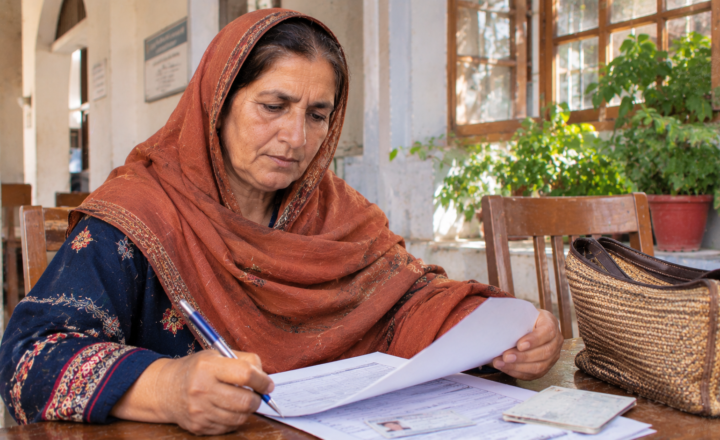
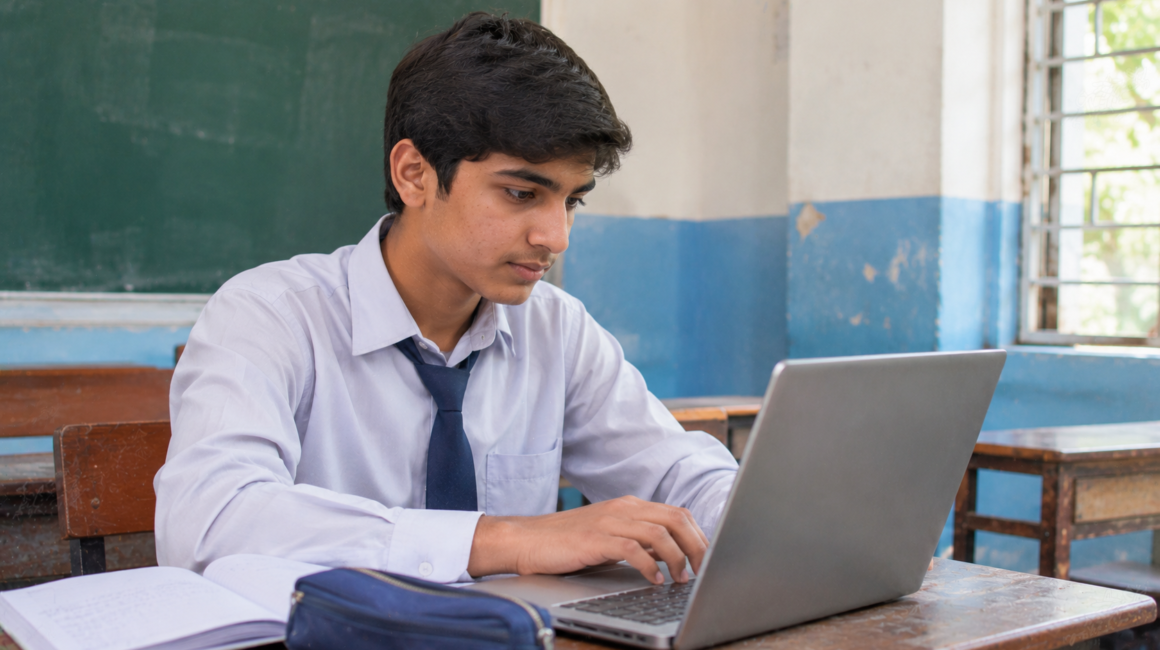
This is an illustrative decision scenario, not a claim that the person shown in a photograph, or any particular applicant, has been admitted or funded.
Related searches — answered in context
This is an application-intent search. Confirm whether the exact phase is open before uploading documents or relying on any link.
This variation concerns who qualifies. Check district, identity, age, education or income conditions in the official notice, rather than relying on an older screenshot.
This related search narrows a specific part of the guide. Verify the relevant official conditions and use the checklist on this page before taking action.
This phrase relates to the financial product or programme mechanism; distinguish pricing, tenor, qualifying category and delivery institution.
Digital learning plan for the first month
A device creates opportunity only if it becomes part of a useful study routine. Start with access to textbooks and school lessons, then practise typing, searching reputable sources and organising files. Short, regular learning sessions may be more beneficial than installing dozens of entertainment apps. Guardians can support progress by helping students set specific weekly goals.
- Week one: sign in securely, learn file management and check basic connectivity.
- Week two: organise school notes and practise writing assignments.
- Week three: create a research task with reliable citations and saved sources.
- Week four: review progress and set subjects needing focused practice.
When an announcement does not specify a closing date, do not manufacture one from a social-media countdown. Instead, record the latest dated source, review it with the relevant institution and organise the papers that are valid regardless of application timing. If a family is evaluating PM Youth Chromebook Scheme 2026, that distinction protects both its time and its personal information.
A student who uses the Chromebook for twenty minutes of revision daily may gain more sustained benefit than someone who uses it only for launch-day photographs.

Planning for offline study in low-connectivity areas
Not every district has reliable broadband or mobile signal. Some educational materials can be saved in advance for offline reading, while others require live internet. Students and teachers should identify those differences early and avoid making an entire study plan dependent on a signal they cannot control. Careful storage and file naming make offline study more manageable.
- Save permitted PDFs, notes and exercises before travelling home.
- Organise folders by class, subject and assessment date.
- Verify which apps allow offline editing and synchronise changes safely.
- Make a small offline task list for periods without connectivity.
Eligibility statements are sometimes summaries of complicated rules. A household can save time by reading every exception, checking which family member is legally applying, and asking the administering office about unclear combinations before making an expensive journey. Reliable PM Youth Chromebook Scheme 2026 guidance should lead back to a verifiable official source whenever a rule is unclear.
In a mountainous KP area with an unreliable signal, downloaded lessons and offline writing tasks can keep learning productive without requiring constant access.
Avoiding fake chromebook application websites
New government launches attract sites promising early registration, guaranteed selection or paid delivery. A convincing logo is not enough to establish authenticity. Check the exact domain and whether an official implementation notice links to it. Never send an OTP, account password or fee to a private contact. Save suspicious messages and seek verification from the responsible education authority.
- Look for dated announcements and a clear implementing department.
- Avoid registration pages hosted on unrelated commercial or shortened domains.
- Do not send biometric or banking information to an unknown promoter.
- Report impersonation and use official channels for corrections.
A digital confirmation proves only what the system says it proves. It might show receipt, database matching or an invitation, and none of these should be silently treated as final selection. Read the exact wording, then retain a screenshot for private records. A useful way to assess PM Youth Chromebook Scheme 2026 is to focus on the evidence behind this step rather than a screenshot or promise.
A viral image claiming “last date tomorrow” without a ministry notice should not pressure a student into exposing their family identity records.
Eligibility questions families should ask their school
At a glance: what is actually confirmed?
The federal launch on 25 October 2026 announced 500,000 Chromebooks/MiFi devices for high achievers; an open mass registration portal was not verified.
For this topic, an official announcement, a registration page and final approval are separate things. Use the table below to decide which action belongs to your situation today.
| Check | Verified position / reader action |
|---|---|
| Announcement date | 25 October 2026. |
| Target group | High achievers in public schools and madrassas. |
| Selection principle | Merit; not a first-come public link. |
| Digital access | MiFi/high-speed connectivity was part of the announcement. |
| Applicant caution | No independently confirmed public registration window. |
Parents want definitive answers about grade levels, merit marks, quotas and whether boys and girls are treated equally. The launch report provides a merit principle but not a complete operational manual. Schools should wait for an authenticated circular before announcing lists or fees. Families can ask precise questions that help identify what is known and what remains open.
- Has the school received a written notice from the implementing authority?
- What exact educational records would be used to establish merit?
- Is selection by school nomination, district allocation or a future official form?
- How will students appeal an identity or result error if a list is issued?
Applicants can protect themselves by verifying the contact details used in a form. A current phone number, a correct spelling and an accessible email account often matter when officials need to request a missing document or confirm a later decision. In the context of PM Youth Chromebook Scheme 2026, this point matters because the applicant must distinguish preparation from official approval.
For “500000 Chromebook scheme Pakistan”, the safest approach is to compare the live government instructions with the applicant’s real circumstances.
Asking the school these questions is reasonable. Demanding an exact delivery date from teachers before official instructions arrive is not.
Why a device alone does not guarantee better results
Hardware makes educational resources more accessible, but achievement still depends on teaching, electricity, internet access and student practice. The scheme’s lasting value should be judged by actual learning, not just distribution totals. Families should encourage balanced use, including handwritten practice and careful research, without expecting technology to replace teachers or school attendance.
- Set study goals tied to real subjects and assessments.
- Establish healthy screen breaks and reasonable device use hours.
- Compare learning progress through assignments rather than screen-time alone.
- Seek technical help when access problems interfere with study.
Where several programmes sound alike, compare the administering department, target group and benefit type. A transport grant, a training place and a health entitlement operate differently even when bloggers place them under the same general heading. Readers checking PM Youth Chromebook Scheme 2026 should confirm the responsible authority and the current programme year before acting.
A Chromebook used mostly for video entertainment will not automatically improve grades. Useful daily routines turn a device into a learning tool.
Tracking distribution and checking official updates
A launch ceremony is the beginning of implementation. Future updates could cover schools, districts, batches or selected students, but only official notices should establish those details. Use government sources, keep a record of the announcement date and avoid publishing children's personal information in public comment sections. If an institution receives a selection notice, follow its actual instructions.
- Monitor the federal education and PM Youth Programme official sites.
- Ask the school if it received a verified circular or distribution schedule.
- Verify any SMS or call with the institution before travelling.
- Keep any device receipt and record if the school distributes equipment.
A credible guide makes room for unanswered questions. If the latest programme rules omit a detail, the right response is to flag the gap and give readers a precise official contact path rather than pretend certainty for the sake of a stronger headline. This is an important PM Youth Chromebook Scheme 2026 safeguard: make the next decision from verified records, not from an unofficial shortcut.
A student who sees a list forwarded from another district should not assume the school is included. Check the issuing authority and notice number first.

A practical three-stage readiness plan
The best immediate steps are simple: verify the launch from Radio Pakistan, organise current academic records and keep an eye on official instructions. Once an authorised selection mechanism appears, follow that exact process and avoid side routes. After receiving a device, set up security and a learning routine. This sequence is more useful than an invented “apply today” tutorial.
- Now: verify published launch facts and keep school records accurate.
- When instructions arrive: follow official merit or nomination procedures.
- After allotment: secure the account, inspect the device and use it for education.
- Throughout: guard student identity information and reject fee-demanding shortcuts.
For family members helping an applicant, obtain consent before uploading identity records. Use a trusted device, remove unnecessary copies afterwards, and keep any reference number somewhere private so the applicant can continue the process independently. For families researching PM Youth Chromebook Scheme 2026, a careful check here can prevent a wasted visit or an incorrect form.
A guardian can prepare a folder of records and speak to teachers without spending money or claiming an unverified registration is live.
Final checks before believing a registration claim
An accurate guide must be comfortable saying what has not yet been published. The 500,000-device goal and October launch are documented; a universal self-registration website, precise last date or guaranteed list of recipients was not verified in this review. Readers should use official sources and read the scheme terms if and when detailed operational instructions emerge.
- Do not mistake launch news for a completed application framework.
- Check every claimed website against the responsible ministry or programme.
- Keep realistic expectations about selection and distribution timing.
- Focus on study readiness and online safety while official procedures develop.
Budget examples are useful for understanding decisions, not for forecasting an individual award. Record actual local prices and confirmed income separately from possible future assistance; then revise the plan once an authorised result becomes available. The practical PM Youth Chromebook Scheme 2026 question is whether the stated condition applies to this applicant now.
A reliable answer is sometimes “the registration route is not yet confirmed.” That protects students from scams and leaves room for genuine future updates.
Two practical perspectives worth keeping together
Students who lack a device may also lack stable internet, suitable charging or a quiet place to study. Distribution can improve access, but meaningful educational value comes from practical routines, trained teachers, local connectivity and safe account management.
A fair selection system should have documented merit rules and a reliable way to correct record mistakes. Until those operational details are published, families can keep academic records accurate and reject paid “early registration” links without missing any verified entitlement.
Official sources and how this guide was verified
The first source to trust is the authority administering the scheme. Information current at publication can change with new notices, so verify application windows, payment rules and selection instructions before sharing documents.
Independent information from SchemeInfo. We are not the official programme operator and cannot approve registrations, guarantee selection or collect documents. The discussion reflects reviewed sources on 13 November 2026 and should be checked again against current government announcements.
Continue reading on SchemeInfo
Related guides from the published-post inventory. These cover a different angle, so you can compare eligibility, cost or application routes without mixing programmes.
Official programme references
Use these primary sources for time-sensitive details. An older form or announcement does not by itself confirm a new application window.
Frequently asked questions
Was the PM Youth Chromebook Scheme launched in October 2026?
Yes. Radio Pakistan reported a formal launch on 25 October 2026, describing Chromebooks and MiFi devices for high-achieving students. This question also arises when readers look up PM Youth Chromebook Scheme 2026.
How many Chromebooks were announced?
The report described a target of 500,000 Chromebooks over two years, along with internet-access support. A target is not the same as the number already delivered. This question also arises when readers look up PM Youth Chromebook Scheme 2026.
Is PM Youth Chromebook registration open to everyone?
A universal public registration portal was not verified in the official launch report. Check education ministry and PM Youth Programme updates before entering your information anywhere. This question also arises when readers look up PM Youth Chromebook Scheme 2026.
Who is eligible for the Chromebook initiative?
The launch highlighted high-achieving students from public schools and madrassas on merit. Detailed grade cut-offs, quotas and nomination rules require a later official notice. This question also arises when readers look up PM Youth Chromebook Scheme 2026.
Can private-university students apply?
The launch report specifically discusses public schools and madrassas. Do not assume private-university eligibility without a formal instruction from the implementing authority. This question also arises when readers look up PM Youth Chromebook Scheme 2026.
Are Chromebooks the same as PM Youth laptops?
No. A Chromebook generally runs ChromeOS and may have different software capabilities. Earlier federal or provincial laptop initiatives have separate rules and portals.
Does the scheme include an internet connection?
The launch report mentioned MiFi and internet connectivity for students, but individual data package limits and activation terms should be confirmed when distribution details are announced.
How will students be selected?
Merit was highlighted at launch; the exact nomination, assessment and distribution process was not fully set out in the report. Wait for authorised school or government instructions.
Should students pay registration or delivery fees?
Do not pay unofficial agents or websites claiming early access. Any legitimate charges or requirements must be documented by the implementing government authority.
Where should I check new announcements?
Follow Radio Pakistan, the federal education ministry, PM Youth Programme and genuine school notices. These are more reliable than unverified social-media registration links.