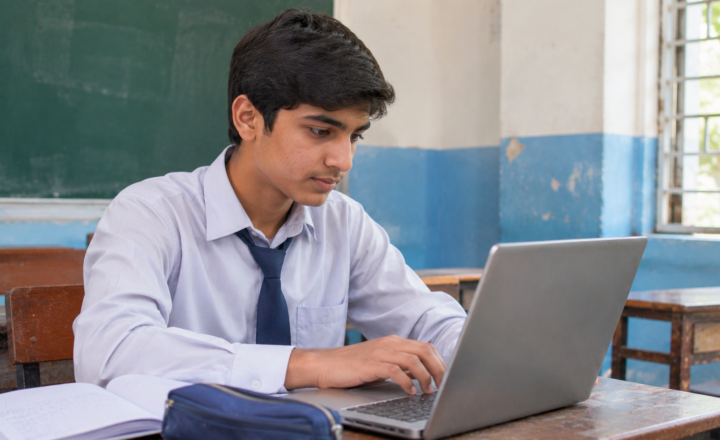
Students searching for the 2026 Punjab laptop scheme should separate published 2025 rules from any newly announced phase, then check domicile, academic thresholds and previous-laptop exclusions.
Table of Contents — jump straight to a section
- Eligibility Criteria
- Required Documents
- Verified programme details at a glance
- What the Punjab laptop programme offers
- Current 2026 registration status: verify the phase
- Punjab domicile is a foundational requirement
- Intermediate marks for BS students
- Medical and dental student eligibility
- Veterinary and nursing student categories
- Previous laptop award exclusion
- Which institutions and study stages count?
- What laptop specifications were announced?
- Preparing academic documents before an application
- How to use the official application portal safely
- Selection and verification after applying
- What to do if your marks or semester are borderline
- Recognizing false fees, portals and selection notices
- How laptop support compares with scholarships
- Practical steps before collecting a device
- Where students should look for the next genuine notice
- Privacy and academic integrity after receiving laptop support
- A responsible checklist for CM Punjab Laptop Scheme 2026
- What matters most before you apply
- Punjab Laptop Scheme: check the student category carefully
- Use a scholarship-style verification checklist
- Before applying: a sensible checklist
- Three practical situations explained
- Explore related Scheme Info guides
- Frequently asked questions
- Official sources and editorial independence

Eligibility Criteria
Who qualifies under this programme
For CM Punjab Laptop Scheme 2026, The accessible government eligibility statement relates to the earlier laptop distribution round. Apply these points only when a new notice repeats them:
- Domicile — The previously published rules require a Punjab domicile.
- Study category — The student must be in an eligible institution, approved programme and applicable academic session.
- Academic marks — Relevant intermediate/previous examination marks must meet the published category threshold.
- Specialized degrees — Medical, dental, veterinary and nursing tracks may have separate marks and institution rules.
- Past awards — The earlier programme excluded students who had already received a laptop under a relevant prior government scheme.
- Current intake — Do not treat a 2025 eligibility page as proof that a new 2026 application portal is open.
Required Documents
Documents that must match the official records
For CM Punjab Laptop Scheme 2026, Prepare these student details to compare with any newly issued, institution-approved document checklist:
- Identity — CNIC or B-form, as the announced academic category permits.
- Domicile — Punjab domicile certificate or verification reference.
- Marks — Intermediate result card or relevant qualifying academic transcript.
- Enrolment — Current admission proof, university/college roll number and student card.
- Contact — Active email and mobile contact linked to the student application.
- Application proof — Submission receipt or campus verification message, where a live intake exists.
Verified programme details at a glance
| Your question | Official detail and how to interpret it |
|---|---|
| Who runs the scheme? | Punjab Higher Education Department and participating educational institutions. |
| What domicile is required? | The official published criteria specify Punjab domicile. |
| What is the BS mark threshold? | 65% or above in Intermediate for listed BS students at public-sector institutions. |
| What is the medical/dental threshold? | 80% or above in Intermediate for the qualifying public-sector programmes. |
| Are DVM and nursing students included? | Published HED guidance cites DVM 75% and BS Nursing 65% for specified public institutions. |
| Can previous laptop recipients reapply? | The published rules exclude students who have received a laptop under an earlier laptop scheme. |
| Is a 2026 registration window verified? | A distinct current online deadline was not confirmed in the cited official 2025 criteria; check an explicitly dated new notice. |
What the Punjab laptop programme offers
Punjab’s laptop initiative aims to help students access capable computers for higher education, research and digital skills. A computer supplied as a scholarship-type benefit is different from a consumer loan: recipients should not assume they must pay monthly instalments merely because other laptop-financing programmes exist.
A laptop can support practical work beyond viewing lectures: preparing assignments, using statistical software, coding, compiling field reports and collaborating on projects. Still, a press release describing thousands of laptops does not guarantee that every eligible student will receive one. Allocation, available budget and merit procedures can limit awards. The first step is to identify your institution and programme category in the current official notice, not simply the model shown in a promotional photo.
Current 2026 registration status: verify the phase
The accessible Punjab Portal eligibility page specifically describes the **2025** laptop programme, and the Higher Education Department also published its eligibility page in March 2025. Those pages are useful official evidence of CM Punjab Laptop Scheme 2026 structure, but they do not, by themselves, confirm a new open 2026 application window. For searchers using the year 2026, the responsible answer is to check whether the authority has issued an updated phase notice with its own dates and participating institutions.
A new ceremony, press photograph or distribution video can concern students selected during an earlier round. Do not mistake a distribution event for an invitation to submit a fresh form.

Punjab domicile is a foundational requirement
The official eligibility summary specifies a Punjab domicile. Domicile is not the same as studying in Lahore or temporarily renting accommodation in a Punjab city. An out-of-province student attending a college in Punjab should therefore not presume eligibility solely from the institution’s location. Conversely, a Punjab-domiciled student studying elsewhere should check whether the announced institution list covers the campus; domicile alone is insufficient.
Before applying, check that your CNIC or other accepted identification details match the educational records and domicile documentation required by the portal. Misspelled names, inconsistent spellings between forms and the domicile certificate, or unreadable scans can delay verification.
Intermediate marks for BS students
The official Higher Education Department information lists at least 65% intermediate marks for the applicable BS student category at public universities and colleges. That threshold is an eligibility benchmark, not an assurance of an award, and it may need to be read alongside semester and institution rules.
Students with an equivalent qualification should check whether the portal requests equivalence from an authorized body. A-level results or other examination systems should not be converted using unofficial online guesses. Academic merit selection may use verified records, and administrative staff can request additional evidence. Check the education board or institution guidance before entering a percentage into a locked form.
Medical and dental student eligibility
Published Punjab criteria set a higher academic threshold for public medical and dental students: at least 80% in intermediate. The 2025 programme summary refers to students in public medical and dental colleges or universities and identifies the corresponding first professional academic session. This means an MBBS or BDS student should not apply under the general BS category just to receive a lower marks threshold.
Professional colleges may use different calendars and terminology from semester-based undergraduate programmes. Review both the official provincial eligibility list and the college’s notice. If the medical programme’s academic-session cutoff has changed for a new phase, the new official circular controls the answer.
Veterinary and nursing student categories
The Higher Education Department page separately mentions public-sector Doctor of Veterinary Medicine students and BS nursing students. Its published thresholds were at least 75% intermediate for DVM and 65% for BS nursing, with the relevant public-sector institutional conditions. This distinction is easy to miss in short social-media posts that mention only BS and MBBS percentages.
Students in these programmes should verify that their current campus, programme title, session and enrollment type appear in any phase-specific rules. A nursing programme delivered by an institution outside the approved public-sector list should not be treated as eligible simply because it awards a similar qualification.
Previous laptop award exclusion
The official criteria state that students who have already received a laptop under a laptop scheme are not eligible. This rule is not a technicality to ignore; it helps distribute limited equipment to students who have not already benefited. A student who previously received a device should not assume that an older, damaged or outdated laptop creates automatic re-eligibility. Read the current notice for any exception rather than infer one.
If you cannot remember whether an earlier institutional device counted as a government laptop programme, ask your department for the award record. Do not hide a prior benefit when the form asks about it. A discrepancy found during verification could jeopardize eligibility and create administrative problems even if the rest of your marks and domicile details are correct.

Which institutions and study stages count?
Punjab’s 2025 portal described eligible early-semester BS students in public universities and colleges and a particular first-professional medical session. The official Higher Education Department categories also mention DVM and BS nursing. These eligibility boundaries show why two friends with similar marks might receive different results: their degree type, semester, institution, previous-award history and domicile can differ.
For a newer phase, do not reuse a previous year’s semester cutoff as if it has been renewed unchanged. Find a participating-institution list or ask the official university focal person. A college that says it has “applied for inclusion” is not the same as a college that is confirmed on the accepted list.
What laptop specifications were announced?
Punjab’s public 2025 programme overview referenced a 13th-generation Core i7 processor, solid-state storage and high-speed RAM, with the goal of enabling multitasking for academic work. These were public programme specifications for that round; they do not entitle a future beneficiary to a specific manufacturer, memory capacity or model unless the relevant allocation document says so. Procurement choices can change as budgets and technology evolve.
When collecting a device, verify the serial number on the handover paperwork, inspect the power adapter and check that the equipment starts correctly. Do not buy accessories from someone who insists they are mandatory “activation” items unless the official programme instructs you to do so.
Preparing academic documents before an application
Begin with accurate personal details and academic records. You may need a CNIC or B-Form, a current student identification or enrollment certificate, intermediate results, domicile information, and contact details. The precise upload list depends on the live portal, so this is a preparation checklist rather than a claim that every item is compulsory in every phase. Students should obtain official, readable copies rather than photographs with shadows obscuring numbers.
Check that your name, date of birth and education-board record align. If the portal permits PDF or image uploads, follow its actual file-size and format rules. Keep a private folder for submissions and acknowledgement screens, and do not share identification scans with unverified “registration helpers” operating through personal social accounts.
How to use the official application portal safely
The Punjab Portal links the CM Laptop programme to cmlaptophed.punjab.gov.pk. If a 2026 round opens, start from an official Punjab government announcement, follow its application link and confirm the web address before entering personal data. A search ad or shared short link may send you somewhere else.
Carefully select the correct institute, campus, academic session and degree category. Enter your actual marks and contact number, review all fields, then save the submission receipt. A draft saved in a browser is not automatically a submitted application. Where the university handles verification, follow the institution’s focal-person instructions as well; an online form may be only the first step in establishing eligibility.

Selection and verification after applying
Submitting a form normally establishes that information has been provided for consideration, not that a laptop has been approved. The responsible department or institution may check domicile, marks, current admission, student status and earlier benefits. Merit-based allocation can further prioritize applicants when the number of eligible students exceeds the available devices. The exact ranking formula must come from the applicable official notice.
Watch the portal or your university’s verified notices for correction opportunities and final lists. Save email or SMS acknowledgements but do not assume that an unsolicited mobile message is authentic. If a verification concern arises, use the institution’s formal grievance or correction route.
What to do if your marks or semester are borderline
A student at the precise threshold needs the official calculation method, not an optimistic estimate. A percentage printed on a board-issued marksheet is usually more reliable than a figure calculated from selected subjects. If you repeated an examination, improved a grade or entered a transfer programme, ask how the current scheme treats that record. The correct answer may depend on a circular not reproduced in an older advertisement.
Semester restrictions can also be decisive. A student who was in semester two at the time of the 2025 intake cannot assume the same personal status in a later year. Check the specific academic-session snapshot used by the new phase, if any.
Recognizing false fees, portals and selection notices
Beware of offers demanding a small “processing fee,” “priority registration” charge or courier payment to secure a supposedly free laptop. Official programme notices, not third-party sellers, determine any legitimate charges. Scammers may reuse the provincial logo, create unofficial websites with similar spellings or claim that a student must pay in a very short time to keep an award.
Use official Punjab and institutional sources, keep the browser address visible and verify any unexpected communication through the campus administrative office. Do not send CNIC scans, passwords or bank details over a social-media chat simply because the sender claims to be a coordinator.
How laptop support compares with scholarships
A laptop award provides a physical learning tool, whereas a need-based scholarship may pay tuition or a stipend. They solve different problems, and one programme’s eligibility does not establish entitlement to the other. Students seeking financial relief should explore verified student scholarship guides alongside the digital-access scheme, particularly when tuition or accommodation is the greater obstacle.
Also distinguish the provincial laptop programme from federal or privately financed laptop offers. A laptop on instalments creates a payment obligation, while an award does not function like a standard consumer loan. Check eligibility, ownership, repair terms and whether any benefit is conditional on continued enrollment.
Practical steps before collecting a device
If selected, follow the university’s distribution venue, date, identification and handover instructions. Bring the original identification specified in the notice and keep copies if requested, but never hand over an ID document permanently without a legitimate reason. Inspect the laptop, keyboard, charger, screen and serial details before signing a receipt. A student should understand whether the device has an institution-managed account or any warranty process.
After collection, install updates from trusted sources, enable a secure screen lock and back up coursework. Do not advertise a government-issued laptop for immediate resale: any contractual restrictions should be respected. A reliable device is most useful when its student owner can maintain it safely, protect personal academic data and use it consistently for learning.
Where students should look for the next genuine notice
The Higher Education Department and Punjab Portal are the strongest starting points for official rules. Individual universities may republish instructions, but the authoritative scheme circular determines eligibility and dates. When a rumour of 2026 registration circulates, compare its page date, phase name and eligibility wording with current official documentation rather than old screenshots.
Check the live portal directly, or ask your student affairs department if a new round has been announced. If the page still describes a previous academic session, label that information historical instead of treating it as an invitation to apply.
Privacy and academic integrity after receiving laptop support
A university laptop may become the main place where a student stores coursework, personal photographs, research material and login credentials. Before moving all of that information onto the device, create a strong account password, install security updates and set a backup schedule. Students in laboratory, medical or business programmes may handle confidential information; they should follow their institution’s research and privacy requirements rather than save sensitive records without authorization.
A laptop grant can improve access to digital tools, but it does not replace academic integrity. A student should use research software, note-taking tools and collaboration platforms in accordance with university policy. If a device is shared at home, create separate user accounts where feasible and avoid sharing passwords with friends.
For the CM Punjab Laptop Scheme 2026, many searches also ask whether students can sell their allocated computer. The accessible eligibility page does not provide a universal resale policy for every future phase. If selected, read the actual acknowledgment or distribution agreement before transferring a device.
Students who are not selected should not assume their studies must stop. Ask the institution about computer laboratories, student technology lending, low-cost campus software licences and verified scholarships. These alternatives are worth considering before signing a consumer laptop financing contract with a repayment obligation that may become difficult to meet.
A responsible checklist for CM Punjab Laptop Scheme 2026
For the CM Punjab Laptop Scheme 2026 search, start by identifying the latest official round rather than treating the calendar year in a keyword as proof of an active intake. Confirm your domicile, intermediate result, degree category, semester and institution.
- Read the latest Higher Education Department circular and its publication date.
- Confirm the correct portal, university category and academic-session rules.
- Keep accurate domicile, educational and enrollment documents ready.
- Save submission acknowledgements and follow campus verification announcements.
- Refuse unofficial agents, selection guarantees and personal payment requests.
What matters most before you apply
Use the dated official sources below to confirm application windows. Guidance prepared from a published set of rules may remain useful when the CM Punjab Laptop Scheme 2026 itself pauses registration or changes an implementation phase.
Punjab Laptop Scheme: check the student category carefully
Eligibility conditions can vary by intake and discipline. A 2025 laptop programme notice cannot be assumed to describe a reopened 2026 form, even when the equipment or branding looks familiar.
Match the institution and programme
- Check participating-campus status. A recognised university may have programmes or campuses outside a particular distribution list.
- Separate BS and professional degrees. The academic benchmark for a general undergraduate student may differ from medical, dental or nursing categories.
- Verify the required study stage. Some rounds focus on newly enrolled students rather than all semesters.
- Check prior-award restrictions. A student who already received a laptop under an earlier qualifying scheme may be excluded.
Review academic and identity records
- Use the actual relevant examination result. An old marks percentage or an internally estimated GPA may not be the criterion the portal checks.
- Confirm domicile details. Punjab eligibility can depend on proper domicile records, not merely studying in a Punjab city.
- Check CNIC/B-Form names against enrolment. Even a small spelling mismatch can complicate institutional verification.
- Keep current contact details. A selection or document query may be sent using data recorded by the institution.
Understand the award realistically
- A laptop is equipment, not cash. Do not trust an agent offering to convert a supposed award into a bank transfer.
- Specifications may vary by phase. Use the latest official equipment list if selecting software or expecting special features.
- Selection and distribution can be separate. Being on a nominated list is not necessarily a confirmed collection appointment.
- Read institutional instructions for collection. Bring only the identity papers and acknowledgement requested by the genuine distribution office.
Use a scholarship-style verification checklist
Before applying or checking status
- Locate the phase-specific portal. Record the official domain, publication date and instructions, including whether students apply directly.
- Ask who uploads academic data. Some institutional processes require nominated officers to verify records, so avoid duplicating entries without guidance.
- Correct errors early. A wrong degree code, department or result is usually easier to fix before final selection.
- Do not pay a selection fee to strangers. A genuine merit-based public distribution cannot be fast-tracked by an unknown caller.
If selected
- Confirm venue and appointment. Campus-level collection instructions may differ between institutions.
- Inspect the device at handover. Verify serial number, condition and supplied accessories before signing receipt documents.
- Store warranty information safely. A proper handover record is useful if a manufacturer service issue arises.
- Protect your login immediately. Set device security and back up study files from the beginning.
If not selected this round
- Ask whether the list is provisional. A pending departmental verification is different from formal ineligibility.
- Compare alternative computer access. University labs, shared devices and institutional lending may support studies while awaiting any future round.
- Monitor the real phase announcement. A change in academic criteria should be confirmed from a new published notice.
- Avoid resellers claiming government allotments. Their sales offers are not proof of a public laptop entitlement.
Before applying: a sensible checklist
- Confirm the issuing authority and current programme phase on an official domain.
- Match identity, domicile, household, land, academic or business records to the actual eligibility category.
- Prepare clear documents and a contact number that you control; never share a login OTP with an agent.
- Read the amount, deadlines, conditions and disqualification clauses as well as the headline benefit.
- Save screenshots of genuine submissions and ask the named official office to clarify disputed information.
Three practical situations explained
A first-semester BS student with 68% marks
Academic marks appear to clear the earlier 65% threshold, but university, semester, domicile and the active phase must also qualify.
A public dental-college student with 75% marks
That would not meet the stated older 80% Intermediate requirement for the dental category.
A former recipient who has changed universities
The previous-award exclusion does not disappear just because an institution or programme changes.
Official sources and editorial independence
Information checked against the government, bank or university pages below on 12 November 2026. Figures and conditions change between programme phases, and publication does not guarantee registration is open. Scheme Info is an independent publisher: we do not issue loans, enrol scholarship recipients or make official allotment decisions.
Frequently asked questions
Who runs the scheme?
Punjab Higher Education Department and participating educational institutions.
What domicile is required?
The official published criteria specify Punjab domicile.
What is the BS mark threshold?
65% or above in Intermediate for listed BS students at public-sector institutions.
What is the medical/dental threshold?
80% or above in Intermediate for the qualifying public-sector programmes.
Are DVM and nursing students included?
Published HED guidance cites DVM 75% and BS Nursing 65% for specified public institutions.
Can previous laptop recipients reapply?
The published rules exclude students who have received a laptop under an earlier laptop scheme.
Is a 2026 registration window verified?
A distinct current online deadline was not confirmed in the cited official 2025 criteria; check an explicitly dated new notice.
Can a private university student assume eligibility?
No. Check whether that particular round lists your institution; the older headline notice focused on public institutions.
Can an applicant buy a guaranteed place?
No. Avoid agents promising a laptop in return for a payment or identity credentials.
How can I confirm distribution status?
Ask your university focal person and check the official HED portal for the relevant cohort and published list.