Compare the official Lahore e-taxi pilot for individuals and fleet owners, understand the five-year repayment commitment and check how ride-hailing registration affects eligibility.
Table of Contents — jump straight to a section
- Eligibility Criteria
- Required Documents
- Verified programme details at a glance
- What the official E-Taxi programme actually offers
- Why the first pilot is centered on Lahore
- The difference between individuals and fleet owners
- The allocation for female and male individual applicants
- What interest-free financing means in practice
- How to judge the five-year repayment period
- Documents an individual driver should prepare
- Documents and capacity checks for fleet applicants
- Using the official registration portal safely
- Electric-vehicle charging in commercial use
- How to compare approved vehicles and models
- Insurance, registration and driver obligations
- Application status, deadlines and waiting lists
- Common mistakes applicants can avoid
- Final checklist before making a financial commitment
- What matters most before you apply
- Evaluate the Punjab E-Taxi pilot as a business, not just a vehicle prize
- EV operating costs that determine viability
- A monthly earnings example for an e-taxi applicant
- Before applying: a sensible checklist
- Driver income and repayment worksheet
- Three practical situations explained
- Explore related Scheme Info guides
- Frequently asked questions
- Official sources and editorial independence

Eligibility Criteria
Who qualifies under this programme
For CM Punjab E Taxi Scheme 2026, The official Lahore pilot distinguishes individual drivers from fleet operators:
- Geographic scope — The announced first phase is a , not unrestricted nationwide financing.
- Individual route — The pilot reserves 100 taxis for individuals operating through registered transport network companies (TNCs).
- Fleet route — It reserves 1,000 taxis for fleet operators with a per fleet owner.
- Financing — Successful applicants must satisfy the bank’s equity contribution and five-year instalment assessment.
- Operational compliance — Approved applicants must meet licensing, registration and TNC/transport requirements applicable to their route.
- Status check — A published pilot allocation alone does not confirm that fresh applications remain open today.
Required Documents
Documents that must match the official records
For CM Punjab E Taxi Scheme 2026, The detailed portal checklist may depend on whether the applicant is an individual or a company:
- Identity — CNIC and active contact details for an individual applicant or authorised company representative.
- Driver and TNC status — Driving licence and TNC registration evidence where required for commercial operation.
- Applicant address — Punjab/Lahore operating address and other location evidence requested by the portal.
- Fleet records — Company/entity registration, fleet plan and operator authorization for fleet applications.
- Bank appraisal — Requested income/cash-flow, proposed equity and financing documents.
- Vehicle selection — Chosen approved model, pricing and any official supplier/registration documents needed after approval.
Verified programme details at a glance
| Your question | Official detail and how to interpret it |
|---|---|
| What is the pilot size? | The Punjab portal describes 1,100 electric taxis in the initial Lahore pilot. |
| How many go to fleets? | 1,000 vehicles are allocated for registered fleet owners; at least ten taxis per fleet owner. |
| What is the individual quota? | 100 vehicles for individual drivers registered with the stated Transport Network Companies. |
| Is there a gender allocation? | The original individual pilot allotment was 70 male and 30 female vehicles. |
| What financing is offered? | The government describes interest-free five-year instalments with an equity contribution; written lender schedules control. |
| Does being selected remove running costs? | No. Charging, tyre replacement, insurance, fees and vehicle downtime still need budgeting. |
| Where is the official portal? | The scheme’s e-taxi.punjab.gov.pk site and official registration link. |
What the official E-Taxi programme actually offers
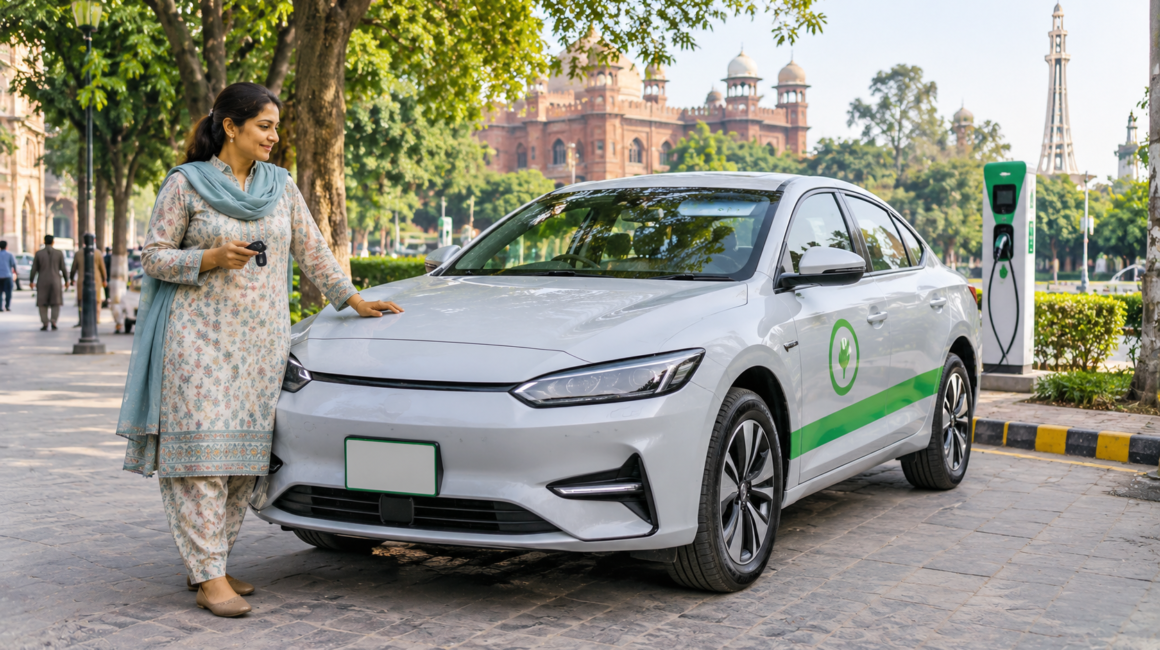
The Government of Punjab presents this as a demonstration of electric mobility for commercial passenger transport in Lahore. A total of 1,100 vehicles are described in the initial programme, with a substantial public subsidy directed toward the pilot. That is a policy commitment and an operating model; it is not evidence that 1,100 additional taxis are available to every visitor today. The published plan distinguishes fleet businesses from individual operators, supports vehicle registration, and envisages charging sites and digital monitoring.
Applicants should begin with the CM Punjab E Taxi Scheme 2026's official portal rather than a social-media advertisement, because vehicle brands, onboarding and financing partners can change between phases. A useful rule is to separate four questions: whether applications are open, which applicant category is currently being accepted, what documents are required, and whether a particular electric vehicle is among approved models. A person who has only seen a news headline will not have enough information to make a safe financial commitment.
Why the first pilot is centered on Lahore
The publicly described pilot is focused on Lahore. For a driver living in another Punjab district, the geographic detail matters more than the programme's provincial name might suggest. Driving routes, the need to operate with a transport network company, vehicle charging availability and fleet supervision all depend on the initial operating area.
Before filling out a form, check the current city restriction and ask whether the applicant must live, work, hold a permit or operate a registered business in CM Punjab E Taxi Scheme 2026 area. If a future district phase is announced, review the actual notification rather than reusing the Lahore conditions. People who are searching for a car to use only for household transport should also understand that this programme is framed around commercial taxi service, not unrestricted personal ownership.

The difference between individuals and fleet owners
CM Punjab E Taxi Scheme 2026 — Two very different audiences appear in the official programme. Under the published distribution, 1,000 E-Taxis are earmarked for fleet owners, while 100 are assigned to individuals registered with transport network companies. The fleet route specifies a minimum of ten taxis per fleet owner.
A fleet business should prepare proof of its registration and the practical ability to operate multiple vehicles, maintain drivers and administer charging and service schedules. An individual should focus on personal identity information, transport-network affiliation and the applicable financial checks. The portal may ask for additional information that is not listed in a short public overview; always treat the live form and official instructions as the operative checklist.
The allocation for female and male individual applicants
The Punjab Government's overview divides the 100 individual pilot vehicles into 70 allocated to male applicants and 30 to female applicants. These figures refer to the initial individual allocation, not a permanent entitlement and not the entire 1,100-vehicle fleet. They also do not guarantee selection merely because a driver belongs to one of these groups. Eligibility, the available category and the selection mechanism must all be considered together.
Women considering ride-hailing should examine the operational conditions as carefully as financing. Their daily travel area, platform access, charging arrangements, personal safety procedures and insurance coverage affect whether a vehicle can be operated sustainably. The same economic checks apply to other individual drivers: a lower advertised markup does not remove running costs, the possible equity payment or the need to meet installment obligations.
What interest-free financing means in practice
The official Punjab overview describes interest-free financing with a five-year installment term. That is a meaningful distinction from a conventional auto loan charging a percentage markup, but borrowers should not interpret it as a vehicle without payment responsibilities. The CM Punjab E Taxi Scheme 2026 refers to equity contribution and government-supported registration.
Ask the finance provider for a written schedule that separates vehicle price, government support, borrower equity, monthly payments and contingent charges. Compare this with realistic commercial receipts after platform commission, electricity, downtime and repairs. Borrowers should not sign a blank form or rely solely on an agent's verbal promise that every expense is waived. The legal financing documents and current official circular should determine the real cost.
How to judge the five-year repayment period
Five years can make a large vehicle purchase manageable, but it also creates a long commercial commitment. A taxi may generate income daily while a driver remains healthy and demand is strong; it can also sit idle during repairs, charging interruptions or weak booking periods. A workable household or fleet budget should account for both situations.
Before applying, sketch a conservative monthly budget using fewer paid trips than the operator hopes to achieve. Include an allowance for platform deductions, electricity, tyres, routine servicing, insurance, connectivity and an emergency reserve. For fleets, add driver management and turnaround time at charging sites.
Documents an individual driver should prepare
CM Punjab E Taxi Scheme 2026 — The exact upload fields must be taken from the active registration portal, but an applicant can prepare a sensible basic folder: a readable CNIC, an accessible mobile number, current contact and address information, details of driving eligibility, proof of affiliation with a transport network company where required, and any income or banking documents requested by the financing partner. The point is to be ready to respond accurately, not to assume this generic list replaces the official checklist.
Names, identity numbers and phone details should match across records. Blurry photographs, expired documents or an account in another person's name can introduce avoidable delays. If the site asks for sensitive financial information, verify the domain and the privacy notice before uploading. Never send complete identity packets to a stranger who contacts you privately and promises guaranteed taxi allocation.
Documents and capacity checks for fleet applicants
The published scheme requires at least ten E-Taxis per fleet owner and registration with relevant transport network companies for E-Taxi operations. A business exploring this route should therefore consider enterprise identity, tax or registration records where applicable, authorized signatories, bank details and operational evidence. Additional conditions may be specified in a particular call for participation.
An effective fleet plan describes who drives each vehicle, where the vehicles charge, how bookings and customer complaints are managed, and who is responsible for insurance, maintenance and payments when a taxi is temporarily off the road. A lender may reasonably ask how cash flow supports a multi-vehicle commitment.
Using the official registration portal safely
The Punjab Transport Department directs users to the official E-Taxi website, and the provincial portal gives a specific registration path. Begin there to see what routes and notices are actually live. A registration page's presence does not necessarily mean the current intake remains open, nor does an account creation screen establish approval. Confirm whether the page is collecting new applications, collecting expressions of interest or displaying information from an earlier pilot.
Type the government address manually or follow a verified department link. Read the form instructions before entering identity details. Keep screenshots of the submitted confirmation and store reference numbers privately. If the portal asks for an unexpected transfer to a personal wallet or private individual, stop and confirm through the official department. A genuine programme can still attract impersonators who reproduce its logo.
Electric-vehicle charging in commercial use
A taxi depends on charging access in a way that a petrol vehicle does not. Public information about charging stations is encouraging, but each operator must check whether chargers are installed, accessible, compatible and sensibly located along realistic driving routes. Charge time and charger queues can reduce the number of profitable trips.
Vehicle selection is therefore about more than showroom range. Ask how much practical range remains when the car carries passengers, air-conditioning is running and traffic is slow. Confirm connector type, battery warranty, charging speed and electricity pricing. A fleet owner should model staggered charging to avoid parking ten vehicles at once.
How to compare approved vehicles and models
CM Punjab E Taxi Scheme 2026 — Official pages refer applicants to the project website for eligible companies and E-Taxi models. Avoid copying a model list from an old promotional image because the available vehicles and quotations may have changed. Evaluate the real purchase price, safety features, service network, battery protection, spare-parts availability and warranty conditions.
A serious comparison should use the same assumptions for all models: daily kilometres, charging expense, battery warranty, commercial insurance and annual maintenance. Get each quotation in writing, and distinguish an approved model from a vehicle merely promoted online as suitable for CM Punjab E Taxi Scheme 2026. Publicly listing a company on a page does not prove that every vehicle it sells is subsidized.

Insurance, registration and driver obligations
The Punjab overview mentions free vehicle registration as part of government support, but it does not follow that every other legal or commercial responsibility disappears. Drivers need to understand how commercial insurance is arranged, what the policy excludes, who pays for damage, and which permits or platform rules apply.
Before accepting a vehicle, request copies of the registration paperwork, insurance terms, delivery inspection and service schedule. Read what happens when a driver changes platform or stops working, or when a vehicle is stolen or damaged. If CM Punjab E Taxi Scheme 2026 contract limits resale or transfer, those restrictions are financially important.
Application status, deadlines and waiting lists
As of the official programme pages reviewed for this guide, the Lahore pilot and registration address are documented, but those pages alone do not establish a fresh nationwide application deadline. Some search results may repeat earlier advertisements without making clear whether the advertised quota is still available. Treat deadlines, balloting announcements and selection lists as time-specific documents.
If you have already submitted an application, check the official portal for a tracking feature and use any reference number provided. If you have not applied, look for a dated and explicit intake notice before providing sensitive details. Keep a record of the notice's publication date and the applicant category concerned. These habits help readers distinguish a programme's continuing existence from a particular application window.
Common mistakes applicants can avoid
The most common mistakes follow from misunderstanding the type of assistance. Someone may assume that the government is giving away 1,100 cars, that every Punjab city is included or that interest-free means no equity is required. Others mistake a fleet quota for an individual quota, or pay an unverified agent for a supposed priority placement.
A safer approach is to make a four-column comparison of claimed benefits, official evidence, individual or fleet eligibility, and unresolved costs. Never alter records to fit a category; rejected information is less damaging than fraudulent information. Save official page links, call the listed department if something is unclear and avoid purchasing a charging accessory or paying a vehicle deposit before receiving a genuine written programme decision.
Final checklist before making a financial commitment
CM Punjab E Taxi Scheme 2026 — The best applicant is not simply the person who finds an online form first. A well-prepared applicant understands the Lahore pilot, the correct individual or fleet route, the transport-network requirement, the up-front equity and the commercial conditions. The vehicle must suit available charging infrastructure and the expected monthly cash flow.
Before signing, recheck the active notification, vehicle eligibility, total payment schedule, insurance, driver authorization, approved bank or programme contact, and what happens after delivery. If any key condition remains undocumented, seek clarification rather than making an irreversible payment.
What matters most before you apply
Use the dated official sources below to confirm application windows. Guidance prepared from a published set of rules may remain useful when the CM Punjab E Taxi Scheme 2026 itself pauses registration or changes an implementation phase.
Evaluate the Punjab E-Taxi pilot as a business, not just a vehicle prize
An interest-free headline does not remove insurance, charging, tyre, battery, registration and repayment costs. Drivers should calculate whether realistic passenger demand can support the five-year commitment.
Individual driver: model the actual workday
- Estimate paid trips, not total kilometres. Empty travel to pickups and waiting time consume electricity and working hours without fare income.
- Subtract platform and operating charges. Gross app receipts are not the same as take-home earnings after commissions and expenses.
- Check charging availability. A long detour to a reliable charger can reduce daily trip capacity.
- Plan for a slow month. Festival peaks or a few strong weekend days do not prove year-round repayment capacity.
Fleet applicant: check operating systems first
- Compare the fleet category with individual rules. Vehicle allocations, ownership structure and permitted application arrangements may differ.
- Budget driver management. Hiring, shift scheduling, deposits and complaint handling can cost more than first-time operators expect.
- Track each vehicle independently. Separate utilisation, charge cost and maintenance records to identify weak routes.
- Verify capital contribution and finance documentation. A group buying multiple vehicles needs a formal repayment and ownership plan.
Understand the Lahore pilot boundary
- Check the phase and city. An advertised pilot allocation in Lahore does not itself prove that a different district is eligible.
- Review applicant quotas where published. Individual male, female and fleet categories may have separate allocations.
- Confirm driving credentials and vehicle rules. Eligibility can include licence, CNIC and programme-specific verification.
- Use only the recognised registration route. Agents promising 'confirmed e-taxi numbers' before selection are not an official authority.
EV operating costs that determine viability
Build a one-month sample budget
- Electricity: Multiply actual charging units by the applicable tariff; include losses and public charging premiums where relevant.
- Maintenance: Budget tyres, brakes, suspension, routine checks and eventual high-value battery service.
- Fixed commitments: Include finance instalments, insurance, parking and personal household spending.
- Emergency reserve: The business needs a buffer for accidents, extended downtime and equipment faults.
Confirm vehicle and finance terms before acceptance
- Ask what warranty covers. Battery and drivetrain warranties may have mileage or servicing conditions.
- Check transfer restrictions. Financed vehicles can have ownership and resale conditions.
- Compare charging access at home and work. A driver without secure overnight parking may face a different cost structure.
- Understand financing documents. Interest-free does not mean the bank waives principal or penalties for breaches.
Avoid common application mistakes
- Choose the right applicant category. An individual cannot assume fleet terms apply automatically.
- Keep documents and contact records consistent. Mismatched licence or address details create avoidable queries.
- Save official payment receipts. Never transfer money to someone claiming to control the ballot.
- Treat estimates as estimates. A vehicle's advertised range does not guarantee the same performance with air conditioning, traffic and passengers.
A monthly earnings example for an e-taxi applicant
This exercise is about planning—not a prediction of income from the Lahore pilot or a guarantee of route access. Change every figure to reflect your own city, vehicle and contract.
Work from completed paid trips
- Count earning hours. A twelve-hour shift may include charging, traffic, cleaning and unpaid waiting.
- Estimate net receipts. Start with actual trip revenue and subtract platform commission or dispatcher fees where relevant.
- Include empty kilometres. Travel between pickups consumes energy and tyres even when no fare is charged.
- Compare weekdays and weekends. A few excellent days should not be multiplied into a guaranteed monthly wage.
Include the full vehicle cost
- Charging tariff: Compare home, workplace and public charging prices instead of using one best-case figure.
- Routine replacement: Tyres and brakes wear with actual mileage, regardless of loan marketing language.
- Insurance and registration: These fixed costs matter even if the taxi is idle for several days.
- Monthly principal: An interest-free facility still requires repayment on its contractual dates.
Decide whether the business is robust
- Model a week of downtime. Ask how household expenses and instalments would be covered if the vehicle needs repairs.
- Check charging access before selection. A driver with no secure charging plan faces higher costs and service disruption.
- Read the approved model's warranty. Service networks, battery conditions and exclusions influence real ownership cost.
- Keep savings for emergencies. A taxi should not put the household at risk during the first slow operating month.
Before applying: a sensible checklist
- Confirm the issuing authority and current programme phase on an official domain.
- Match identity, domicile, household, land, academic or business records to the actual eligibility category.
- Prepare clear documents and a contact number that you control; never share a login OTP with an agent.
- Read the amount, deadlines, conditions and disqualification clauses as well as the headline benefit.
- Save screenshots of genuine submissions and ask the named official office to clarify disputed information.
Driver income and repayment worksheet
A taxi is an income-producing asset only when the driver can generate enough paid mileage after operating expenses. Record actual daily trips rather than an optimistic target supplied by a seller.
| Budget line | What to calculate |
|---|---|
| Paid rides and fare receipts | Rides completed per day × average amount actually received after any refunds and incentives. |
| Platform commission | Deduct the contractual app or fleet commission, not the percentage advertised by a third party. |
| Charging | Estimate actual energy consumed per week and charging cost per kWh at the available station. |
| Maintenance and repairs | Set aside cash for tyres, servicing, minor accident damage and unexpected battery or electrical diagnosis. |
| Financing and insurance | Use the bank's written instalment schedule and annual insurance expense, not an online estimate of the advertised subsidy. |
| Days out of service | Keep a reserve for holidays, downtime, low-demand periods and months when payments are still due. |
For a useful stress test, reduce your projected paid rides by 25% while keeping most fixed costs unchanged. If the vehicle cannot support instalments in that scenario, ask whether the purchase price, mileage assumptions or financing terms need reconsideration. This is a budgeting exercise, not a statement of promised earnings.
Three practical situations explained
An occasional driver in another city
The published first pilot focuses on Lahore and platform registration. Do not assume general eligibility across Punjab.
A female ride-hailing driver
The pilot reserved 30 individual slots for women; confirm current phase, safety policy, vehicle terms and real driver earnings.
A company proposing two cars
The published fleet route specifies at least ten vehicles per fleet owner, not two.
Official sources and editorial independence
Information checked against the government, bank or university pages below on 12 November 2026. Figures and conditions change between programme phases, and publication does not guarantee registration is open. Scheme Info is an independent publisher: we do not issue loans, enrol scholarship recipients or make official allotment decisions.
Frequently asked questions
What is the pilot size?
The Punjab portal describes 1,100 electric taxis in the initial Lahore pilot.
How many go to fleets?
1,000 vehicles are allocated for registered fleet owners; at least ten taxis per fleet owner.
What is the individual quota?
100 vehicles for individual drivers registered with the stated Transport Network Companies.
Is there a gender allocation?
The original individual pilot allotment was 70 male and 30 female vehicles.
What financing is offered?
The government describes interest-free five-year instalments with an equity contribution; written lender schedules control.
Does being selected remove running costs?
No. Charging, tyre replacement, insurance, fees and vehicle downtime still need budgeting.
Where is the official portal?
The scheme’s e-taxi.punjab.gov.pk site and official registration link.
Can I choose any electric vehicle model?
Vehicle models and suppliers are controlled by the programme; review the approved project list before paying a dealer.
Does interest-free financing mean no down payment?
No. The portal describes a borrower equity contribution and a five-year repayment commitment.
Is an older registration form proof the pilot is open today?
No. Confirm the live phase and an explicitly published registration period on the official site.