Scheme Info • Independent Pakistan financing guide • Updated 12 November 2026
An electronic warehouse receipt can help a farmer avoid selling rice or maize immediately after harvest. But storage charges, warehouse eligibility and a one-year loan repayment deadline can change whether delayed selling pays off.
Table of contents — choose a section
- Eligibility: who can realistically qualify
- Documents and evidence to prepare
- Official terms of ZTBL Electronic Warehouse Receipt Financing
- Follow the crop from farm to collateral
- Check the real lending calculation
- Warehouse margin arithmetic before committing a crop
- How an electronic receipt becomes collateral
- Where the official pilot applies
- The borrowing ceiling
- Warehouse and collateral controls
- Documentation and credit assessment
- Markup and time to repay
- Commodity quality and storage risk
- Pricing a delayed sale
- Know when delayed sale might fail
- Deeper decision checks before you borrow
- Three real-world decisions to think through
- Who approves and monitors the facility
- When it can be useful
- Avoiding receipt and warehouse fraud
- The safest application sequence
- How to apply for ZTBL Electronic Warehouse Receipt Financing: six careful steps
- Related guides
- Frequently asked questions
- Official sources and editorial independence

Eligibility: who can realistically qualify
For ZTBL Electronic Warehouse Receipt Financing, check these programme-specific conditions before preparing an application.
- Applicants must be creditworthy farmers with qualifying stored rice or maize.
- A genuine electronic receipt issued through the designated collateral manager is essential.
- The published pilot covers Okara, Kasur, Hafizabad and Sheikhupura.
- ZTBL lists clear CWR status and obligor risk rating up to four.
- A minimum 30% stock-value margin applies to the published facility.
Documents and evidence to prepare
The following documents and supporting evidence are relevant to ZTBL Electronic Warehouse Receipt Financing. Mandatory and conditional items are distinguished below.
- CNIC copy and completed bank loan application.
- Electronic Warehouse Receipt for eligible stored stock.
- Two recent photographs.
- Warehouse, stock and lien records required to verify the receipt.
- Any further credit documents requested by ZTBL for sanction.
The first three items are listed by ZTBL. Warehouse and credit evidence is conditional on the bank’s assessment.

Official terms of ZTBL Electronic Warehouse Receipt Financing
These are the published rules on the named authority’s website, reviewed 12 November 2026. A maximum finance amount is not an offer or a promise of approval. Always request updated product details before submitting original documents or accepting financing.
| Key question | Published position and what it means |
|---|---|
| Commodities | The published product addresses rice and maize crops. |
| Pilot geography | Official terms identify Okara, Kasur, Hafizabad and Sheikhupura district branches; confirm any later expansion. |
| Warehouse receipt | Receipt must be issued through Neymat/Naymat Collateral Management Company Limited after its checks. |
| Financing amount | Up to PKR 2.5 million per party and a maximum of 70% of the officially valued stock. |
| Required margin | At least 30% of stock value remains as borrower margin. |
| Collateral | Electronic receipt under bank lien plus borrower personal guarantee and related control requirements. |
| Repayment | One lump sum within one year of disbursement under the published product. |
Follow the crop from farm to collateral
The most useful way to approach ZTBL Electronic Warehouse Receipt Financing is to turn the headline into a written, testable plan. These are decisions the actual borrower can check, rather than promotional claims or guaranteed outcomes.
- Harvest and grade rice or maize to the warehouse’s accepted quality and moisture standards.
- Choose an eligible licensed warehouse and check its fees, location, permitted crops and loss-handling rules.
- Confirm that the collateral manager issues an authentic electronic receipt with correct weight, grade and storage details.
- Ask the branch how the receipt is pledged under the bank’s lien and when stock can be released or sold.
- Keep warehouse notices, insurance documents, receipts and communications in one case file.
Why it matters now
A well-prepared proposal is specific: it shows not only the purchase or working-capital need but also the timing of expected benefits and the evidence supporting each amount. For ZTBL Electronic Warehouse Receipt Financing, this means making the next step on written facts rather than expecting an institution or seller to resolve every uncertainty after approval.
Check the real lending calculation
Official eligibility is only the beginning. Before taking on this commitment, measure the costs and constraints that arise in the real business or household setting. The points below are practical checks, not a substitute for a bank appraisal.
- Work from the collateral manager’s recognised stock value, not a hoped-for future commodity price.
- Apply the 70% published maximum advance ratio, then compare with the PKR 2.5 million absolute borrower ceiling.
- Remember the remaining 30% margin is not a separate grant from ZTBL; it is the unfinanced portion of stored value.
- Add warehouse rent, sampling, loading, insurance, spoilage risk, bank fees and prevailing production markup.
- Model a lower sale price and delayed buyer payment to see whether proceeds still cover the lump-sum repayment.
Evidence to collect
Keep dated quotations, identity and security records, realistic operating notes and a short income forecast. If a fact cannot be independently verified, label it as an estimate. For ZTBL Electronic Warehouse Receipt Financing, this means making the next step on written facts rather than expecting an institution or seller to resolve every uncertainty after approval.
Warehouse margin arithmetic before committing a crop
The 70% lending ratio should be applied to the value recognised by the warehouse and collateral process, not a hoped-for future sale price. The PKR 2.5 million borrower cap still applies.
Illustrative calculation — not a bank quotation
Four checks before signing
- Verify the electronic receipt with the authorised collateral manager.
- Check storage, handling and insurance charges in writing.
- Model a lower crop price at the eventual sale date.
- Plan how sale proceeds will settle the bank’s one-year lump-sum repayment.
Replace the example figures with your own verified costs and the lender’s signed term sheet. An attractive headline ceiling tells you nothing about your eventual approval or overall cost.
How an electronic receipt becomes collateral
Farmers deposit eligible rice or maize in a licensed warehouse and receive an electronic warehouse receipt as proof of stored stock. The financing depends on a genuine, transferable, unencumbered receipt—not an informal paper from a local trader. That is the starting point for understanding ZTBL Electronic Warehouse Receipt Financing, not an automatic promise of an award.
Programme labels can be deceptively broad: a named initiative may contain several products, phases or qualifying activities. Consider how the published purpose maps onto the actual project, financed asset or course of study before collecting paperwork. Applicants do not gain a right to a different benefit merely because it appears in another programme with a similar title. The exact text of the official programme, rather than a generic loan or scholarship article, must settle the point. The issue here is how an electronic receipt becomes collateral; the practical meaning may differ for applicants with different locations, resources and prior records.
Imagine a rice grower who harvested more grain than the market can absorb immediately. Ask what measurable change would make the activity useful, and which cost or condition could prevent it. Compare the intended result with the ordinary alternative available to that person today. For ZTBL Electronic Warehouse Receipt Financing, write down the decision this example raises and the source needed to answer it. If a quotation, a document, an operating assumption or a timetable cannot be substantiated, it is better to delay commitment than to treat uncertainty as approval.
Where the official pilot applies
ZTBL identifies a pilot limited to branches in Okara, Kasur, Hafizabad and Sheikhupura. A farmer in another district must confirm whether the bank has formally expanded operations before planning a distant warehouse delivery. A reader weighing ZTBL Electronic Warehouse Receipt Financing should record that detail before comparing advertised amounts.
A requirement has to be satisfied with evidence. Read the rule as an officer or bank analyst might read it, then identify the one document or fact that would settle the point. Where a term is undefined, asking the implementing authority is more reliable than an online interpretation. The exact text of the official programme, rather than a generic loan or scholarship article, must settle the point. The issue here is where the official pilot applies; the practical meaning may differ for applicants with different locations, resources and prior records.
Imagine a maize farmer comparing warehouse costs with a trader’s spot price. The first verification is whether the individual or institution falls into the published eligibility group. The second is whether the activity described in the application matches the programme purpose. For ZTBL Electronic Warehouse Receipt Financing, write down the decision this example raises and the source needed to answer it. If a quotation, a document, an operating assumption or a timetable cannot be substantiated, it is better to delay commitment than to treat uncertainty as approval.
The borrowing ceiling
The published maximum is Rs. 2.5 million per borrower or party. The bank can finance up to 70% of warehouse-declared stock value while a minimum 30% stock-value margin remains. This specific condition matters more for ZTBL Electronic Warehouse Receipt Financing than a headline about possible benefits.
Assistance calculations need both the percentage and the ceiling, if one exists. The number most visible in an advertisement may be a maximum or a project-wide allocation rather than the amount available to the individual. Subtract personal contributions and real charges before declaring any purchase affordable. The exact text of the official programme, rather than a generic loan or scholarship article, must settle the point. The issue here is the borrowing ceiling; the practical meaning may differ for applicants with different locations, resources and prior records.
Imagine a borrower holding a receipt but lacking clear proof of legal stock ownership. A sensible comparison separates the advertised figure from the value that could actually be used. Include contributions, bank charges, travel and preparation costs, where those are relevant. For ZTBL Electronic Warehouse Receipt Financing, write down the decision this example raises and the source needed to answer it. If a quotation, a document, an operating assumption or a timetable cannot be substantiated, it is better to delay commitment than to treat uncertainty as approval.
Warehouse and collateral controls
The receipt should be issued by Naymat Collateral Management Company Limited after its checks. The bank takes a lien on the electronic receipt and requires a personal guarantee, which affects when stock can be released. It is a useful way to distinguish ZTBL Electronic Warehouse Receipt Financing from superficially similar programmes.
This issue can materially change whether a planned activity is worthwhile. Identify where the inputs come from, who performs the work, when outputs become available and what happens if weather or delays interrupt the schedule. Any expected income should be tested against an unfavourable, not only a perfect, season. The exact text of the official programme, rather than a generic loan or scholarship article, must settle the point. The issue here is warehouse and collateral controls; the practical meaning may differ for applicants with different locations, resources and prior records.
Imagine a warehouse manager confirming moisture readings and deposit records. Look at the calendar as carefully as the money. A short harvesting window, financial-aid deadline or procurement stage can determine whether assistance has practical value. For ZTBL Electronic Warehouse Receipt Financing, write down the decision this example raises and the source needed to answer it. If a quotation, a document, an operating assumption or a timetable cannot be substantiated, it is better to delay commitment than to treat uncertainty as approval.
Documentation and credit assessment
The listed documents include CNIC, application, receipt and two recent photographs. Published eligibility also refers to a clear CWR, satisfactory credit profile and an obligor risk rating up to four. The real value of ZTBL Electronic Warehouse Receipt Financing depends on how that rule works on the ground.
The operating side is as important as the application form. A project that is legally eligible may still have weak daily economics if transport, labour, maintenance or recurring supplies are overlooked. Those expenses require a plan independent of the financing or support announcement. The exact text of the official programme, rather than a generic loan or scholarship article, must settle the point. The issue here is documentation and credit assessment; the practical meaning may differ for applicants with different locations, resources and prior records.
Imagine a rice grower who harvested more grain than the market can absorb immediately. A real proposal identifies where regular revenue, work output or learning progress will come from, as well as the staffing and tools needed to deliver it. For ZTBL Electronic Warehouse Receipt Financing, write down the decision this example raises and the source needed to answer it. If a quotation, a document, an operating assumption or a timetable cannot be substantiated, it is better to delay commitment than to treat uncertainty as approval.
Markup and time to repay
The prevailing rate of markup on ZTBL production loans applies, with a lump-sum recovery within one year of disbursement. This is short-term secured commodity finance, not an eight-year machinery loan. This condition is often overlooked in casual descriptions of ZTBL Electronic Warehouse Receipt Financing.
In the context of ZTBL Electronic Warehouse Receipt Financing, Two government initiatives can share a sector while using different financial instruments. The distinction between a grant, a cost-sharing contribution, a credit facility and a stipend affects repayments, permitted uses and risk. Treat each offer according to its own signed terms. The exact text of the official programme, rather than a generic loan or scholarship article, must settle the point. The issue here is markup and time to repay; the practical meaning may differ for applicants with different locations, resources and prior records.
Imagine a maize farmer comparing warehouse costs with a trader’s spot price. The right comparison is with the programme that actually serves this particular need, not the one that simply has a larger maximum or a better-looking social-media banner. For ZTBL Electronic Warehouse Receipt Financing, write down the decision this example raises and the source needed to answer it. If a quotation, a document, an operating assumption or a timetable cannot be substantiated, it is better to delay commitment than to treat uncertainty as approval.
Commodity quality and storage risk
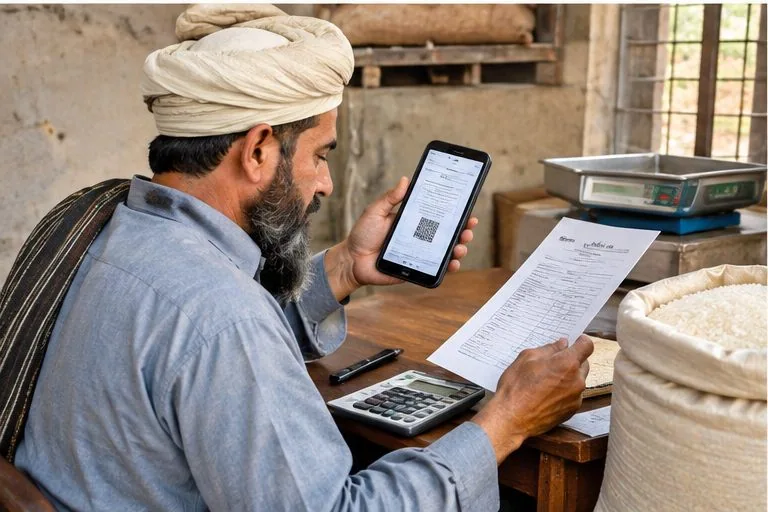
A warehouse receipt only helps if the grain meets moisture, grading and pest standards. Storage rent, shrinkage, handling and warehouse release fees should be confirmed before deciding to hold rice or maize. For anyone assessing ZTBL Electronic Warehouse Receipt Financing, it defines an important boundary of eligibility or use.
Before committing to ZTBL Electronic Warehouse Receipt Financing, A feasible applicant contribution can be difficult to assemble at the deadline. Compare the bank balance or available resources with the timing of any deposit and with later recurring expenses. If the figures only work when an uncertain reimbursement arrives immediately, rethink the schedule. The exact text of the official programme, rather than a generic loan or scholarship article, must settle the point. The issue here is commodity quality and storage risk; the practical meaning may differ for applicants with different locations, resources and prior records.
Imagine a borrower holding a receipt but lacking clear proof of legal stock ownership. Even where assistance is substantial, the applicant should protect essential household cash and avoid borrowing informally to meet an uncertain matching contribution. For ZTBL Electronic Warehouse Receipt Financing, write down the decision this example raises and the source needed to answer it. If a quotation, a document, an operating assumption or a timetable cannot be substantiated, it is better to delay commitment than to treat uncertainty as approval.
Pricing a delayed sale
Compare the current harvest-time sale price with a realistic future price after deducting markup, storage, transport, quality loss and transaction charges. A higher future market price is not a guaranteed gain. Those requirements should inform a decision about ZTBL Electronic Warehouse Receipt Financing before any payment is made.
When planning around ZTBL Electronic Warehouse Receipt Financing, A quotation should be evaluated for fit, warranty, eligibility and the ability to obtain repairs or academic services after approval. The cheapest visible offer may carry the greatest later cost; conversely, a premium option may exceed the approved assistance ceiling. The exact text of the official programme, rather than a generic loan or scholarship article, must settle the point. The issue here is pricing a delayed sale; the practical meaning may differ for applicants with different locations, resources and prior records.
Imagine a warehouse manager confirming moisture readings and deposit records. Before signing a supplier, lender or university agreement, ask about the approved scope, cancellation rights, complaints route and ongoing support. For ZTBL Electronic Warehouse Receipt Financing, write down the decision this example raises and the source needed to answer it. If a quotation, a document, an operating assumption or a timetable cannot be substantiated, it is better to delay commitment than to treat uncertainty as approval.
Know when delayed sale might fail
This section addresses the costly mistakes that a short online application guide often misses. Keep records of the assumptions, ask the bank for the current product conditions and adjust the proposal to the reality of the intended activity.
- More storage time does not guarantee a higher market price; supply, imports and weather can move prices in either direction.
- If warehouse quality rules reject a lot, the finance plan may fail before the receipt is issued.
- Loss of stock weight or quality can change collateral value; understand how the lender and warehouse handle shortfalls.
- Plan a clear sale and debt-settlement process well before the twelve-month maximum loan date.
- Do not pay an intermediary for a forged receipt or bypass the named collateral-management process.
The decision threshold
Pause when the figures work only under optimistic conditions. Better information, a smaller pilot or an alternative to borrowing may protect the family or business from an avoidable obligation. For ZTBL Electronic Warehouse Receipt Financing, this means making the next step on written facts rather than expecting an institution or seller to resolve every uncertainty after approval.
Deeper decision checks before you borrow
These product-specific checks help readers go beyond headline figures. Work through the details in the context of your own farm, household or business and compare the answers with current official requirements.
Confirming a real warehouse receipt
- Inspect the storage facility’s authorisation and verify it can issue the electronic receipt accepted by the named collateral manager.
- Compare the recorded stock grade, weight and moisture with the physical lot before pledging it as collateral.
- Confirm the warehouse’s charges for storage, loading, inspection, quality tests and any insurance arrangements.
- Keep electronic records and verify the bank’s lien process rather than trusting a printable receipt shared by an intermediary.
Checking the 70/30 advance calculation
- If recognised stored stock is valued at PKR 1 million, the published 70% maximum suggests an advance not exceeding PKR 700,000 before credit checks.
- The same 70% arithmetic can never override the separate PKR 2.5 million maximum per borrower or party.
- The unfinanced 30% margin remains exposed to commodity price changes; it is not a bank-paid benefit.
- Compare the cost of warehousing and production-loan markup against a conservative estimate of any delayed sale price improvement.
Planning the exit before the loan is taken
- Identify realistic buyers, quality specifications and whether a sale will settle promptly enough to pay the loan within one year.
- Ask the bank what evidence is needed to release pledged stock once sale proceeds are received.
- Consider the consequences of damage, moisture changes or lower prices that could leave sale proceeds below the loan obligation.
- Check that the warehouse and branch actually operate in the officially listed pilot geography or any documented later extension.
Write down the assumptions that still need verification and take that list to the authorised bank or office. If the plan only works when sales, harvests or repayment conditions are perfect, reduce the proposed commitment before signing.
Three real-world decisions to think through
The situations below are illustrative, not actual applicants or guaranteed results. Compare the detail that changes the correct decision: location, income timing, project operations or eligibility.
A maize farmer storing 1 million rupees of crop
At a recognised stock value of PKR 1,000,000, the published 70% limit suggests a maximum advance of PKR 700,000 before any other credit checks. The borrower still bears costs and at least 30% margin; actual approval may be lower.
A rice farmer expecting a stronger winter price
The farmer compares likely price gain against warehouse charges, bank markup, transport and the risk of lower market prices. If the expected benefit is small or uncertain, a prompt sale may be safer.
A farmer outside the pilot districts
A grower in another district should not assume the published pilot has automatically expanded. The correct next step is to confirm current operational coverage and recognised warehouses through ZTBL.
Use the scenarios as prompts for your own figures. If your location, project design or income differs, the likely bank assessment can also differ. Save written quotes, identify which assumptions are uncertain and revisit them before committing.
Who approves and monitors the facility
ZTBL lists approval through its Head Office Credit Review Department and monthly monitoring through branch, regional and credit teams. Borrowers should keep stock movements and receipt details reconciled. A credible plan for ZTBL Electronic Warehouse Receipt Financing starts with a realistic understanding of this obligation.
A reasonable scenario includes both a normal outcome and a credible problem: an absent technician, unsuitable weather, additional travel, delayed payments or an academic admission result. Preparing responses in advance prevents a small delay from becoming a major commitment failure. The exact text of the official programme, rather than a generic loan or scholarship article, must settle the point. The issue here is who approves and monitors the facility; the practical meaning may differ for applicants with different locations, resources and prior records.
Imagine a rice grower who harvested more grain than the market can absorb immediately. An honest stress test explains the consequences of a delayed harvest, postponed field survey or late admission result without assuming that officials will make an exception. For ZTBL Electronic Warehouse Receipt Financing, write down the decision this example raises and the source needed to answer it. If a quotation, a document, an operating assumption or a timetable cannot be substantiated, it is better to delay commitment than to treat uncertainty as approval.
When it can be useful
The facility may ease pressure to sell produce immediately after harvest. It is not designed to finance unrelated construction projects or speculative commodity purchases without acceptable proof of stock ownership. When assessing current access to ZTBL Electronic Warehouse Receipt Financing, treat announcements and open windows separately.
Programme duration and intake duration are separate concepts. A published budget for several years can coexist with a completed application window. Verify the current stage using a recent dated circular, application confirmation or the office responsible for that round. The exact text of the official programme, rather than a generic loan or scholarship article, must settle the point. The issue here is when it can be useful; the practical meaning may differ for applicants with different locations, resources and prior records.
Imagine a maize farmer comparing warehouse costs with a trader’s spot price. Check the date printed on the notice. Search snippets and undated portal buttons should never be taken as proof that a registration round reopened. For ZTBL Electronic Warehouse Receipt Financing, write down the decision this example raises and the source needed to answer it. If a quotation, a document, an operating assumption or a timetable cannot be substantiated, it is better to delay commitment than to treat uncertainty as approval.

Avoiding receipt and warehouse fraud
Check that the licensed warehouse, collateral manager and electronic receipt identifier are genuine. Never send an advance charge to a social-media intermediary who promises a receipt-backed approval. This is one reason that ZTBL Electronic Warehouse Receipt Financing should not be compared only on its advertised maximum.
Fraud often starts where official details are incomplete. A private message promising preferential selection or asking for a personal-bank transfer should not override the scheme’s instructions. Use the named institution’s website and a verified contact route. The exact text of the official programme, rather than a generic loan or scholarship article, must settle the point. The issue here is avoiding receipt and warehouse fraud; the practical meaning may differ for applicants with different locations, resources and prior records.
Imagine a borrower holding a receipt but lacking clear proof of legal stock ownership. Independently verify the person collecting an application, the domain used for any form and the institution responsible for confirmation or payment. For ZTBL Electronic Warehouse Receipt Financing, write down the decision this example raises and the source needed to answer it. If a quotation, a document, an operating assumption or a timetable cannot be substantiated, it is better to delay commitment than to treat uncertainty as approval.
The safest application sequence
Verify district availability with ZTBL; confirm warehouse capacity and grading; obtain a genuine receipt; present ownership, banking and identity papers; then request a written finance offer. The next step for ZTBL Electronic Warehouse Receipt Financing is to check the actual official process applicable to your case.
For an applicant considering ZTBL Electronic Warehouse Receipt Financing, The strongest application is also the easiest to audit. Maintain a list of supporting documents, a copy of the final form, reference numbers, approved terms and relevant dates. If the answer is not yet available, record the uncertainty and build a fallback plan. The exact text of the official programme, rather than a generic loan or scholarship article, must settle the point. The issue here is the safest application sequence; the practical meaning may differ for applicants with different locations, resources and prior records.
Imagine a warehouse manager confirming moisture readings and deposit records. Once a decision is received, preserve the evidence and review the next obligation. Approval is usually the start of implementation, not the end of responsibility. For ZTBL Electronic Warehouse Receipt Financing, write down the decision this example raises and the source needed to answer it. If a quotation, a document, an operating assumption or a timetable cannot be substantiated, it is better to delay commitment than to treat uncertainty as approval.
How to apply for ZTBL Electronic Warehouse Receipt Financing: six careful steps
For readers searching for an online application, it is important to distinguish enquiry, portal registration, bank appraisal and final sanction. These are not interchangeable milestones.
- Start with the official product: Open the issuing authority’s named product page, check the current operating status, and verify the correct branch or portal for your district.
- Confirm that you qualify: Use the published facts table to check purpose, geography, creditworthiness, contribution and any age or experience requirement. Do not change the truth to fit the product.
- Build the project plan: List each funded item, operating cost, expected income timing and the evidence behind the numbers. Obtain genuine supplier or buyer quotes.
- Get the full finance illustration: Ask the institution for the current markup, fees, security rules, repayment dates, late-payment consequences and total amount payable.
- Submit only through verified channels: Share CNIC, land records and private finances only through the official bank or authorised government system. Preserve the reference number.
- Review the sanctioned terms: Read all conditions before signing or paying a supplier. Approval amounts, security, insurance and disbursement stages may differ from the application.
Official sources and editorial independence
Primary product information checked 12 November 2026. These links lead to the relevant bank or government sources. Scheme Info is an independent information website, not a lender or government application office. Rules can change and decisions rest with the named institution.
Frequently asked questions
These answers focus on decisions readers need to make. Where current bank terms are not published, ask the authority for a written response rather than using an invented fixed rate or deadline.
Is this loan for any crop?
The named published product is for rice and maize; other warehouse products may have separate rules.
Which districts are covered?
The official page lists Okara, Kasur, Hafizabad and Sheikhupura as the pilot geography.
How much can the bank advance?
The published cap is the lower of PKR 2.5 million or 70% of eligible recognised stock value, subject to approval.
What does the 30% margin mean?
The bank does not finance at least 30% of the recognised stock value under the published ratio.
Can I present a handwritten storage receipt?
No. The product requires an eligible electronic receipt from the named collateral-management process.
Is the stored crop the security?
The bank takes a lien on the electronic receipt and also lists a personal guarantee and other checks.
When must I repay?
The published terms require a lump-sum recovery within one year of disbursement.
Is the loan free?
No. ZTBL describes prevailing production-loan markup and other costs.
Does the warehouse guarantee a better future price?
No. Future crop prices remain uncertain and storage itself costs money.
Where should I verify current availability?
The official ZTBL product page and relevant branch can confirm district coverage and warehouse participation.