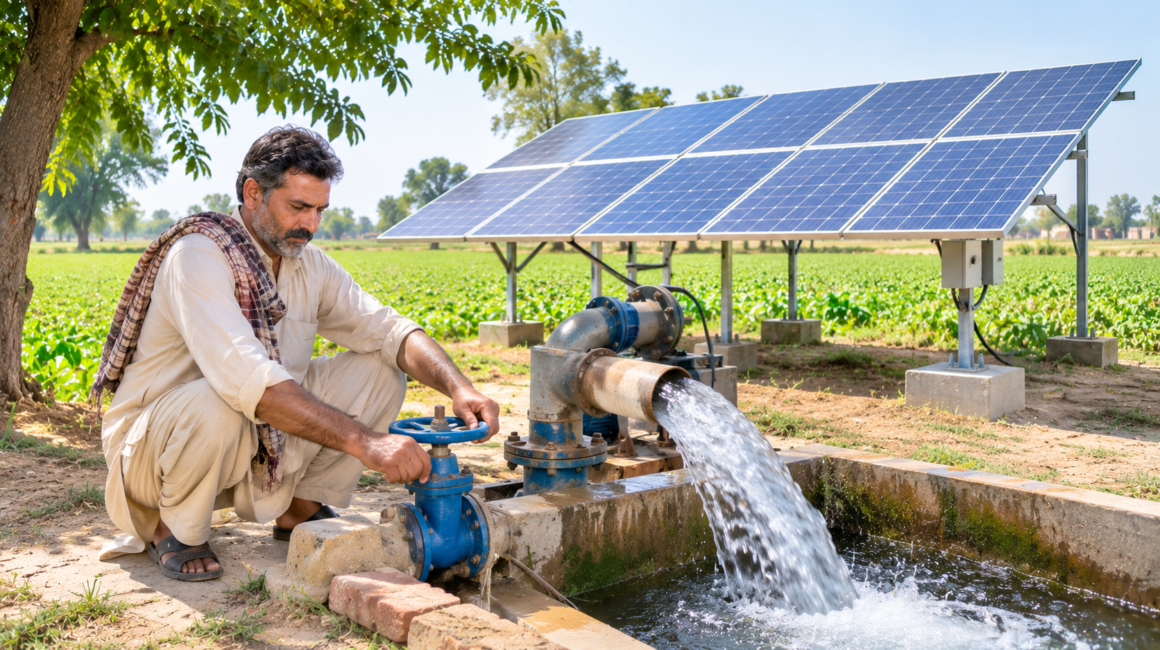
Solar irrigation can reduce fuel spending, but subsidy amounts depend on approved capacity, land ownership and existing tubewell records. Compare all three published support slabs before making a purchase.
Table of Contents — jump straight to a section
- Eligibility Criteria
- Required Documents
- Verified programme details at a glance
- Why tubewell solarization matters
- Published subsidy slabs
- Land and district eligibility
- Electric versus diesel tubewells
- Sizing a system correctly
- Registration and official forms
- Selection, balloting and inspections
- Installation and equipment quality
- Calculating savings realistically
- Avoiding misleading solar offers
- Other agriculture support options
- What to verify before applying
- What matters most before you apply
- Solar tubewell financing: size the system to the water need
- Procurement and maintenance after approval
- Before applying: a sensible checklist
- Three practical situations explained
- Explore related Scheme Info guides
- Frequently asked questions
- Official sources and editorial independence
Eligibility Criteria
Who qualifies under this programme
Check the following conditions before spending time on an application. The official programme or bank makes the final decision.
- Applicant must reside in Punjab and hold a valid CNIC.
- Own at least one acre of agricultural land in the same district in which the application is filed.
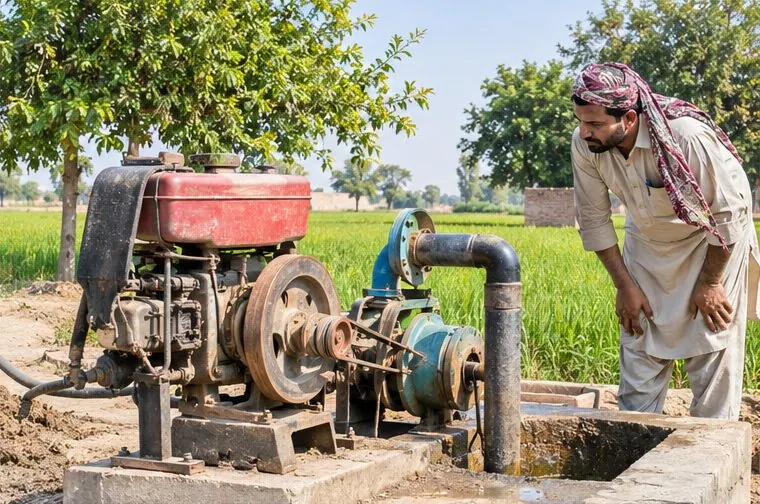
- Own an eligible electric or diesel agricultural tubewell; one solarization facility is allowed per family.
- For an electric tubewell, hold a three-phase connection installed by 30 October 2024 and have no unpaid bill default.
- Apply for an eligible 10 kW, 15 kW or 20 kW configuration under the notified rules.
Required Documents
Documents that must match the official records
Use this practical preparation list. Items described as conditional are needed only if the official form or verification team requests them.
- Copy of the applicant’s CNIC.
- Fard-e-Malakiat or other official land-ownership record for the relevant district.
- Latest paid electric-tubewell bill if seeking conversion of an electric connection.
- Diesel tubewell ownership and equipment details when requested for diesel applications.
- Online application record and any additional site-verification documents requested by the programme.
Verify the latest details in the Punjab tubewell solarization eligibility page before submitting anything.
Verified programme details at a glance
| Your question | Official detail and how to interpret it |
|---|---|
| What is the 10 kW subsidy? | Rs 500,000 according to Punjab’s published solar tubewell programme. |
| What is the 15 kW subsidy? | Rs 750,000 under the published capacity table. |
| What is the 20 kW subsidy? | Rs 1,000,000 under the published capacity table. |
| How much land must an applicant own? | At least one acre in Punjab, with relevant ownership evidence in the application district. |
| Does an electric tubewell qualify? | It may, if the connection was installed by 30 October 2024, is three-phase and has paid-bill proof, subject to verification. |
| Can diesel tubewells qualify? | The programme includes eligible diesel-powered tubewells; inspect the appropriate application conditions. |
| Where can farmers apply? | The published official route is cmstp.punjab.gov.pk; verify whether a new application window has been announced. |
Why tubewell solarization matters
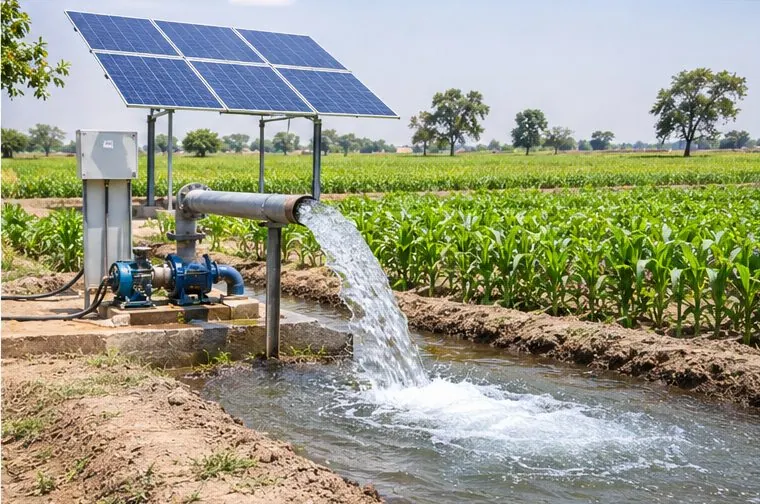
For CM Punjab Solarization of Agriculture Tubewells, Diesel and grid electricity can make water lifting a volatile expense for farmers. A solar conversion is meant to reduce operating costs, but its practical value depends on field area, depth, pump size and irrigation pattern. Solar generation cannot be assessed by subsidy alone.
An assessment of CM Punjab Solarization of Agriculture Tubewells should begin with one principle: The first decision should therefore be about the actual benefit, not the size of a headline. Read the government's description carefully, identify what must happen before a benefit is confirmed, and keep the wording of any decision or notice. Planning around a possible award as though it were cash already in hand can create avoidable costs for a household.
One useful way to approach the issue is to write three columns: what the published programme says, what evidence the applicant actually holds, and what remains unverified. This small exercise separates facts from hopes. It also helps relatives or business partners make decisions without confusing a preliminary eligibility check with an official result. With CM Punjab Solarization of Agriculture Tubewells, make the distinction in writing before acting.
Ask what is being transferred or financed, who owns it afterward, and whether restrictions continue after selection. Many government support announcements describe programme-level goals that are wider than an individual applicant's rights. The exact outcome should always be read from the relevant authorization or agreement.
Published subsidy slabs
Understanding CM Punjab Solarization of Agriculture Tubewells starts here: The official Punjab page sets three fixed capacity-based bands: Rs. 500,000 for 10 kW, Rs. 750,000 for 15 kW and Rs. 1 million for 20 kW. These figures are government support, not universal installation prices. Vendor quotations, site conditions and applicant contribution require separate attention.
When reviewing CM Punjab Solarization of Agriculture Tubewells, remember that Eligibility is rarely established by one attractive number. A sensible applicant checks every applicable condition, including identity, residency, date and exclusions, then compares that list with their genuine circumstances. When a rule is unclear, seek written clarification from the named authority rather than guessing or changing personal information to fit a form.
Read conditions together, not one at a time. A person may satisfy a general age or income description while failing a location or documentation rule. Even where an exclusion sounds unfair, the correct response is to seek official clarification or an authorized appeal—not to omit an inconvenient fact.
Land and district eligibility
The practical position under CM Punjab Solarization of Agriculture Tubewells is this: Applicants must own at least one acre in Punjab and provide evidence of land in the same district in which they apply. The government also limits one solar facility to a family. Clarify family and land record details before purchasing equipment or entering an agreement.
The location question in CM Punjab Solarization of Agriculture Tubewells is worth examining because Local implementation can matter just as much as the national or provincial announcement. The correct district, branch, scheme site or programme phase may decide where an application should go. Before travelling or hiring help, check that the location is genuinely covered and that the published process is still accepting requests.
For a practical comparison, consider an applicant who satisfies the main geographic rule but has not confirmed the programme phase. That applicant may be suitable in principle and still unable to apply today. Another who submits on time with incorrect identity information faces a different problem. Each case calls for a different response. That distinction affects the likely path through CM Punjab Solarization of Agriculture Tubewells.
A programme may cover selected cities, tehsils, villages, financial branches or institutions. That boundary is often deliberate because funding and administrative capacity are allocated locally. Check whether a particular service office can help before assuming the entire province uses the same process.
Electric versus diesel tubewells
A careful look at CM Punjab Solarization of Agriculture Tubewells shows why For electric tubewells the official criteria refer to a three-phase connection, no electricity arrears, proof from the latest paid bill and installation by October 30, 2024. Diesel applicants need their own qualifying evidence. Treat the two pathways as different document sets.
Before supplying evidence for CM Punjab Solarization of Agriculture Tubewells, consider this: Documents have two purposes: they establish identity and support the particular claim being made. Make a checklist before starting; compare names, addresses and dates across records; and keep readable copies. Do not assume a third-party screenshot has the latest file requirements, because portals and verification workflows can change without warning.
Keep the document pack small but well organized: identity proof, any relevant income or ownership evidence, and the official acknowledgement. Store originals securely and use copies only through legitimate channels. A well prepared file makes later correction requests easier to understand and reduces the temptation to pay an unauthorized facilitator. For CM Punjab Solarization of Agriculture Tubewells, keep the evidence organized before submission.
A reliable application record includes originals held safely, legible scans and a note explaining the purpose of each uploaded document. Sensitive data should be shared only where it is genuinely required. Applicants should avoid sending full identity records to informal groups offering to 'check' status for a fee.
Sizing a system correctly
For CM Punjab Solarization of Agriculture Tubewells, Match pump head, water table, motor load, sun hours and expected irrigation schedule to the selected system. A 20 kW band is not necessarily the best choice for every farm. An undersized array may disappoint, while oversizing increases the amount a farmer must finance.
For anyone using the official CM Punjab Solarization of Agriculture Tubewells route, Online submission should be treated as a formal declaration. Read the entire form, check selected options and save a personal copy of the final acknowledgement. Where an official portal provides a reference number, record it securely. An apparently successful submit button does not necessarily mean an application was approved.
Where a portal is available, use the direct address on the official department's site rather than an advertisement. Record the page date, review any privacy notice and check the spelling of the domain. When a form is closed, treat that as a status issue—not an invitation to search for a secret alternative form. These habits help make a CM Punjab Solarization of Agriculture Tubewells application more reliable.
The most important part of an application is consistency. Forms asking about residence, ownership, banking status or household composition are often checked against other records. A truthful, complete declaration may take longer to prepare, but it is easier to defend if the application is selected for manual review.
Registration and official forms
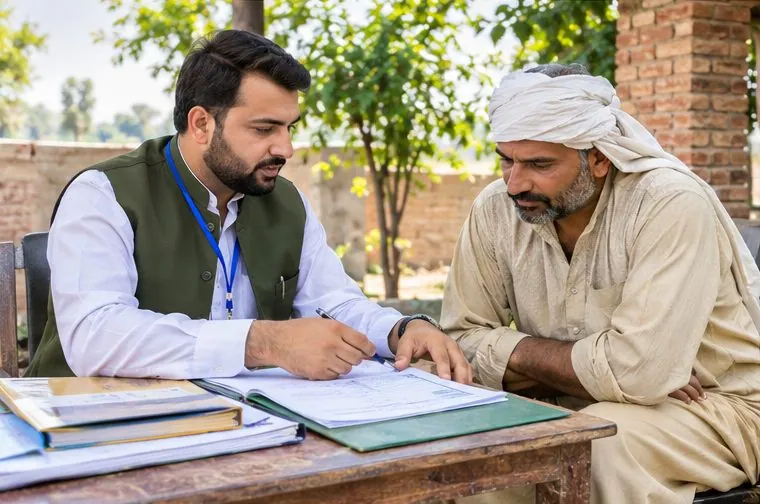
Understanding CM Punjab Solarization of Agriculture Tubewells starts here: The Punjab page names cmstp.punjab.gov.pk as the scheme portal and provides access to an application form. Verify the portal is accepting new submissions; an old page alone does not establish today’s opening. Preserve your acknowledgment and review every field.
As a candidate moves through CM Punjab Solarization of Agriculture Tubewells, Verification protects the programme as well as legitimate applicants, but it can take time. Some checks happen automatically while others require human review or physical evidence. Ask what a pending or under-review status actually means; never treat an intermediary's verbal promise as proof that a government authority or bank has selected you.
After submission, note the precise status message and whether any further action is requested. A delay can arise from quotas, technical checks, record matching or an incomplete inspection, depending on the programme. The responsible authority can explain the next authorized step better than an anonymous video claiming a fixed timeline. That is a practical way to track CM Punjab Solarization of Agriculture Tubewells without confusing pending and approved cases.
The review stage can include technical, eligibility, financial and administrative decisions. Being asked for an additional document is not proof that an award will follow. It is simply another step in a process that should be tracked using the programme's own communication channels.
Selection, balloting and inspections
The practical position under CM Punjab Solarization of Agriculture Tubewells is this: Some earlier rounds used balloting and follow-up checks. Farmers should distinguish registration from shortlisting, site verification and the final authorized installation process. Do not assume a screenshot of a result list is equivalent to an accepted vendor work order.
Financially, CM Punjab Solarization of Agriculture Tubewells needs to be understood in these terms: Published assistance figures need context. They may describe a maximum subsidy, a per-unit amount, a target for the entire programme or a confirmed individual entitlement. Separate public budget announcements from contractual terms applying to one applicant, and calculate the costs you would still carry after any benefit.
For financial planning, distinguish the face value of support from accessible cash. A benefit in equipment, land, housing work or a restricted card may not be sold or spent on unrelated items. Ask what the recipient is allowed to do and what contribution, maintenance or reporting may still be required. In CM Punjab Solarization of Agriculture Tubewells, net value matters more than a headline.
The headline value should not be mistaken for the net economic gain. Applicants may have maintenance, transport, materials, legal or business-operating costs. A responsible decision compares these costs over time and checks whether receiving one form of support restricts access to another.
Installation and equipment quality
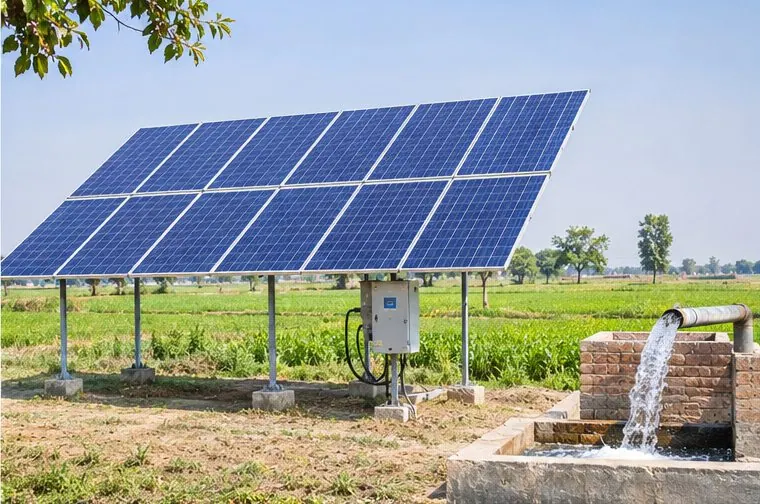
A careful look at CM Punjab Solarization of Agriculture Tubewells shows why An installation should include appropriate mounting, inverter/controller design, protection, earthing, wiring, water management and maintenance instructions. Farmers should request component specifications, warranties, receipt schedules and service contacts in writing before accepting an installed system.
For the latest phase of CM Punjab Solarization of Agriculture Tubewells, A dated notice is usually more useful than a viral screenshot. Application openings, selection lists and payment cycles can change independently. Keep the date and source of a rule with your notes, and avoid telling friends that a programme is currently open solely because its original registration page remains accessible.
Keep a simple chronology: announcement date, submission date, last government update and next action. This avoids passing along expired information. If the page has no fresh deadline, write 'current intake not confirmed' in your own plan rather than inventing a day to make the process seem urgent. Compare every CM Punjab Solarization of Agriculture Tubewells date with a freshly issued official notice.
Older notices can remain searchable for years and still describe a valid historic phase. A reader should therefore separate the permanent purpose of a scheme from the temporary dates of a particular intake. Programme activity is not the same thing as a verified open registration period.
Calculating savings realistically
For CM Punjab Solarization of Agriculture Tubewells, Compare recent diesel purchases or electricity bills with predicted pumping hours, maintenance and initial contribution. Seasonal pumping, groundwater depth and fuel-price changes affect savings. A useful farm budget separates government subsidy from farmer-funded equipment or civil work.
A responsible budget for CM Punjab Solarization of Agriculture Tubewells recognises that A practical household or enterprise budget should include money spent before receiving support, routine costs after receiving it and a margin for delays. Use conservative estimates rather than the most optimistic outcome. That approach makes the decision useful even if the application is deferred, reduced or rejected.
Costs are easiest to control when they are separated into essential, optional and uncertain items. Include transport, copies, connectivity, maintenance or working capital as relevant. Do not spend money on non-refundable bookings or contractors until the scheme's actual approval conditions are clear. In a CM Punjab Solarization of Agriculture Tubewells plan, this is safer than assuming the most favourable outcome.
Good planning relies on a conservative case, not just a best case. Estimate what happens if the support arrives late, is smaller than hoped, or comes with an obligation to contribute. This protects the applicant from making irreversible purchases based on a provisional result.
Avoiding misleading solar offers
Understanding CM Punjab Solarization of Agriculture Tubewells starts here: Scammers sometimes claim instant approval or offer a guaranteed vendor allotment. Check whether the vendor is actually authorized for your round and refuse off-platform payments demanded by strangers. Keep copies of all original departmental communications.
A common difficulty with CM Punjab Solarization of Agriculture Tubewells is that Many rejected or stalled applications are complicated by inconsistent documents, missing proof or incorrect assumptions about the benefit. Review the exact cause before trying again. An error that can be corrected should not be confused with a permanent exclusion, but an applicant should never use fabricated records to get around a genuine rule.
When something appears wrong, start with the source document or official status record. Identify one specific discrepancy and ask for the appropriate remedy. Repeated messages to unrelated numbers and social-media pages rarely resolve a formal eligibility or payment dispute. A thoughtful CM Punjab Solarization of Agriculture Tubewells review begins by finding the exact cause.
An unsuccessful result can have several causes: an ineligible circumstance, a missing record, expired registration, exhausted quota or simple data mismatch. These possibilities call for different remedies. Seek a clear reason and preserve a copy of the official response before making a new application.
Other agriculture support options
The practical position under CM Punjab Solarization of Agriculture Tubewells is this: An eligible farmer might also investigate Kissan Card inputs, high-tech machinery financing or a Green Tractor subsidy, but those schemes have different aims and rules. Do not combine percentages or funding ceilings from one programme with another.
Individual examples involving CM Punjab Solarization of Agriculture Tubewells illustrate why Personal circumstances make a difference. Two households might live in the same district but have different eligibility because of land ownership, income, family status or programme history. Use examples as a way to identify questions for the real authority, not as a substitute for individual assessment or professional advice.
A realistic scenario is useful only if its assumptions are visible. Write the applicant's age or family status, district, asset situation and evidence on hand, then test each one against the official rule. Do not turn a hypothetical example into a guaranteed approval statement. That is why CM Punjab Solarization of Agriculture Tubewells cannot be assessed from a single example.
Examples also show why broad social-media advice fails. A rule may interact with family size, ownership history, district or specific benefit purpose. Compare scenarios cautiously and use them to prepare precise questions for the responsible authority rather than as evidence of an individual entitlement.
What to verify before applying
A careful look at CM Punjab Solarization of Agriculture Tubewells shows why Confirm your land record, tubewell status, electricity bill details where applicable, solar sizing and the current programme window. Ask the agriculture helpline 0800-17000 about a disputed requirement rather than relying on a reposted advertisement.
For safe participation in CM Punjab Solarization of Agriculture Tubewells, If a phone number, social-media account or unofficial representative asks for a deposit or PIN, verify the request through the provider's published website or help line. Protect CNIC images and financial data. For alternative support, compare the purpose and conditions of separate programmes rather than assuming their rules are interchangeable.
Finally, share only the facts that can be checked. A family member may want a simple answer, but 'eligible subject to verification' is more helpful than an unsupported promise. Keeping records and using legitimate complaint routes reduces exposure to fraud and makes the next administrative step clearer. Reliable information about CM Punjab Solarization of Agriculture Tubewells starts with the provider, not an intermediary.
Official programmes should be approached through official channels even when an advertisement looks convincing. Fraud prevention is part of financial planning: verify domains, protect one-time codes and keep copies of genuine payment instructions. Where a new phase is not confirmed, the safest next step is monitoring the official source.
What matters most before you apply
Use the dated official sources below to confirm application windows. Guidance prepared from a published set of rules may remain useful when the programme itself pauses registration or changes an implementation phase.
Solar tubewell financing: size the system to the water need
A good irrigation system starts with crop water demand, pump capacity and a realistic energy plan. The largest announced solar grant is not necessarily the right design for every farm.
Establish the existing tubewell category
- Electric versus diesel: The scheme may treat power sources and conversion evidence differently; confirm your tubewell's status.
- Land and possession: Keep ownership or cultivation records consistent with the well location and the scheme's district criteria.
- Pump characteristics: Record motor horsepower, well depth, discharge and present fuel or electricity use.
- Past bills and receipts: Historical spending is useful for testing savings; a single unusually expensive month can distort the result.
Estimate daily irrigation requirements
- Crop area: Calculate acreage, crop stage and water demand across the actual season.
- Available sunlight: Solar output varies with location, weather and panel condition; plan around real daytime pumping hours.
- Pump performance: Static head, pipe friction and pressure requirements matter alongside nameplate motor power.
- Storage or scheduling: Consider whether daytime pumping aligns with available irrigation turns or if water storage is practical.
Read subsidy slabs properly
- Confirm the officially approved capacity category. A household-panel grant cannot be copied into an agriculture-tubewell programme.
- Separate grant from farmer contribution. The subsidy amount may cover only part of equipment and installation cost.
- Check eligibility before purchasing hardware. Buying an inverter or pump privately does not guarantee later reimbursement.
- Avoid selecting by maximum subsidy alone. Oversized systems can cost more to maintain without providing proportional agricultural benefit.
Procurement and maintenance after approval
Compare complete installer quotations
- Require a component list. Panels, inverter, controller, mounting, wiring, protection and pump interfaces should be specified.
- Check electrical safety. Proper earthing, isolation switches and weatherproof enclosures are essential for equipment used around water.
- Review service and warranty. Ask who will attend a failure during a critical irrigation window.
- Plan physical security. Remote sites may need protection against theft, livestock damage and extreme weather.
Check inspection and commissioning stages
- Save official selection evidence. An accepted online application is not necessarily an installation authorisation.
- Expect site verification. Actual equipment and well location may be checked against the application.
- Document test performance. Record discharge and power output during commissioning rather than relying only on installer claims.
- Keep commissioning papers. Warranty, serial numbers and contractor details support later repairs.
Evaluate long-term savings fairly
- Compare like-for-like irrigation. Fuel savings only make sense if the solar system delivers comparable water volume.
- Include replacement parts. Electronics and pumps may need service during the system's useful life.
- Account for dry-season restrictions. Solar power does not solve inadequate groundwater availability.
- Make water efficiency part of the plan. Better scheduling, channels and irrigation practices may save both water and energy.
Before applying: a sensible checklist
- Confirm the issuing authority and current programme phase on an official domain.
- Match identity, domicile, household, land, academic or business records to the actual eligibility category.
- Prepare clear documents and a contact number that you control; never share a login OTP with an agent.
- Read the amount, deadlines, conditions and disqualification clauses as well as the headline benefit.
- Save screenshots of genuine submissions and ask the named official office to clarify disputed information.
Three practical situations explained
A grower with one acre and a working diesel pump
Check land evidence and pump details, then size the solar system to real irrigation duty, not to the highest subsidy alone.
An electric tubewell connected in December 2024
That is later than the published 30 October 2024 cut-off for electric connections, so the older rule would not qualify it.
A farmer quoted a 20 kW system with large extra charges
Compare the entire installation budget and the subsidy. The remaining price, wiring and equipment maintenance are not automatically covered.
Official sources and editorial independence
Information checked against the government, bank or university pages below on 12 November 2026. Figures and conditions change between programme phases, and publication does not guarantee registration is open. Scheme Info is an independent publisher: we do not issue loans, enrol scholarship recipients or make official allotment decisions.
Frequently asked questions
What is the 10 kW subsidy?
Rs 500,000 according to Punjab’s published solar tubewell programme.
What is the 15 kW subsidy?
Rs 750,000 under the published capacity table.
What is the 20 kW subsidy?
Rs 1,000,000 under the published capacity table.
How much land must an applicant own?
At least one acre in Punjab, with relevant ownership evidence in the application district.
Does an electric tubewell qualify?
It may, if the connection was installed by 30 October 2024, is three-phase and has paid-bill proof, subject to verification.
Can diesel tubewells qualify?
The programme includes eligible diesel-powered tubewells; inspect the appropriate application conditions.
Where can farmers apply?
The published official route is cmstp.punjab.gov.pk; verify whether a new application window has been announced.
Will the government pay the full solar installation price?
No. The published amounts are fixed capacity-based subsidies, not a promise to cover the entire project.
Is a higher kW system always better?
No. Match capacity to pump horsepower, water depth and realistic irrigation hours; oversizing wastes investment.
What if a contractor demands an upfront approval fee?
Verify official registration and recognised suppliers using the Agriculture Department helpline before giving money.