
Punjab’s 2026–27 tractor programme has two different tracks. Compare horsepower, landholding thresholds, subsidy values, registration precautions and the real amount farmers may still need to pay.
Table of Contents — jump to a section
- Eligibility Criteria
- Verified facts at a glance (November 2026)
- What the updated rules mean in practice
- Required Documents
- CM Punjab Green Tractor Scheme 2026: what the 2026–27 programme includes
- Low-power Phase IV and high-power Phase V compared
- Who may qualify and why land records matter
- Application status: verify the latest 2026–27 phase notice
- How to check the genuine registration channel
- Documents and details to prepare before applying
- What happens after a submission or ballot
- Understanding the subsidy versus your own purchase cost
- Timeline, monitoring and safe next steps
- Match tractor horsepower to the farm, not the advert
- Understand selection and delivery stages
- Build a responsible tractor budget
- A practical pre-application checklist
- Three applicant situations: what to do next
- Frequently asked questions
- Official sources and editorial disclosure
- Explore related Scheme Info guides
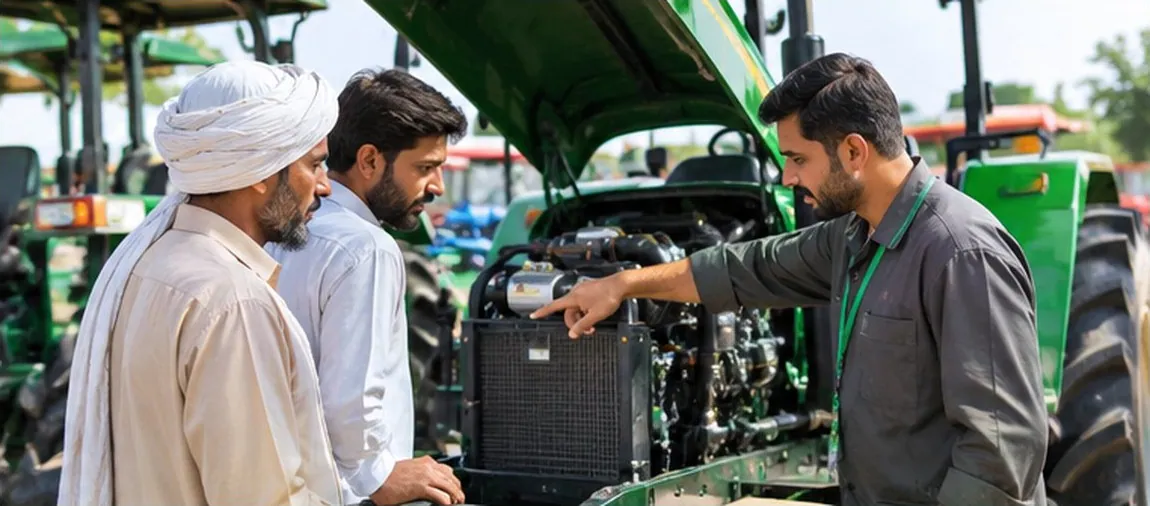
Eligibility Criteria
For CM Punjab Green Tractor Scheme 2026, The 2026–27 Agriculture Department targets separate two tractor classes. Check the phase notice before judging eligibility:
- Punjab farming connection — The applicant must satisfy the residency and farmer conditions in the applicable provincial phase notice.
- Phase IV low power — The published 50–65 HP phase targets landholders with at least .
- Phase V high power — The published 75–125 HP phase targets landholders with at least .
- Verifiable landholding — Ownership and acreage must agree with the land records checked by the programme.
- Selection is not automatic — Meeting the minimum acreage does not replace the programme’s verification, selection or balloting process.
Verified facts at a glance (November 2026)
These are published official rules, programme targets or procedural details. They are not a personal eligibility determination, a live-registration claim or an approval promise.
| Question | Official detail or important distinction |
|---|---|
| Low-power Phase IV | 2026–27 plan: 10,000 subsidised tractors, 50–65 horsepower. |
| Low-power land threshold | At least 5 acres in current initiative table. |
| Low-power published subsidy | Rs 750,000 per tractor. |
| High-power Phase V | 2026–27 plan: 9,500 subsidised tractors, 75–125 horsepower. |
| High-power land threshold | At least 7 acres in current initiative table. |
| High-power published subsidy | Rs 1 million per tractor. |
| Application status | Planning/budget notification is not itself a farmer registration announcement; check the Agriculture Department and current official registration portal. |
What the updated rules mean in practice
Two machines, two different farm-economics questions
For 50–65 HP machines, a farmer should ask whether the tractor can handle expected daily operations and attached implements. For 75–125 HP machines, additional power may improve field capacity but can increase diesel, repair, tyre and equipment expenses. The 2026–27 programme plan sets separate acreage thresholds, subsidy values and tractor targets for Phase IV and V. A subsidy should not be the only reason to choose an oversized tractor.
Build the real amount-payable worksheet
Obtain an authorised dealer quote and list price, registration, delivery, implements, taxes if applicable, operating supplies and initial service. Subtract only the government subsidy formally confirmed for the selected model. For example, a hypothetical price of Rs 2.9 million minus an approved Rs 750,000 subsidy leaves Rs 2.15 million before other expenses. That illustration is not an official price list and must not be represented as what every successful farmer will pay.
2026 phase caution: The Punjab Portal’s older Green Tractor page includes a 10 October 2024 deadline and different specifications. Use the Agriculture Department’s 2026–27 initiative table for phase comparison; confirm registration dates separately.
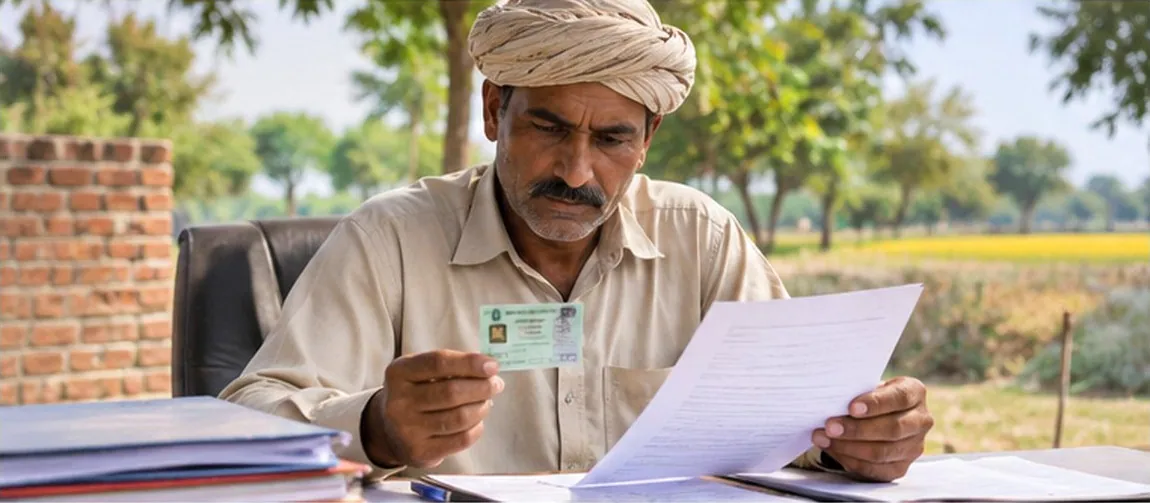
Required Documents
For CM Punjab Green Tractor Scheme 2026, Prepare the following before using any <em>currently announced</em> application route; the exact upload checklist may change by phase:
- Identity — A valid CNIC and a working contact number for the applicant.
- Land proof — Current Fard/land ownership extract or other land record establishing the holding and acreage.
- Farm details — District, tehsil, village and other holding particulars requested by the relevant form.
- Application reference — Submission receipt or tracking number if a form was already submitted.
- Post-selection records — Any official selection notice, payment instruction or bank detail .
Check the current official application notice before uploading anything: some records are required only after selection, at a bank interview or for particular applicant categories.
CM Punjab Green Tractor Scheme 2026: what the 2026–27 programme includes
The CM Punjab Green Tractor Scheme 2026 should be read as a set of programme phases, not one permanent form with an unchanged subsidy. Punjab’s Agriculture Department has published 2026–27 targets for low-power and high-power tractors, each with different horsepower ranges, landholding thresholds and planned numbers of subsidised machines. Those differences matter because a farmer who qualifies by acreage for one phase might not meet the published threshold for another. The machine required for orchard work, small plots or a narrow access track may also be different from the tractor suited to heavy tillage or large implements.
CM Punjab Green Tractor Scheme 2026 separates published project targets from an individual farmer’s right to receive a subsidy.
Farmers reviewing CM Punjab Green Tractor Scheme 2026 should compare horsepower with the implements already used on their holdings.
The official 2026–27 initiative table lists a Phase IV low-power programme targeting 10,000 tractors of 50–65 horsepower for farmers with holdings of at least five acres. It describes a subsidy of Rs. 750,000 per tractor.
It is also important to distinguish a project budget from the amount a farmer will receive. The department publishes multi-million-rupee allocations to fund the intervention, but applicants should focus on CM Punjab Green Tractor Scheme 2026’s individual subsidy, approved tractor options and their own remaining contribution.
A responsible guide should therefore answer three different questions separately: what government has planned for 2026–27, which phase the farmer might fit, and whether a fresh submission window is available on the day the farmer checks. Those answers can change at different times. Scheme Info does not sell tractors, collect fees or process applications; the final authority remains the Agriculture Department and its designated portal. In the context of CM Punjab Green Tractor Scheme 2026, the current official notice should resolve any uncertainty.
Low-power Phase IV and high-power Phase V compared
The difference between the two tracks is more than the subsidy value. Under the published Phase IV target, a 50–65 HP tractor is intended for applicants meeting the five-acre-and-above landholding condition. Such machines may suit operations in which manoeuvrability, fuel efficiency and standard implements are the main constraints.
Under CM Punjab Green Tractor Scheme 2026, a five-acre holding does not by itself qualify an applicant for the high-power seven-acre category.
A prospective CM Punjab Green Tractor Scheme 2026 applicant should budget the unsubsidised balance before committing to a dealer.
The high-power Phase V target covers 75–125 HP tractors and a stated landholding minimum of seven acres, with the larger Rs. 1 million subsidy. The higher horsepower category can be useful for demanding implements, but it normally brings different running costs, transport requirements and maintenance considerations. Bigger is not always better: if a tractor spends most days idle, the farm may struggle to justify the investment even after a generous grant. The most reliable information about CM Punjab Green Tractor Scheme 2026 remains the programme provider’s published instructions.
The department’s phases also have separate administrative histories. News about Phase IV balloting should not be interpreted as a fresh Phase V submission deadline. Similarly, a Phase V advertisement may refer to the high-power programme only.
When comparing models, build a realistic plan around annual hours of use, field sizes, soil type, expected implements, spare-parts availability and service access. If two neighbouring farms could share access to machinery, consider whether a custom-hiring service would be more economical than ownership. The subsidy can make an investment easier, but it cannot turn a machine with no workable use case into a financially sound purchase. For CM Punjab Green Tractor Scheme 2026, this distinction matters before an applicant relies on an old announcement.
| Official 2026–27 track | Low power: Phase IV | High power: Phase V |
|---|---|---|
| Tractor range | 50–65 HP | 75–125 HP |
| Published target | 10,000 tractors | 9,500 tractors |
| Published land threshold | 5 acres or above | 7 acres or above |
| Published subsidy | Rs. 750,000 | Rs. 1,000,000 |
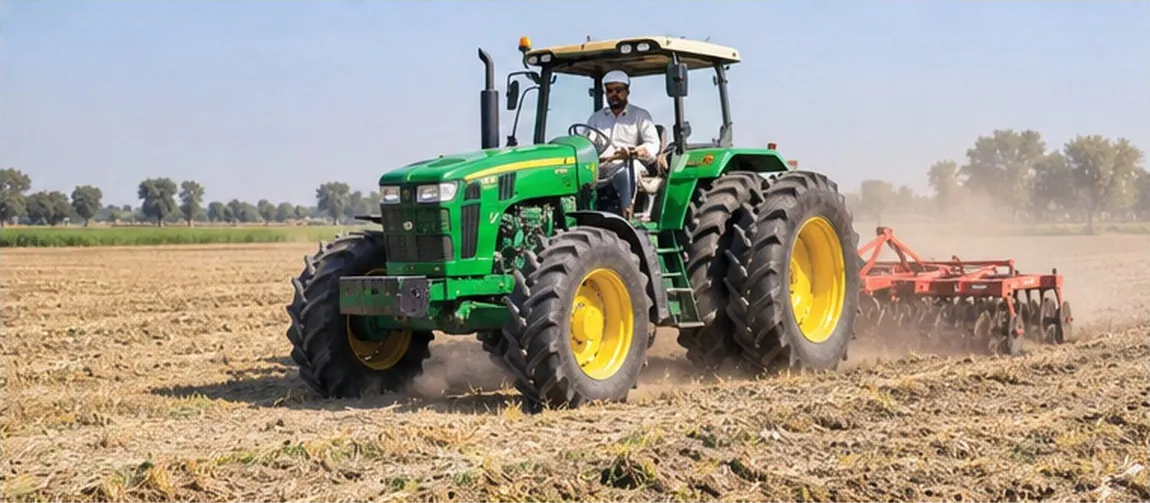
Who may qualify and why land records matter
The most concrete current eligibility distinction visible in the official 2026–27 initiative table is landholding size: five acres and above for the published low-power Phase IV target and seven acres and above for the published high-power Phase V target. That information should not be mixed with older programme pages that described different acre limits for previous phases. Government programmes evolve, and the eligibility text on an archived news page may be correct for its original year but unsuitable for a new application.
The acreage thresholds in CM Punjab Green Tractor Scheme 2026 are different because the two tractor classes serve different farm operations.
The next phase of CM Punjab Green Tractor Scheme 2026 should be identified by a new government notice, not an old advertisement.
Land ownership and operational control are not interchangeable concepts in every government scheme. A person may cultivate rented land, sharecrop with relatives or work several small parcels. Whether that arrangement is accepted is a matter for the actual application instructions, not for a general blog to decide. The practical step is to assemble the property record showing how the relevant land is registered and ask the responsible agricultural office to confirm how joint ownership, inheritance or leasing is treated in that phase. An applicant assessing CM Punjab Green Tractor Scheme 2026 should keep the supporting evidence available for verification.
CNIC information must be consistent across records. A spelling difference, a missing family name, a recently changed mobile number or an outdated ownership entry can create delays during verification. Applicants should check identity details before applying, particularly where the government uses computerised ownership data and phone-based confirmations. Avoid giving another person your account password, verification code or CNIC image merely because that person claims to be an agent.
Farmers should be cautious about claims of guaranteed selection. Meeting the published threshold is an entry condition, not a guarantee that a subsidy will be granted. Where demand exceeds the number of available subsidised tractors, the government may use a defined selection or balloting process. Retain proof of any application, follow announcements through official channels and be prepared for documentary checks before a purchase is finalised. Readers comparing CM Punjab Green Tractor Scheme 2026 with other forms of support should check the exact scheme category.
Application status: verify the latest 2026–27 phase notice
The CM Punjab Green Tractor Scheme 2026 has already had several deadline notices and extensions. The Punjab Agriculture Department’s October 2026 public updates state that the high-power programme submission date was extended to 30 October 2026.
The October 30 extension associated with CM Punjab Green Tractor Scheme 2026 should not be described as a November reopening.
A farmer comparing CM Punjab Green Tractor Scheme 2026 models should examine service availability as carefully as initial price.
The difference between a programme being funded and a portal accepting applications is particularly important. A 2026–27 budget or target demonstrates the existence of a government initiative; it is not itself a live registration notification. Likewise, the appearance of a balloting announcement generally means some applications have already passed a submission stage. A farmer who did not apply during that stage should look for the next official opening rather than assume late applications can be accepted through a private intermediary. In the context of CM Punjab Green Tractor Scheme 2026, the current official notice should resolve any uncertainty.
How to check the genuine registration channel
The Government of Punjab’s older programme overview links to the Green Tractor portal at gts.punjab.gov.pk, and the Agriculture Department publishes its own scheme notices and downloadable forms. Those are reasonable official starting points for checking registration information. They should not, however, be mistaken for proof that a particular 2026–27 form is presently active. Read the landing-page date, the phase heading and any instructions displayed before entering personal information. The most reliable information about CM Punjab Green Tractor Scheme 2026 remains the programme provider’s published instructions.
The official application link for CM Punjab Green Tractor Scheme 2026 should be checked against the correct phase before entering personal information.
A cautious applicant can begin from the Agriculture Department homepage, open the Chief Minister’s initiatives section and compare the current programme listing with the latest news item. Where the official portal provides a working form, read the declaration and required fields before starting.
Only the original government website or an official extension should be treated as an authoritative application destination. A page with a similar name, a misspelled government domain or a private payment link may be an imitation. Look carefully at the full website address rather than relying only on a green badge, a government-style logo or a forwarded screenshot. If a government portal is temporarily unavailable, wait for an update rather than using an unrelated third-party form. For CM Punjab Green Tractor Scheme 2026, this distinction matters before an applicant relies on an old announcement.
After entering details, review everything. The most costly errors are often simple: the wrong phase, mismatched acreage, a phone number not in use or a model choice the applicant cannot afford. Retain the application reference in a safe place and use it only through official verification channels.
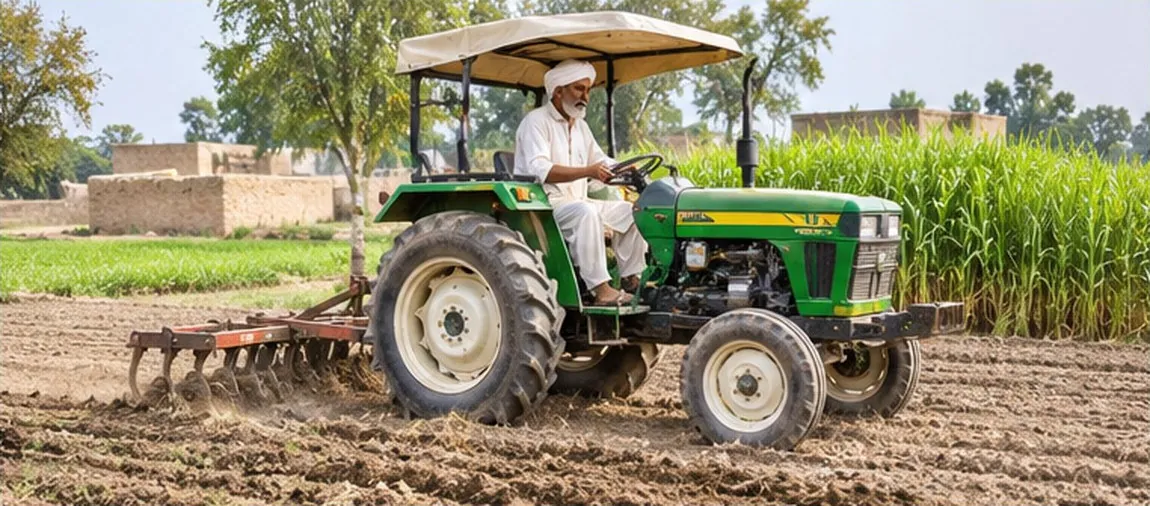
Documents and details to prepare before applying
Document requests may vary by phase, so no article should pretend that one historical list is universally valid. As a practical starting kit, a farmer can prepare their CNIC, current mobile contact, relevant ownership extract or land record, and any information the current notice requests about the agricultural holding. Keep clear scans where online upload is required and have originals available for a verification visit. Ensure every uploaded image is legible and complete. An applicant assessing CM Punjab Green Tractor Scheme 2026 should keep the supporting evidence available for verification.
Landholding evidence matters in CM Punjab Green Tractor Scheme 2026 because an incorrect acreage can affect verification.
Property documentation deserves special attention. If the land has been inherited, transferred or divided recently, confirm that the ownership information used in the application reflects the current official record. Joint holdings should be explained exactly as recorded; an applicant should not invent an acreage figure to qualify.
It is useful to keep a small written checklist of the intended tractor model, approximate market price, expected subsidy, financing or cash contribution, implements and recurring operating costs. These are not necessarily all fields on the government form. They are part of making a disciplined purchasing decision. A farmer who knows only the announced subsidy but has not planned for the remaining price, insurance if required, fuel and repairs could face serious financial pressure later. Readers comparing CM Punjab Green Tractor Scheme 2026 with other forms of support should check the exact scheme category.
When uploading through any portal, avoid using a public computer that saves password history or documents automatically. Sign out after submission, delete scans from shared devices and never disclose one-time verification codes. If someone assists you with form completion, stay present and check the final details yourself. Your application must reflect your real circumstances even when another person is helping with typing.
What happens after a submission or ballot
A successful online submission does not necessarily mean the tractor has been allocated. Agricultural subsidy schemes can involve validation of applicant information, checks against programme rules, shortlisting, selection or balloting, and post-selection instructions. Each administrative step has its own status. A receipt confirms that the form was submitted; a selected list or official confirmation is the relevant evidence for an allotment decision. In the context of CM Punjab Green Tractor Scheme 2026, the current official notice should resolve any uncertainty.
A submission receipt under CM Punjab Green Tractor Scheme 2026 is evidence of application, not confirmation of allocation.
Where a scheme uses balloting, it is important to distinguish participation from selection. Some applicants meet the minimum criteria yet are not selected because the number of applications exceeds the target. That outcome does not automatically mean their records were wrong.
Selected applicants may receive further instructions about models, payment arrangements, approved suppliers and deadlines. Do not make an irreversible private payment merely because someone forwards a screenshot bearing your name. Verify the status from the government channel, check the beneficiary instructions and ask how the remaining farmer contribution must be paid. Keep transaction receipts and a record of any written communication. The most reliable information about CM Punjab Green Tractor Scheme 2026 remains the programme provider’s published instructions.
If an applicant is not selected, look for official information about subsequent phases, waiting lists or fresh applications rather than reusing an old reference number without permission. Separate phases can require separate forms. Some farmers may also benefit from learning about bank tractor finance or the Kissan Card programme, although those are different products with different obligations and should not be described as an automatic substitute for the Green Tractor subsidy.
Understanding the subsidy versus your own purchase cost
A grant reduces the purchase burden; it does not always eliminate the price a farmer must pay. For illustration only, suppose an approved tractor were priced at Rs. 3 million and the particular programme paid a subsidy of Rs. 750,000. The simple arithmetic difference would be Rs. 2.25 million before any separately applicable charges. The example is not an official current tractor quotation, and actual approved prices, payment schedules and costs must be checked at the time of selection. For CM Punjab Green Tractor Scheme 2026, this distinction matters before an applicant relies on an old announcement.
In CM Punjab Green Tractor Scheme 2026, a subsidy reduces a purchase price but does not necessarily cover the entire machine.
For high-power machinery, a Rs. 1 million subsidy may look more attractive in isolation. Yet the remaining amount can still be larger if the selected machine carries a substantially higher price. The practical question is the farm’s total cash commitment, not the nominal size of the headline grant. Budget for maintenance, diesel, lubricants, tyres, repairs, storage, transport and the cost of trained operation.
Owners should compare the estimated number of hours the tractor will be used with the alternative of hiring a tractor for individual tasks. If the farm requires ploughing only a few weeks per year, custom hiring may reduce fixed costs. On the other hand, a farmer with a strong workload and reliable access to repair services may gain from timely cultivation and reduced dependence on outside contractors. These tradeoffs vary by crop and region. An applicant assessing CM Punjab Green Tractor Scheme 2026 should keep the supporting evidence available for verification.
Timeline, monitoring and safe next steps
The safest way to follow a changing agricultural programme is to maintain a simple timeline. Record the date of the official news item, the phase to which it applies, the stated application deadline, any extension and the date of balloting or beneficiary verification. Keep the links in one place. This makes it easier to spot when a social-media post is recycling last year’s advertisement as a fresh opportunity. Readers comparing CM Punjab Green Tractor Scheme 2026 with other forms of support should check the exact scheme category.
For CM Punjab Green Tractor Scheme 2026, retain dated screenshots of official notices and any legitimate tracking messages.
As of 2 November 2026, the department has published the 2026–27 Phase IV and Phase V targets, while its high-power application publicity carried an extension to 30 October 2026. The existence of a new phase or balloting announcement does not prove there is currently a live application button for late applicants.
Farmers who are waiting can still take productive steps: update land records, budget the remaining price, identify which machinery is useful, ask about authorised servicing and compare current alternatives. If a household is considering a significant purchase with borrowed money, obtain a clear repayment plan first. An equipment subsidy and a bank loan are not the same type of support, even when both concern tractors. In the context of CM Punjab Green Tractor Scheme 2026, the current official notice should resolve any uncertainty.
This guide is written for independent public information. It is not affiliated with a tractor manufacturer, the Agriculture Department or the government balloting process. It does not collect applications, request a fee or guarantee selection.
Match tractor horsepower to the farm, not the advert
The two proposed 2026–27 tractor phases have different horsepower and acreage thresholds. A tractor that qualifies for a larger subsidy may still be the wrong machine for your land, implements or operating budget.
Low-power 50–65 hp: where to investigate
- Assess five-acre eligibility first. The Phase IV initiative table identifies farmers holding five acres and above for the low-power programme.
- Compare implement requirements. Work out whether your plough, cultivator, trailer or seeder can operate safely and efficiently with the chosen horsepower.
- Include field shape and access. Narrow tracks and fragmented plots can make a large machine less practical than a smaller tractor.
- Price the balance after subsidy. The published Rs 750,000 subsidy is not the full purchase price; check dealer quotation and delivery costs.
High-power 75–125 hp: test the real need
- Confirm the seven-acre threshold. The Phase V official planning table lists a higher minimum land holding.
- Check equipment compatibility. Larger tillage and mechanisation attachments may justify extra power, but also raise fuel and maintenance costs.
- Consider rental work conservatively. Do not assume your tractor will earn hire income every week; calculate a realistic utilisation rate.
- Account for the unsubsidised portion. A Rs 1 million published subsidy can still leave a substantial payment, registration and running-cost burden.
Understand selection and delivery stages
A budget announcement is not an open ballot
- Read the current phase notice. The Agriculture Department's initiative page sets targets and subsidies; registration instructions and dates must come from a distinct current announcement.
- Keep prior winners separate. A 2024 or 2025 ballot list cannot demonstrate 2026–27 application acceptance.
- Check land and identity matching. Actual selected applicants may have to verify records again before tractor allocation.
- Use authentic links only. Do not pay a person claiming they can add your name to a drawing or change a computerised ballot result.
If shortlisted, inspect the real transaction
- Confirm make, model and horsepower. Save the official approved dealer and specification before making a payment.
- Understand delivery timing. Transport, stock availability and district-level handover can affect when machinery reaches the farm.
- Read any retention or transfer restrictions. Subsidised machinery may carry conditions, so check the signed phase rules before resale or transfer.
- Budget maintenance from day one. Service, fuel, tyres and repairs are real operating costs even when the purchase subsidy is substantial.
Build a responsible tractor budget
Work out the full season cost
- Purchase shortfall: Total invoice minus the actual approved subsidy is the amount to fund from your own resources or approved finance.
- Annual running cost: Estimate hours, fuel consumption, servicing and operator expense using realistic field operations.
- Opportunity cost: Compare tractor ownership with hiring local machinery for the number of operations you perform.
Check before committing funds
- Do not pay based on a screenshot. Verify the current phase, approved list and official collection instructions directly.
- Keep written quotations. Compare at least the eligible model, warranty, delivery and service access.
- Avoid debt that assumes perfect harvests. Tractor payments remain due when weather, prices or crop yields deteriorate.
Final checks before submitting or spending money
- Build a short written budget for the specific scholarship, home, farm, business or employment costs discussed in this guide; do not rely on an advertised maximum.
Three applicant situations: what to do next
These are realistic planning examples, not reports of verified applicants or promises of acceptance.
Farmer with five acres seeking a utility tractor
The low-power Phase IV acreage threshold may be more relevant than the high-power track, but the current official application notice still controls actual qualification.
Farmer with a larger holding needing heavy implements
Compare Phase V horsepower and subsidy against fuel cost, attachment compatibility and the price difference; do not choose capacity by subsidy value alone.
Applicant seeing an old lottery screenshot
Check the image’s phase and year. Balloting or winner lists from previous rounds do not establish new registration or selection.
Frequently asked questions
How many tractor tracks are in the 2026–27 plan?
The Agriculture Department lists low-power Phase IV and high-power Phase V separately.
What are the Phase IV specifications?
The published plan covers 50–65 HP tractors, at least 5 acres and a Rs 750,000 subsidy.
What are the Phase V specifications?
The published plan covers 75–125 HP tractors, at least 7 acres and a Rs 1 million subsidy.
Are the two phase subsidies identical?
No. The low-power and high-power phase amounts differ.
Can I use the October 2024 deadline?
No. That deadline is from an earlier programme page and does not establish a 2026–27 closing date.
Does the government pay the full price?
No. An approved subsidy reduces an eligible purchase price; the farmer usually pays the balance and relevant costs.
Is the 2026 application portal open now?
The initiative listing alone does not establish live registration. Verify a current official advertisement.
Where can I confirm changes?
Use the Punjab Agriculture website or agriculture helpline, not advertisements from unofficial agents.
What is the published Phase IV target number?
The 2026–27 agriculture plan targets 10,000 low-power subsidised tractors.
What is the Phase V target number?
The same plan targets 9,500 higher-power tractors; these are programme totals, not individual entitlements.
Official sources and editorial disclosure
Research checked against the public government, HEC, banking or PSDF material linked here on 12 November 2026. Conditions, allocations, registration windows and pricing can change. Confirm the latest publication with the actual issuing authority before applying. Scheme Info is an independent information publisher; it is not a lender, scholarship administrator, application representative or government department.