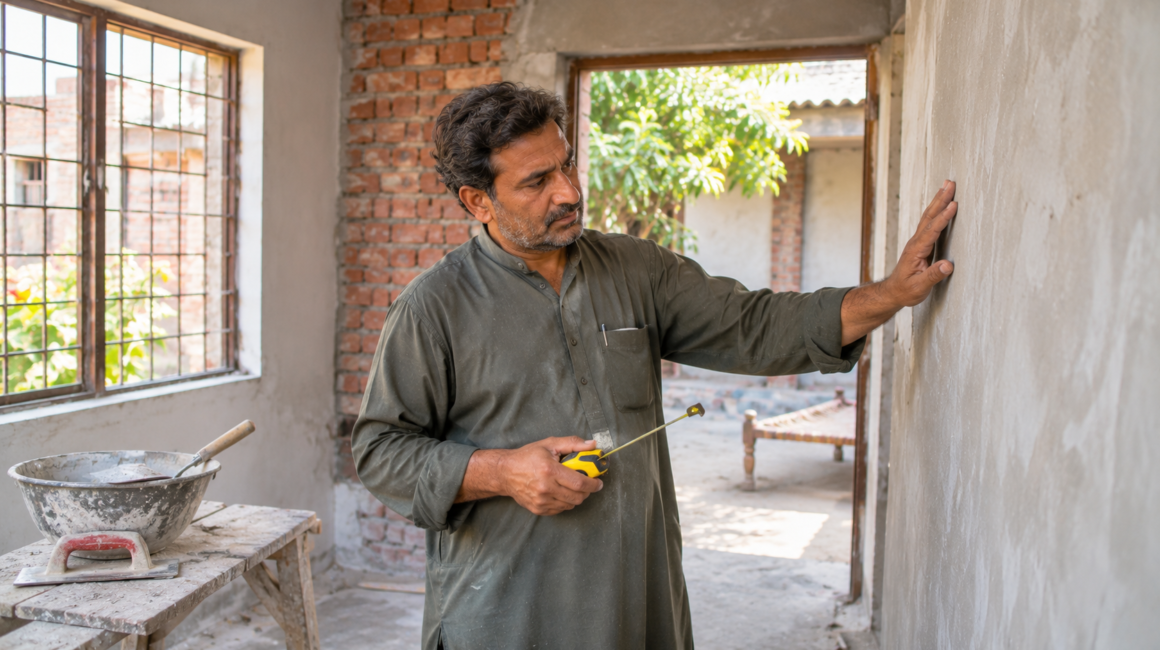
Akhuwat’s current housing loan listing and the older government-backed low-cost housing project have different ceilings. This guide separates them, explains property evidence and helps households prepare a realistic repair budget.
Table of Contents — jump to what you need
- Eligibility criteria
- Documents to prepare
- The verified facts at a glance
- What the programme actually offers
- Who should consider applying
- Permitted uses and project planning
- Costs, pricing and borrower contribution
- Repayment, timing and affordability
- How to approach the official application
- Three realistic situations to compare
- Working examples and decision tests
- Avoidable errors and fraud checks
- Comparing similar schemes and alternatives
- Final checklist before committing
- Practical questions to raise with the official office
- Which Akhuwat housing product are you reading about?
- Build a useful housing application file
- Before you take the next step
- Frequently Asked Questions
- Official sources and editorial independence
- Related Scheme Info guides

Eligibility criteria
Who qualifies under this programme
- Has valid identity and relevant ownership/right-to-build evidence
- Needs eligible home repair, roof, room or construction work
- Lives within an operating Akhuwat branch area
- Can demonstrate a practical cost estimate and repayment capacity
- Meets the specific housing product and appraisal criteria
Documents to prepare
Documents that must match the official records
- Valid CNIC and applicant photos
- Ownership papers/registry/fard or other permitted property evidence
- Repair or construction cost estimate and photos
- Utility or local residence details
- Guarantor / repayment records the branch requests
The verified facts at a glance
| Your question | Published terms and practical meaning |
|---|---|
| What is Akhuwat’s general housing loan ceiling? | The 2026 loan product page lists up to Rs 1,500,000, depending on project and funds. |
| What is the published general product term? | Up to 120 months for housing loan products. |
| What work may qualify? | Renovation, construction of rooms, roofs, walls and related essential household improvements. |
| What is the earlier government-backed product? | The separately published Prime Minister Low Cost Housing Project described up to Rs 500,000 and 13–60-month terms. |
| Is the housing loan interest-free? | The current general housing product describes 0% profit and interest; principal must still be repaid. |
| Is online application supported? | Akhuwat instructs applicants to visit a branch rather than apply through unverified web forms. |
| What property records may be needed? | Land or house ownership evidence and a construction/repair plan, subject to the particular project rules. |
What the programme actually offers
Akhuwat Housing Loan — practical verification points
Akhuwat Housing Loan is most useful to understand through its actual lending mechanism rather than through a headline. Akhuwat Islamic Microfinance lists housing loans for home construction or repair, and states that it does not take loan applications online. It uses Qarz-e-Hasan, social appraisal and local branches; the current housing amount and exact repayment schedule must be confirmed with the branch.
This matters particularly to low-income families whose homes need essential improvements, residents near an operating Akhuwat branch, and people who can show a credible repair or construction budget. A benefit that fits one household, farm or enterprise may be unsuitable for another because eligibility, access and repayment capacity vary. Begin with the official provider and note exactly what has been published; do not infer approval from a promotional announcement.
The practical aim of Akhuwat Housing Loan is safe roof repair, sanitation improvements, basic structural completion and necessary home extensions—not speculative property buying or a guaranteed free house. Before spending money to prepare an application, determine whether the requested outcome is the sort of activity the programme supports. Ask whether the bank or agency pays a supplier, releases a loan to an account, or asks for another documented method.
For a reader comparing programmes, Punjab Apni Chhat Apna Ghar concerns a provincial housing facility; Apni Zameen Apna Ghar concerns free plots; neither is identical to Akhuwat’s branch-assessed housing microfinance. The distinction changes not only which institution to contact but also the commitments involved. A grant, subsidy, repayable bank loan and beneficiary selection exercise require different financial decisions and should never be described as interchangeable.
Akhuwat Housing Loan applicants should use the official branch network, not websites collecting up-front digital approval fees.
Who should consider applying
The best starting point for Akhuwat Housing Loan is a simple fit test: the potential applicant should belong to the intended group, have a sensible purpose for the support, and be able to document any relevant eligibility requirement. For this programme, the likely audience is low-income families whose homes need essential improvements, residents near an operating Akhuwat branch, and people who can show a credible repair or construction budget.
Consider what the project needs over the next twelve months, not only what it needs today. Safe roof repair, sanitation improvements, basic structural completion and necessary home extensions—not speculative property buying or a guaranteed free house can fail when the recipient has money for equipment but not for electricity, labour, repairs or inventory. List all obligations that continue after the initial support arrives.
Anyone seeking Akhuwat Housing Loan should distinguish a programme being listed on a website from a confirmed live acceptance window. The official pages used for this guide document product design; a branch, implementing partner or current government notice must confirm whether applications can be processed now.
A realistic applicant does not need to sound impressive; they need to describe the project plainly and consistently. A clear record of work, monthly expenses and cash flow can be more useful than exaggerated projections. Where a bank requires collateral or credit history, disclose them rather than guessing they will be waived.

Permitted uses and project planning
planned use is central: safe roof repair, sanitation improvements, basic structural completion and necessary home extensions—not speculative property buying or a guaranteed free house. The most persuasive project description links every requested item to its direct economic or household benefit rather than presenting an unstructured shopping list.
Prepare a simple project map with three columns: item or activity, expected cost, and the evidence behind that cost. Quotes, photographs, prior purchase records and a small operating history make estimates more credible. For larger purchases, find out whether the bank disburses to a supplier or directly to the borrower.
Do not assume the programme will pay for unrelated costs. A budget may include actual contractor labour, bricks/cement, plumbing and wiring, transport, contingency, and the family’s ability to meet ordinary monthly expenses during repairs; however, each line must still be checked against the scheme’s actual permitted-purpose rules. Costs useful to the business are not automatically costs eligible for the loan.
The scale of investment should match the skill and capacity of the person receiving it. Start with a feasible first phase if demand, weather, production conditions or customer behaviour are uncertain. With Akhuwat Housing Loan, the cheapest option is not always the most productive, but the largest available limit is not necessarily the right borrowing amount.
Akhuwat Housing Loan is an interest-free lending product, but every borrower should still confirm the disbursement and repayment schedule.
Costs, pricing and borrower contribution
Any serious guide to Akhuwat Housing Loan must separate headline financing limits from the amount actually received, and also separate fees from interest or markup. The relevant cost factors are actual contractor labour, bricks/cement, plumbing and wiring, transport, contingency, and the family’s ability to meet ordinary monthly expenses during repairs.
Ask for a written cost schedule that distinguishes principal, borrower contribution, appraisal or processing charges, insurance, taxes, documentation, collateral registration and any penalties. A product advertised as interest-free can still involve repayments; a conventional bank product can have a variable markup rate that cannot be predicted from a static article.
The value of an investment is not measured by the cash released at the start. The question is whether the project produces enough benefit to justify ongoing obligations. Under Akhuwat Housing Loan, the applicant should compare reliable income or savings with operating expenses over a full year, including less favourable months.
Build a contingency margin into the project rather than counting every rupee of potential income as spendable. If an item becomes more expensive between quotation and disbursement, clarify who covers the difference. Never make an unofficial payment to a person claiming to guarantee finance approval.
Repayment, timing and affordability
The published repayment or financial obligation for Akhuwat Housing Loan should be understood carefully: interest-free does not mean repayment-free: applicants should request the approved principal, instalment dates, loan term and any documented administration obligations before accepting.
Where instalments are half-yearly, calculate the six-month cash requirement from monthly income rather than waiting for the due date to discover a shortfall. If income is seasonal, reserve part of each profitable sale toward the next payment. Keep borrowing for a productive activity distinct from routine family spending.
Interest or markup, when applicable, can change the true cost substantially. Request an illustration showing total payable under current terms and what happens if a payment is late. never calculate a repayment using a rate or duration found on an unofficial social-media card.
The safest affordability test asks what happens when sales, harvest output, wages or expected benefits are below plan. A project that works only under the best scenario leaves the borrower exposed. Consider smaller financing, waiting for more savings or choosing an alternative scheme if the minimum realistic outcome cannot support payments.
a realistic repair budget is more informative than an unexplained lump-sum request.
How to approach the official application
The responsible way to begin an application for Akhuwat Housing Loan is: find the nearest official branch, explain the safety problem, ask for current housing-loan availability, submit requested evidence, cooperate with home verification and read the sanction terms.
Open the official provider page directly and verify the spelling of its web address. For bank products, contact a listed branch; for government initiatives, use the named department or portal. Ask which version of the scheme is being implemented and whether any deadline applies. Preserve a screenshot or receipt of the response.
The application should describe exactly the same purpose as the accompanying budget and evidence. If the amount changes during appraisal, update your records and financial projections accordingly. A signed approval is more meaningful than a status screen saying that information has merely been received.
At the final step of Akhuwat Housing Loan, read every obligation before signing. Confirm who owns purchased equipment or assets, which insurance is required, who may inspect utilisation and when repayments start. Where a decision is refused, request the proper reason and avoid submitting altered facts to circumvent eligibility checks.
Three realistic situations to compare
A leaking roof on an owned small plot
Get a materials estimate and compare the repair plan with actual monthly repayment capacity.
A family quoting the older Rs 500,000 programme
Ask the branch which current product is actually funded; do not assume historical terms are still available.
Someone financing an investment property
The published housing products focus on deserving households’ practical housing needs, not speculative property development.

Working examples and decision tests
Consider the order of repairs in a low-income household. A roof that leaks during the monsoon, dangerous wiring and an unusable toilet are not interchangeable priorities. A family seeking Akhuwat Housing Loan can show a simple survey of damaged areas and put structural safety ahead of appearance. Quotes should describe measured quantities and labour, rather than just a round total provided by a contractor.
A sensible construction file has two budgets: the urgent work that must be done now and the optional upgrades that could wait. For example, replacing broken roof sheets and fixing drainage may cost far less than building another room. The branch can assess the first proposal more clearly when the scope is limited, written and supported by photographs and local labour estimates.
Two non-family guarantors are part of Akhuwat's published general lending methodology. Before asking neighbours or colleagues to act as guarantors, explain the proposed housing improvement, borrowing amount and repayment obligation without pressuring them. A guarantor's willingness is not an entitlement to approval, and the branch may require separate appraisal and identity verification.
Repairs can interrupt family routines. A plan should include temporary protection against rain, safe storage for household belongings and a way for children to continue studying while work takes place. The best use of housing microfinance is a safer and more durable living space, not a larger loan merely because the household hopes a bigger amount will be approved.
Ask the Akhuwat Housing Loan officer how the proposed guarantors will be contacted and verified.
Avoidable errors and fraud checks
Common mistakes around Akhuwat Housing Loan include fake online processing fees, claims of instant approval, borrowed CNICs, unverifiable WhatsApp contacts, unauthorised property documents and plans that assume the loan is a grant. Each is avoidable with documented verification and a realistic financial plan.
One warning sign is anyone asking for a processing payment to a personal wallet while promising certain approval. Legitimate public agencies, lenders and registered partners can provide identifiable locations and formal receipts. If something looks suspicious, end the conversation and contact the institution through its own published channel.
Another mistake is basing major purchases on a policy that may no longer be accepting applications. Keep any historical phase information separate from current operational status. Do not interpret an old launch announcement or the mere presence of a web form as confirmation of available funding.
A third problem is publishing sensitive personal details online to ask for informal “eligibility checking.” Bank staff should use authorised secure processes. Readers exploring Akhuwat Housing Loan should not publish CNIC scans, property documents, bank credentials or one-time verification codes in public groups.
Comparing similar schemes and alternatives
When choosing between Akhuwat Housing Loan and related programmes, the distinction matters: Punjab Apni Chhat Apna Ghar concerns a provincial housing facility; Apni Zameen Apna Ghar concerns free plots; neither is identical to Akhuwat’s branch-assessed housing microfinance.
Compare three practical dimensions: the intended beneficiary, what the programme finances and the full obligations. A scheme designed for equipment cannot automatically replace crop input credit; a scholarship cannot be treated as a personal loan; and a housing grant is different from repayable housing microfinance.
If Akhuwat Housing Loan is unsuitable, do not force eligibility by changing the project description. Instead, read the official options for the applicant’s real need. Choosing a smaller, simpler or geographically appropriate facility may create better results than chasing the largest advertised amount.
Internal Scheme Info guides can help organise the comparison, but they do not replace the decision made by the actual programme administrator or bank. Use the links below to explore related agricultural, business, housing and student financing topics, then return to the lender for current terms.
Final checklist before committing
A strong final preparation list for Akhuwat Housing Loan is: verify the branch through Akhuwat’s official directory; obtain two written repair quotes; keep receipts; ask who owns the property; confirm disbursement timing; set an affordable instalment.
Write down the source of each important figure, particularly the maximum loan, eligibility rule, repayment term and named application channel. Record the date you checked it. Scheme rules can change while an older article remains visible in search results; a careful reader treats the latest official notice as authoritative.
Before submitting anything, ask one final question: would this still be a good decision if approval were delayed, the amount were smaller, or the economic benefit arrived later? If not, revise the budget or postpone commitments. The purpose of Akhuwat Housing Loan should be genuine resilience and productive benefit, not an unnecessary financial burden.
Keep complete copies of the final application, lender or agency messages, signed terms, payment receipts, supplier invoices and any subsequent updates. This protects the applicant during disputes and makes the long-term outcome easier to measure, whether the project is a household improvement, an agricultural business or an education expense.
Akhuwat Housing Loan applicants should ask how both guarantors will be checked by the branch.

Practical questions to raise with the official office
Before making a commitment under Akhuwat Housing Loan, ask the responsible official to identify the current programme circular and whether applications are being received. Ask about permitted purpose, accepted documents and the expected sequence from enquiry through approval and disbursement. Write down the employee’s role and the response date.
If collateral, guarantors or a credit report are involved, ask which exact form of evidence is acceptable and which charges are non-refundable. Do not assume a family member’s property can always be offered; confirm their consent and the bank’s formal policy. a verbal assurance from an unrelated intermediary is not a replacement for written terms.
If the loan funds an asset, ask when ownership or any restriction ends and who pays insurance or upkeep. If the facility is linked to education or training, ask about enrolment and progress requirements. If it finances production, ask how the due dates match seasons and who inspects the use of funds.
Finally, request contact details for appeals, corrections or complaints. Responsible support is not merely issuing money; it includes accessible guidance when a document is rejected or a repayment record looks wrong. Keep the answer with the file for Akhuwat Housing Loan.
Which Akhuwat housing product are you reading about?
Older government-backed low-cost housing arrangements and Akhuwat's current housing-loan listing may have different limits, borrowers and conditions. A careful guide must not combine their numbers into one imaginary offer.
Identify the product before quoting a limit
- Check the official product name. Save the exact scheme or loan description shown on Akhuwat's current website.
- Compare publication dates. A page describing a historic housing project may remain indexed even after its application window changes.
- Ask the local branch for current availability. National awareness does not guarantee an available budget or open intake at every branch.
- Do not assume entitlement from a headline ceiling. The sanctioned amount, if any, follows appraisal and suitability checks.
Match the intended construction work
- New core home: A budget should show foundations, walls, roof and essential utilities.
- Renovation: Identify which repairs are necessary for safety, weather protection or improved living conditions.
- Expansion: Check whether the land and current structure can legally and safely support additional rooms.
- Land title: Formal ownership or authorised occupancy evidence matters before money is committed to a property.
Understand household affordability
- Make a realistic cost estimate. Masonry, labour, electrics, water and finishing often cost more than first-time applicants expect.
- Plan for repayment alongside living expenses. Zero interest does not eliminate monthly or otherwise scheduled principal dues.
- Leave a contingency for price changes. Cement, steel and transport costs can rise during construction.
- Choose a buildable scope. A finished, safe small home can be more valuable than an incomplete ambitious extension.
Build a useful housing application file
Before visiting an authorised branch
- Bring a coherent household picture. CNIC, family income and current living conditions should agree with any documents the branch asks for.
- Prepare property evidence. Collect ownership documents, permitted construction details and site photographs when relevant.
- Get itemised contractor quotations. A total without quantities makes it difficult to judge whether funding will complete the work.
- Ask about guarantors and references. Requirements depend on the official product and the branch assessment.
During the assessment
- Clarify permitted uses. Property purchase, new construction and repairs may not be interchangeable under a given loan product.
- Request the total repayment schedule. Confirm amount, tenor, due dates and applicable documented administrative terms.
- Understand inspection rights. Housing support may be tied to work progress or conditions on the property.
- Keep original papers secure. Obtain acknowledgement for any essential original title document examined or retained.
After approval
- Spend funds on the stated purpose. Maintain bills and dated evidence of construction to support transparency.
- Avoid sending money to unofficial accounts. Payment details should come from the authorised branch or written agreement.
- Deal with delays promptly. If contractors or materials disrupt the plan, notify the lender rather than concealing the issue.
- Check fraud claims before sharing documents. No stranger can guarantee a housing loan by selling a registration form.
Before you take the next step
The safest application is one supported by accurate records, a clearly dated official notice and an understanding of the obligations that come after selection. Keep your confirmation numbers privately, compare amounts with the issuing agency and never pay an intermediary who promises a guaranteed result. If a programme is paused, treat older rules as background information rather than evidence that a new application has opened.
Frequently Asked Questions
What is Akhuwat’s general housing loan ceiling?
The 2026 loan product page lists up to Rs 1,500,000, depending on project and funds.
What is the published general product term?
Up to 120 months for housing loan products.
What work may qualify?
Renovation, construction of rooms, roofs, walls and related essential household improvements.
What is the earlier government-backed product?
The separately published Prime Minister Low Cost Housing Project described up to Rs 500,000 and 13–60-month terms.
Is the housing loan interest-free?
The current general housing product describes 0% profit and interest; principal must still be repaid.
Is online application supported?
Akhuwat instructs applicants to visit a branch rather than apply through unverified web forms.
What property records may be needed?
Land or house ownership evidence and a construction/repair plan, subject to the particular project rules.
Can a tenant use an owner’s documents?
Do not imply ownership. Clarify title and permitted arrangements directly with the Akhuwat branch.
Does the Rs 1.5 million ceiling mean everyone receives that amount?
No. Project funding, appraisals, eligibility and available resources determine individual approval.
Can I receive housing finance without a cost estimate?
A work plan, ownership papers and reasonable cost breakdown help the branch assess purpose and repayment.
Official sources and editorial independence
Primary programme guidance reviewed 12 November 2026. Scheme Info is an independent information publication, not a government office, bank, grant provider or application agent. Programme dates and product rules may change; approval remains with the issuing authority.